A mosque’s need for wudu basins cannot be defined using a standard ratio. The actual requirement is determined by the number of people who need to do wudu, how quickly each person can finish, and how well the room allows the activity to proceed.
In practice, mosque wudu capacity is shaped by peak demand, and not total attendance. Friday prayers, Eid gatherings, and evening congregations compress usage into 10–15 minutes. A layout that appears sufficient on paper often fails under this pressure, leading to queues, water spillover, and reduced usable basins.
Basin count should be treated as a performance decision rather than a numerical target. The number of users that can be accommodated is determined by layout, basin geometry, seating capacity, and drainage. An incorrect assessment of this relationship will result in problems after installation, and cleaning alone will not help resolve the problems.
A well-planned wudu area works quietly under pressure. A poorly planned one reveals its limitations every single prayer time.
Quick Answer: How Many Wudu Basins Does a Mosque Need?
Early-stage planning often benefits from rough working ranges before detailed design is finalized:
- Small / Private Mosque: 2–3 stations
- Medium Mosque: 4–6 stations
- Large Congregation: 8+ stations or multi-user linear systems
These ranges are not design rules. They act as a starting point for feasibility discussions.
Why Basin Count Goes Wrong in Real Mosque Projects
Early-stage planning often treats basin quantity as a simple numerical exercise. That approach breaks down once the space begins operating under real conditions. Capacity decisions made during design directly shape how the wudu area performs during peak prayer times, and several recurring misjudgments continue to appear across projects.
Capacity Estimation Based on Total Worshippers
Total mosque capacity is frequently used as the starting point. That figure has limited value during planning. Peak demand occurs within a compressed pre-prayer window, where a large portion of attendees require access simultaneously. A basin count that appears adequate on paper quickly becomes insufficient when usage concentrates into a 10–15 minute period.
Layout Constraints Addressed Too Late
Spatial planning is often finalized before basin requirements are properly resolved. Circulation paths, entry and exit points, and spacing between basins end up constrained by structural decisions. This reduces the number of basins that can function effectively at the same time. Increasing basin count later does not solve the issue because movement bottlenecks remain.
Basin Geometry Treated as a Secondary Detail
Attention tends to focus on how many basins are installed rather than how each basin performs. Depth, edge profile, and slope directly influence splash behavior and drainage. When geometry is not resolved early, water escapes the basin zone, slowing turnover and affecting adjacent users. This cannot be corrected after installation without a full replacement.
These planning gaps surface immediately during peak usage:
- Circulation breakdown: Queues extend into walkways and prayer access routes, interrupting overall movement through the mosque
- Water spread beyond wudu zone: Splash and overflow create consistently wet floors outside designated areas
- Cleaning overload: Maintenance teams increase frequency, yet surfaces remain wet during peak periods
- Reduced usable capacity: Closely spaced or poorly performing basins become difficult to use simultaneously, lowering actual throughput
Each of these issues traces back to early decisions around capacity, layout, and basin performance. Once installed, these conditions persist throughout the life of the facility.
What Happens During Peak Usage
Peak-time performance exposes planning gaps that are not visible on drawings. A wudu area that appears sufficient during design often struggles within minutes of actual use.
In high-traffic mosques, usage compresses into a short pre-prayer window. Users arrive in clusters, not evenly. This creates immediate pressure on both basin availability and circulation.
Several patterns consistently emerge:
- Queue spillover into circulation areas: Waiting users extend beyond the wudu zone, blocking access routes and affecting overall movement
- Partial basin usability: Closely spaced or poorly positioned basins can’t be used simultaneously, reducing actual capacity
- Water spread beyond basin area: Splash and overflow increase as users rush, creating wet zones that extend into walkways
- Turnover slows under pressure: Users take longer due to congestion and discomfort, which further reduces effective capacity
A common issue seen after installation involves designs that technically meet basin count expectations but fail operationally. Adding more basins later rarely fixes the problem because layout and drainage constraints remain unchanged.
These conditions are not temporary. They reflect how the space behaves under real use. Once built, these limitations persist throughout the life of the facility.
Common Capacity Planning Mistakes And Their Consequences
Several recurring mistakes continue to impact mosque projects:
- Underestimating peak demand: Leads to queues extending into circulation areas and disrupting overall movement
- Overcrowded basin layout: Reduces actual usable capacity despite higher basin count
- Ignoring splash control: Creates permanently wet zones that extend beyond the wudu area
- No buffer planning: The system fails under peak conditions.
These issues are not temporary. Operational adjustments cannot compensate for design limitations.
What Actually Determines Mosque Wudu Capacity
Capacity in a wudu area is not governed by how many basins are installed. When it comes to peak pressure, the performance of a specific space is measured based on multiple variables, such as:
- Peak demand window: Usage concentrates within a short interval before prayer. Most users arrive within a 10–15 minute window, creating a temporary surge that exceeds average demand. A basin layout that works outside this window may fail completely during it.
- Simultaneous usage: Not every user occupies a basin at the same time. Some are waiting, some are finishing, and others are transitioning between steps. Effective planning considers how many users are actively using basins at any given moment rather than total arrivals.
- Turnover time: Each basin serves multiple users in sequence. Faster turnover increases effective capacity without increasing basin count. Poor ergonomics, splash issues, or drainage delays slow this cycle and reduce overall throughput.
- User behavior: A portion of attendees arrive with wudu already completed. Others depend entirely on mosque facilities. Local habits, time of day, and congregation profile all influence this ratio. Ignoring this leads to overdesign in some cases and severe under-capacity in others.
Capacity emerges from the interaction of these four drivers. Treating basin quantity as a fixed number without considering it leads to unreliable outcomes.
The Practical Way to Estimate Basin Quantity
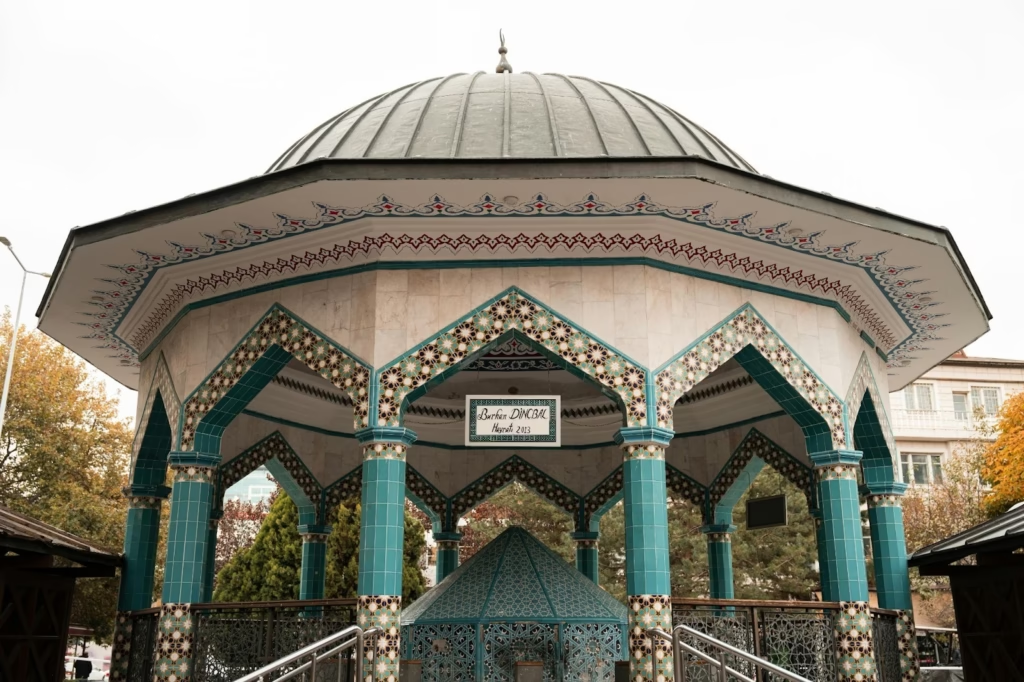
Basin quantity should be approached as a structured estimation, rather than a fixed ratio.
Step 1: Identify Peak Attendance
Start with the highest expected congregation size, not average daily attendance. Friday prayers and special gatherings should guide this number.
Step 2: Estimate Percentage Requiring Wudu Onsite
Not all attendees will use the facility. A realistic estimate must reflect local patterns. Overestimating increases cost and space pressure. Underestimating creates immediate congestion.
Step 3: Define Peak Usage Window
Determine how much time users have before prayer. A shorter window increases demand intensity and requires more basins to avoid queues.
Step 4: Factor User Turnover Per Basin
Evaluate realistically how many users a single basin can serve during peak hours based on ergonomics, water flow, speed of drainage, and user comfort.
Step 5: Add Buffer for Congestion
Peak conditions are rarely uniform. Small delays create ripple effects across the space. A buffer accounts for variation in user speed and unexpected surges.
This method provides a more accurate estimate of how many basins you’ll need. Additionally, it allows mosque committees to identify areas for design improvement.
| Quick Planning Checklist: Wudu Basin Capacity |
Design Factors That Directly Change Basin Count
Basin quantity cannot be separated from layout performance. A poorly designed system can create a lower potential for effective concurrent use of all basins.
- Layout efficiency: Inefficient layouts create dead zones with basins that are not comfortable for use in times of peak use.
- Circulation space: Limitations on circulation space create more time for a person to enter and exit, resulting in longer wait times and reduced turnover.
- Seating allocation: If seating is provided for 10-20% of people who will use an area, it will stabilize the flow of users, but the relationship between seat-to-basin spacing must be carefully factored to achieve this stability.
- Entry and exit separation: Shared access points cause crossing movement and localized congestion
- Drainage performance: A slow-draining basin keeps the surrounding area wet, delaying the next user and reducing the effective capacity.
Each of these factors influences how many basins are actually usable under pressure. Increasing basin count without resolving layout issues leads to diminishing returns.
Basin Geometry and Splash Control (Often Overlooked)
Geometry is crucial to the performance of the wudu area.
- Basin depth: Adequate depth contains water during washing. Shallow basins allow splash to escape, affecting adjacent users and surrounding floors.
- Edge profile: Sharp edges increase water rebound. Rounded or controlled edge profiles reduce outward splash and improve containment.
- Slope design: Internal slope determines how quickly water drains. Poor slope design leads to pooling, which slows turnover and increases cleaning requirements.
- Basin spacing: Insufficient spacing causes users to interfere with each other’s movement. This reduces comfort and slows the overall process.
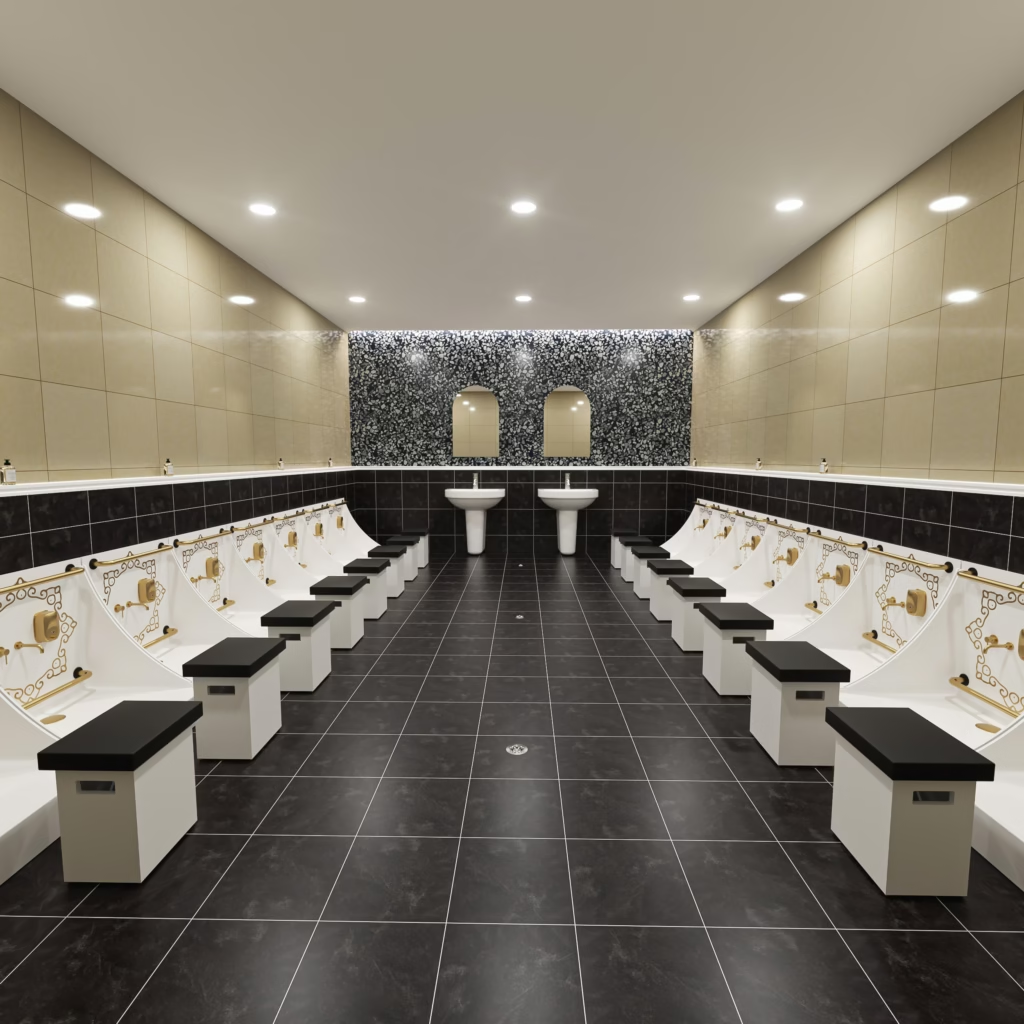
Poor geometry creates a continuous cycle of wet surfaces and reduced usability. Cleaning frequency may increase, but the underlying issue remains. This calls for replacing the basins entirely.
Basin Height and Seating Relationship
Height coordination between seating and basins is a critical but often overlooked detail.
Seat height and basin height must align to support a stable posture during use. When this relationship is incorrect, users compensate by adjusting their position, which affects both comfort and performance.
Incorrect pairing leads to:
- Unstable posture: Users shift position to reach water comfortably
- Increased splash: Misalignment causes water to fall outside the basin zone
- Slower usage: Users take longer to complete wudu due to discomfort
These effects reduce turnover and lower effective capacity. Adjustments after installation are limited, making early coordination essential.
Material Choice and Its Impact on Long-Term Capacity
The selection of materials is important for the performance of the wudu area in the long run. The focus is on the hygiene of the area and not its appearance.
- Non-porous materials: They help prevent the absorption of water and the resulting staining and odor.
- Seamless Construction: It reduces the occurrence of joints where dirt and bacteria accumulate.
- Edge durability: High-use environments place constant stress on basin edges. Durable materials maintain integrity under repeated use.
- Refinishable surfaces: Allow restoration without full replacement, extending service life.
Material performance directly affects how many basins remain usable over time. Poor material choices lead to visible wear, increased cleaning effort, and gradual loss of functional capacity.
Conclusion
Wudu basin planning is not a question of quantity alone. Capacity emerges from how the space performs under real conditions, where peak demand, user flow, and basin behavior intersect. Decisions made at this stage define whether the area operates smoothly or struggles with congestion, splash, and ongoing maintenance pressure.
A well-resolved layout supports continuous movement. Proper basin geometry contains water and maintains usability. Material selection ensures that performance does not decline over time. Each of these elements contributes directly to how many users the space can realistically serve, regardless of how many basins are installed.
Early planning decisions tend to become permanent constraints. Adjustments after installation are limited and often ineffective. A structured approach at the design stage helps avoid these limitations and ensures the space performs as intended during peak use.
Solutions such as those developed by WuduWashPro reflect this performance-focused approach, where basin design, material integrity, and layout integration are considered together.
FAQs
Does basin design affect how many basins are needed?
Yes. Geometry influences turnover speed. Better-performing basins can serve more users, reducing the total number required.
What happens if a mosque installs too few basins?
Queues form quickly during peak periods. Circulation areas become blocked, and users may not complete wudu in time for prayer.
How much space should be allocated per basin?
Adequate spacing must allow comfortable movement and prevent interference between users. Tight spacing reduces usable capacity even if more basins are installed.
Can existing wudu areas be upgraded without rebuilding?
Minor improvements are possible, but fundamental issues related to layout, geometry, or drainage often require reconstruction to resolve effectively.