Many mosque projects run into the same issue during installation. Basins arrive on site and do not align with the planned layout. Drainage points sit slightly off, forcing on-site adjustments. Minor compromises made during fitting begin to affect how the space performs once it is in use.
These gaps are not always visible during procurement. They emerge when standard products are introduced into a layout that requires coordination, and you’re stuck with a system that technically fits but does not function as intended. Water does not flow efficiently, splash extends beyond the basin area, and cleaning effort increases without improving conditions. Higher maintenance becomes a routine outcome.
These issues are often linked to how the system was sourced in the first place. There are two types of sourcing: Factory Direct and Local Supplier. Each has its own process for obtaining goods. Choosing between these options can be based on the level of control needed in terms of design, material, and performance over time.
Decisions made at the sourcing stage influence installation quality, maintenance demands, and lifecycle cost. A procurement approach that appears convenient early on can introduce constraints that remain throughout the life of the facility.
Why Procurement Strategy Affects Wudu Area Performance
Sourcing decisions are often treated as administrative. In practice, they shape how the final system performs.
The wudu area is used by worshippers throughout the day to clean their feet before entering the praying area. Any inconsistency in the wudu design can create performance gaps that will be noticeable as soon as the wudu area is installed.
If you purchase your materials from factory-direct wudu basin suppliers, you will have more control over the specifications of the basin depth, slope, edge profile, and material composition. Conversely, when purchasing products from local suppliers, most of the products are standard and may not match the requirements outlined in your project specifications.
In short,
- Basins not aligned with drainage = persistent wet floors
- Mixed wudu basin suppliers = installation mismatch
- Standard products = splash and congestion issues
Factory-Direct vs Local Wudu Basin Suppliers: A Quick Glance
| Factor | Factory-Direct | Local Suppliers | Best Fit |
| Design Flexibility | Custom fabrication aligned with layout | Standard product catalog | Factory-direct |
| Material Control | Defined at the manufacturing stage | Dependent on available stock | Factory-direct |
| Quality Consistency | Controlled production process | Varies across batches | Factory-direct |
| Lead Time | Longer but predictable | Shorter but dependent on availability | Local suppliers |
| Technical Coordination | Directly with the manufacturer | Limited to supplier knowledge | Factory-direct |
| Lifecycle Performance | Optimized for use conditions | Not always aligned with demand | Factory-direct |
Factory-direct sourcing focuses on performance alignment. Local sourcing focuses on availability and speed.
Why Factory-Direct Sorucing Is Most Convenient
Factory-direct procurement introduces a different level of involvement during the planning stage. Mosque committees engage earlier with technical requirements, which leads to more precise outcomes.
Specification Control
Dimensions, basin geometry, and material properties are defined before production begins. This allows alignment with actual layout conditions and expected usage patterns. Adjustments at this stage are precise and do not depend on available stock or predefined product sizes.
Integrated Fabrication
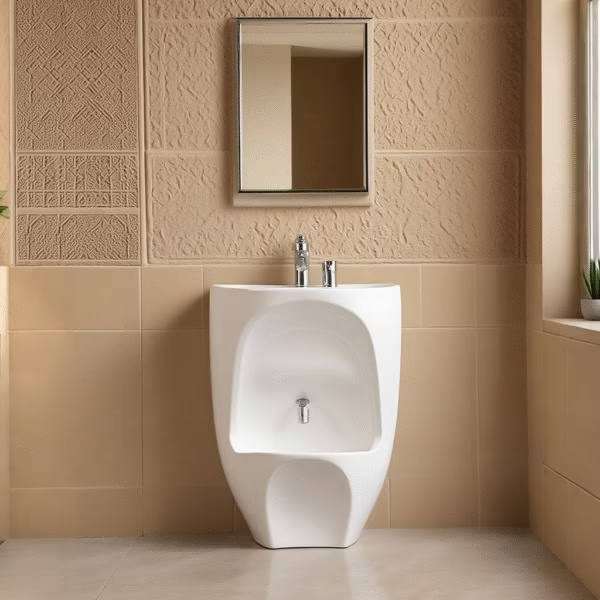
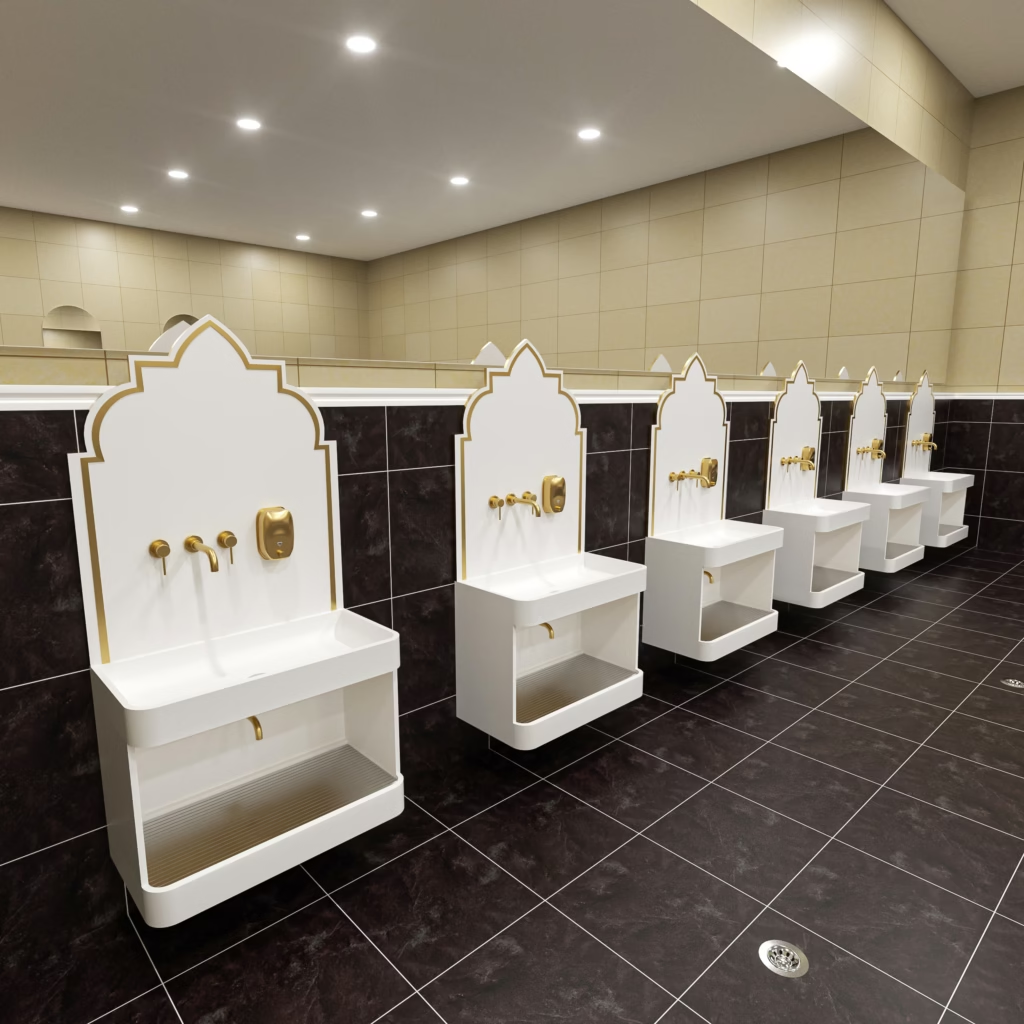
Components are produced as part of a coordinated system rather than assembled from separate products. This improves consistency across all units and reduces variability during installation. Alignment between basins, drainage, and surrounding surfaces is resolved during fabrication rather than on site.
Performance Alignment
Design decisions are evaluated against real usage conditions before production. Basin depth, slope, and spacing can be configured to support turnover and reduce splash. This leads to systems that perform as intended during peak periods rather than requiring adaptation after installation.
In high-traffic mosques, this level of coordination supports consistent operation. The system is configured for actual demand, not adjusted around product limitations.
Factory-direct sourcing is necessary for:
- High-traffic mosques
- Complex layout mosque designs
- Long lifecycle requirement for wudus
What Happens with Local Suppliers
Local wudu basin suppliers provide convenience and speed. Limitations become apparent when project requirements extend beyond standard configurations.
Product-Driven Selection
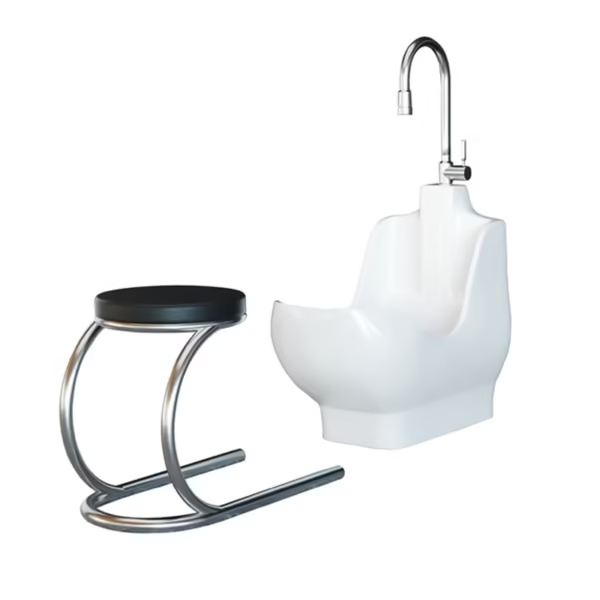
Available inventory often defines design decisions. Basin dimensions, geometry, and material options are selected based on what is in stock rather than what the layout requires. This reverses the intended design process, where products should follow performance needs.
Limited Customization
Adjustments are typically restricted to minor modifications. Core parameters such as depth, slope, and edge profile remain fixed. This limits the ability to respond to specific site conditions or user behavior patterns.
Installation Variability
If there are multiple vendors supplying the same components, the final products may not align properly. There can be differences in material quality and finishes during installation. That results in on-site adjustments, often leading to compromised alignment.
Performance Gaps in Operation
Standard products may not address requirements such as splash control, drainage efficiency, or user flow. These gaps become visible during peak usage, where systems are tested under pressure.
A common issue seen after installation involves setups that meet procurement expectations but fall short in operation. Increased maintenance effort does not resolve these limitations, as they are rooted in initial sourcing decisions.
Cost Considerations When Selecting a Supplier
Cost evaluation should extend beyond initial pricing. The selection of a wudu basin supplier is a significant factor in the future amount of maintenance required, the frequency of replacement, as well as how long the components will last.
- Initial cost vs lifecycle cost: Lower upfront pricing often leads to higher long-term expenditure due to maintenance and replacement. Higher initial investment can reduce total cost over time through durability and stability
- Maintenance load: Material quality and fabrication determine cleaning frequency and effort. Poor surfaces and multiple joints increase ongoing operational cost without improving results
- Repairability: Systems that allow repair and refinishing reduce long-term expense. Non-repairable components shift cost toward full replacement
- Consistency across installation: Variations in product quality create uneven wear and staggered replacement cycles, increasing maintenance complexity and cost
- Hidden costs: Misalignment, poor fit, and inconsistent components introduce additional labor during installation and ongoing adjustments during use
- Post-installation limitations: Design and sourcing constraints restrict the ability to correct issues later. Rework and temporary fixes increase cost without resolving root problems
- Downtime and disruptions: Replacement cycles and repair work are indirect cost factors.
- Budget alignment with usage: In a highly trafficked mosque, the wudu area materials must withstand constant use. The increased cost of lower-priced products could be a factor of their inability to handle such high usage.
A balanced approach considers both immediate constraints and long-term requirements of a commercial wudu basin.
Lead Time and Project Coordination
Procurement timelines influence project scheduling.
Factory-direct sourcing:
- Requires early planning
- Lead times are defined and consistent
- Coordination begins at design stage
Local sourcing:
- Faster procurement
- Dependent on stock availability
- Coordination occurs during installation
Shorter lead times may appear advantageous. Delays can happen if products are not well aligned with site conditions. Changes made to products at this stage can extend the project timeline well beyond initial projections.
Planning ahead can prevent issues of uncertainty, which can create coordination issues in the project timeline.
Design Control and Its Impact on Usability
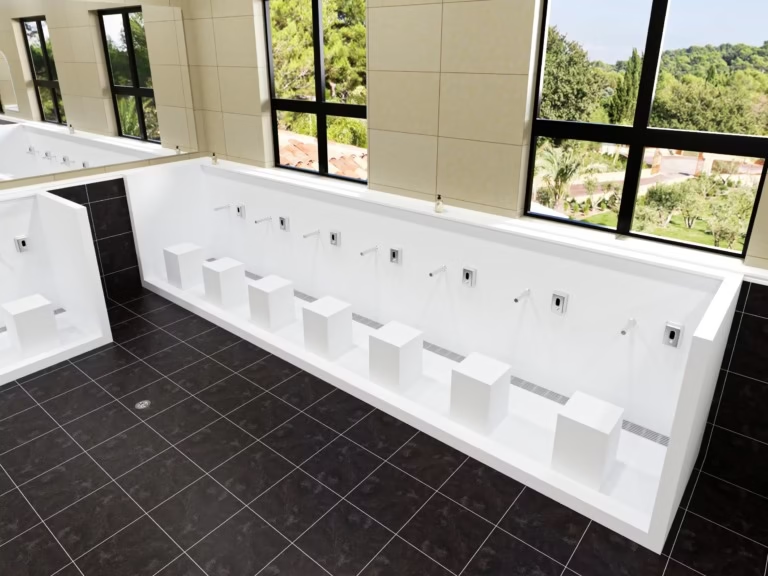
Design control determines how well the system supports user behavior.
Factory-direct sourcing allows alignment between:
- Basin spacing and circulation
- Geometry and splash containment
- Drainage and turnover efficiency
Local sourcing limits this alignment. Design must adapt to available products, which may not support optimal performance.
In practice, this affects how many users can be served within a given time. A system that can accommodate fewer users but is well designed could outperform a system that can accommodate more users but causes congestion and water splashes.
Material Consistency and Quality Assurance
Material performance influences durability and hygiene.
Factory-direct production ensures consistent material properties across all components. Quality control processes maintain uniform standards.
Local suppliers obtain their products from various manufacturers. Inconsistent quality can result in inconsistent performance within the system.
The effects of these differences can be seen within a short period, especially in high-usage areas. Some products tend to deteriorate faster than others.
Common Failure Scenarios Linked to Procurement Decisions
Several issues can be traced directly to sourcing choices:
- Mismatched components: Different products do not align during installation
- Inadequate geometry: Standard basins fail to control splash effectively
- Drainage inefficiency: Poor alignment between basin design and drainage system
- Inconsistent quality: Variations in material performance across units
These conditions persist once the system is installed. Operational adjustments cannot resolve them. Replacement or redesign becomes necessary.
When Local Suppliers May Still Be Suitable
Local sourcing remains viable under certain conditions:
- Small mosques with low usage intensity
- Projects with tight timelines
- Temporary or phased installations
These scenarios involve lower demand and reduced performance requirements. Limitations remain, but the impact is less significant.
High-traffic mosques require a different approach. Performance requirements justify greater control during planning and production.
Final Decision Guide: Factory-Direct vs Local Suppliers
Decision-making should prioritize long-term performance rather than short-term convenience. This quick guide can help:
- High-traffic mosque → Factory-direct preferred
- Complex layout → Factory-direct required
- Standard layout, low usage → Local supplier acceptable
- Tight deadline → Local supplier may be practical
Conclusion
Factory-direct and local supplier approaches reflect different priorities. One focuses on performance alignment and long-term reliability. The other emphasizes speed and accessibility.
Wudu areas demand consistent performance under daily use and peak conditions. Procurement decisions influence how well the system meets these demands over time. Limitations introduced at this stage become part of the installation and affect its operation throughout its lifecycle.
For high-traffic mosques, factory-direct sourcing provides a more reliable outcome. It aligns design, material, and fabrication early, reducing mismatch and long-term maintenance issues. Local sourcing may suit smaller or time-sensitive projects, but comes with accepted constraints.
Engaging with sourcing strategies that integrate design, material selection, and fabrication improves outcomes. Approaches aligned with this level of coordination, such as those reflected in WuduWashPro systems, support more reliable performance without requiring corrective measures after installation.
FAQs
Is factory-direct sourcing more expensive?
Initial costs are usually higher, but long-term costs may be lower due to reduced maintenance and longer lifespan.
Do local suppliers offer customization?
Customization is usually limited to minor adjustments. Core design elements remain fixed.
Which option is better for large mosques?
Factory-direct sourcing provides better control over design and performance, making it more suitable for high-traffic environments.
Can local supplier installations be upgraded later?
Minor upgrades are possible, but fundamental design limitations often require replacement.
How does sourcing affect maintenance?
Material quality, joint design, and fabrication consistency all influence how frequently maintenance is required.