Introduction
Modern mosque architecture in the Middle East and beyond demands perfection — not only in aesthetics and structure but also in material precision. The wudu (ablution) areas, reception counters, and interior decorative components require seamless finishes that reflect both spiritual purity and architectural excellence.
To achieve this standard, designers and contractors increasingly rely on precision fabrication of solid surface materials, combining digital design, CNC machining, and expert craftsmanship.
Solid surface is more than a beautiful finish; it is a technically engineered material that can be molded, shaped, and joined with unmatched accuracy — ideal for complex, large-scale mosque projects where durability, hygiene, and uniformity are essential.
The Importance of Precision in Mosque Construction
In large mosques, thousands of worshippers use wudu areas daily. A poorly fabricated surface can lead to uneven joints, water leaks, or inconsistent alignment — all of which affect the facility’s function and appearance.
Precision fabrication ensures:
- Seamless joints for better hygiene.
- Perfect edge alignment in long, continuous counters.
- Consistency across hundreds of custom-made basins or wall panels.
- Faster installation with minimal on-site adjustment.
Thus, precision is not merely aesthetic — it’s integral to durability, efficiency, and spiritual dignity in high-profile mosque projects.
Digital Design and CNC Machining
1. CAD/CAM Design Workflow
Fabrication begins with digital modeling using CAD (Computer-Aided Design) software. Architects submit 3D mosque layouts, and fabricators translate these into CAM (Computer-Aided Manufacturing) data for precision cutting and shaping.
Benefits include:
- Dimensional accuracy within ±0.2 mm.
- Perfect repetition for mass-produced units.
- Easy modification for different prayer hall sections.
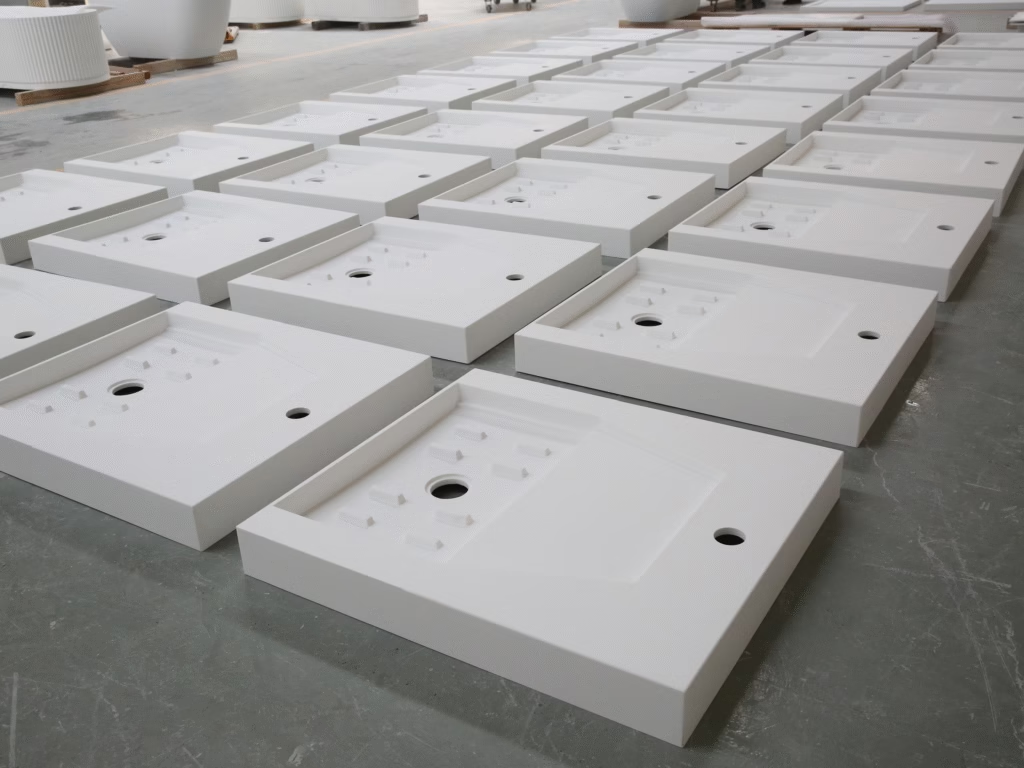
This approach ensures every wudu basin, bench, or countertop fits seamlessly into the architectural blueprint.
2. CNC Machining and Laser Calibration
High-end factories use 5-axis CNC routers and laser alignment systems to mill, cut, and contour solid surface sheets with exact tolerances.
Applications include:
- Curved wudu basins for group ablution zones.
- Integrated seating platforms with slope-controlled drainage.
- Decorative wall panels featuring geometric or calligraphic motifs.
This combination of digital accuracy and controlled material removal guarantees precision even across large installation runs.
Thermoforming for Custom Mosque Geometry
Islamic architecture often features fluid curves, domes, and flowing geometries that symbolize unity and divinity. Solid surface materials can be thermoformed — heated and shaped into complex forms while maintaining seamless continuity.
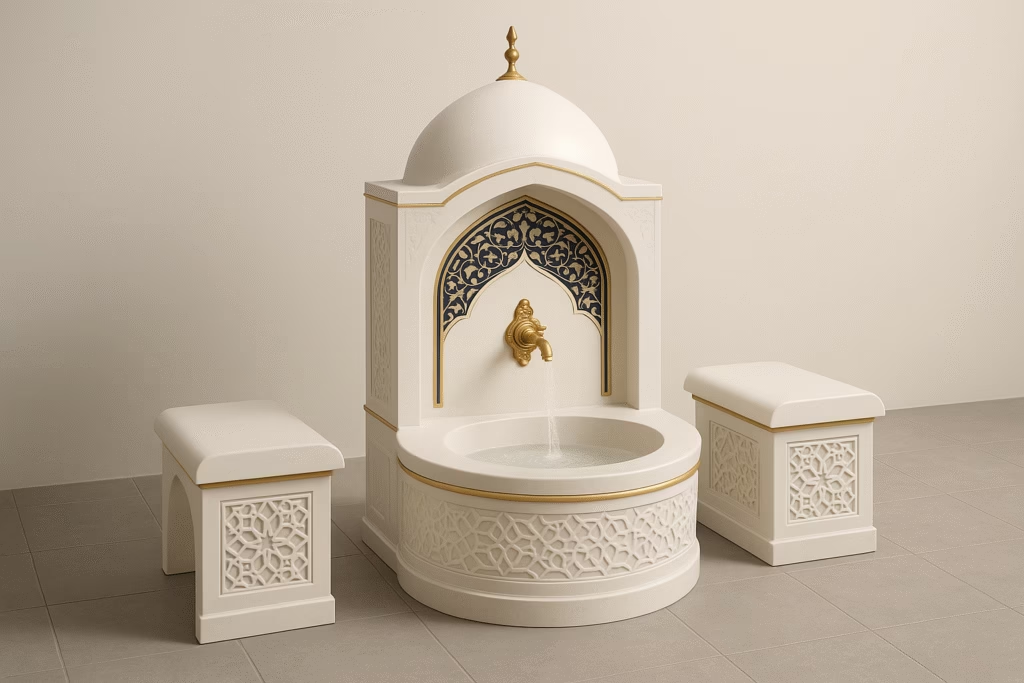
Advantages in mosque applications:
- Rounded corners prevent water retention and bacterial buildup.
- Continuous forms reflect the smooth, organic lines of Islamic design.
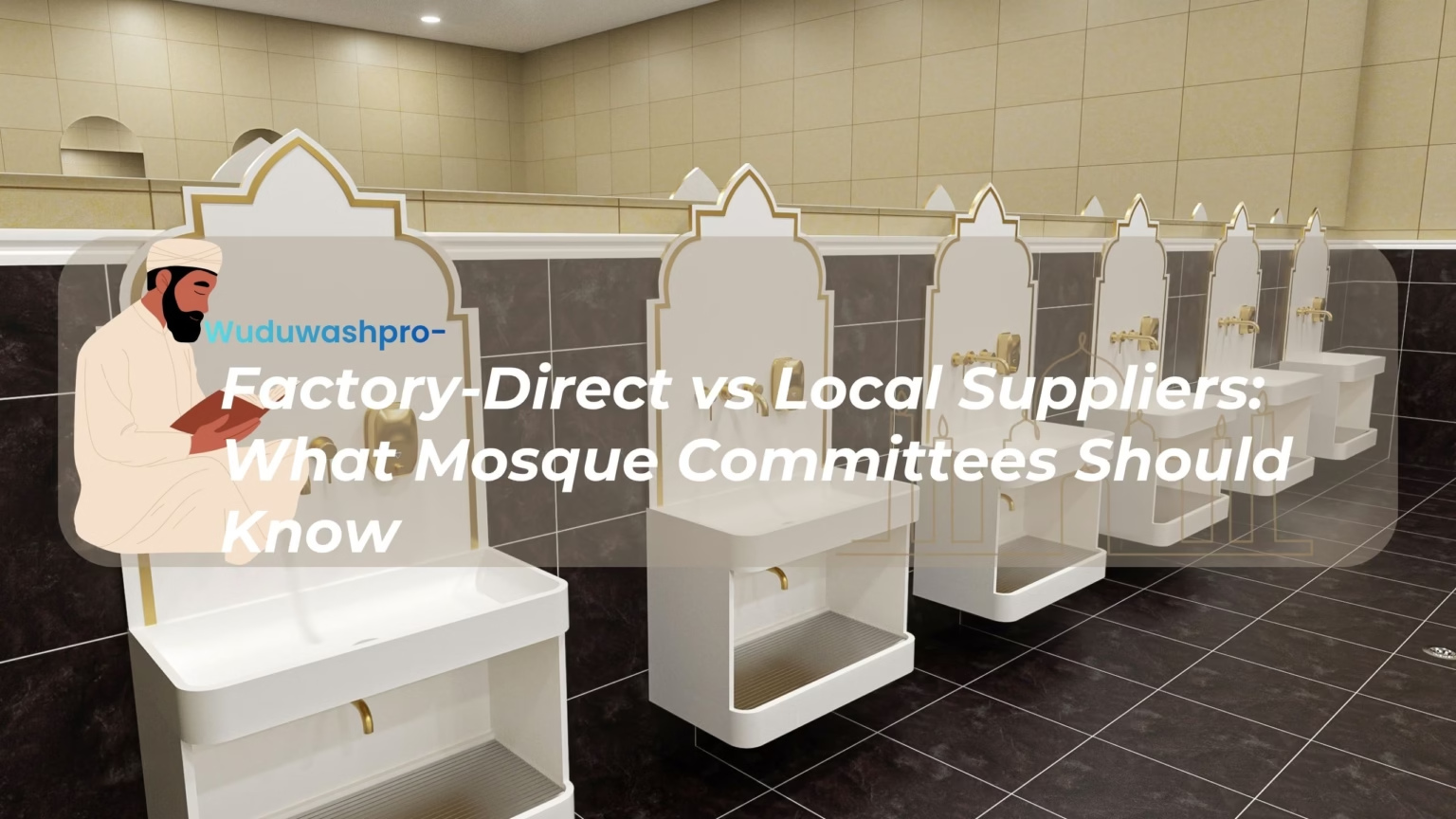
- Ideal for dual-level wudu stations, semi-circular benches, and curved walls in luxury mosques.
👉 Read more: Exploring Dual-Level Wudu Basins: Comfort for Hands and Feet
Seamless Jointing and Finishing Techniques
The hallmark of expert solid surface fabrication is invisible joints. Using proprietary adhesives and micro-sanding techniques, technicians join multiple pieces into one continuous surface.
Finishing process includes:
- Adhesive bonding with color-matched resins.
- Edge profiling to achieve smooth transitions.
- Polishing for either matte or high-gloss finish.
- UV stability coating to ensure longevity under natural light.
In large mosque projects, this precision enables the production of 10–20 meter continuous counters or multi-station wudu basins without visible seams — creating the appearance of a single sculpted piece.
Quality Control and On-Site Coordination
Factory Inspection
Each piece is inspected before shipment for:
- Dimensional tolerance
- Surface uniformity
- Adhesion strength and edge sealing
Digital QR-coded tracking ensures that each fabricated section can be matched to its architectural location.
On-Site Integration
During installation, 3D laser levels confirm perfect alignment between fabricated components and structural elements such as drainage systems or wall finishes.
This reduces rework and guarantees harmony between design intent and execution.
Case Application: Large Mosque Projects in the Middle East
WUDUWASHPRO and other advanced fabricators have delivered custom solid surface ablution systems for major mosque projects in Saudi Arabia, UAE, and Qatar.
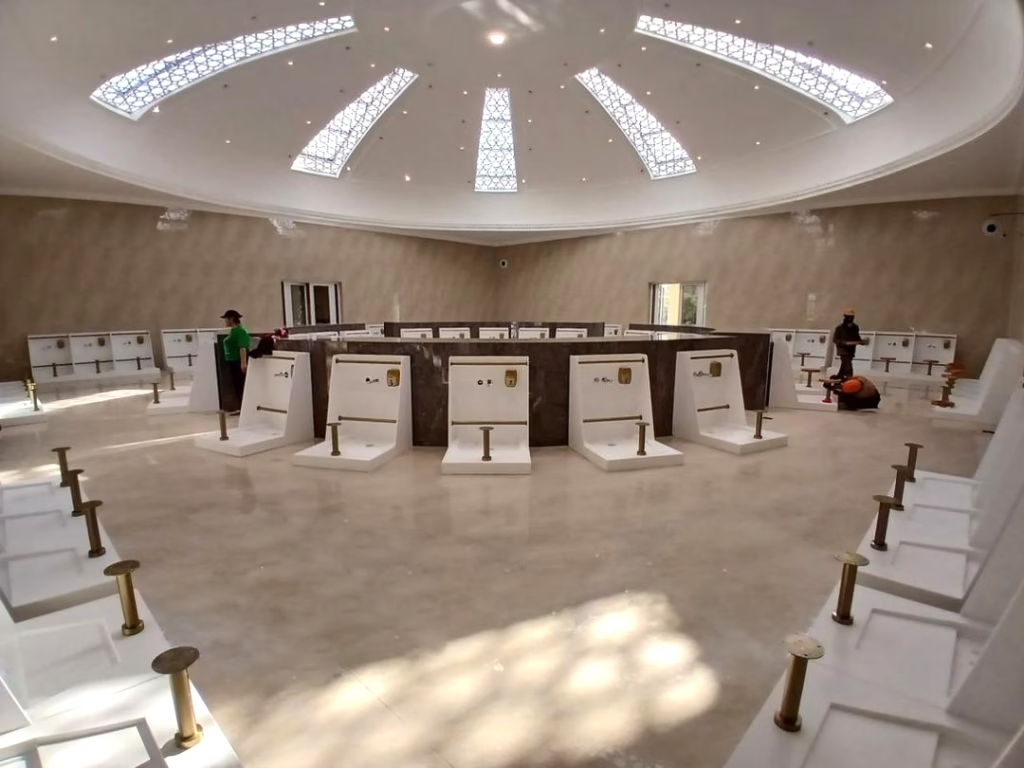
Key achievements include:
- Continuous basin systems over 15 meters in length.
- Integrated drainage and seating structures for high-traffic wudu areas.
- Matching solid surface reception counters, shelving, and wall cladding.
These projects demonstrate how precision fabrication enhances the sanctity, beauty, and performance of modern Islamic architecture.
👉 Related article: Custom Wudu Basins in Mosque Projects: Solid Surface Advantages for the Middle East
Sustainability and Efficiency in Fabrication
Modern fabrication facilities utilize automated material nesting software to minimize waste and maximize sheet usage.
Offcuts are reused for smaller accessories such as soap shelves or drain covers, ensuring nearly zero material loss.
Additionally, dust collection systems and water-based polishing reduce environmental impact during production — supporting the Middle East’s growing focus on sustainable construction.
Conclusion
Precision fabrication of solid surface materials has transformed how large mosque projects are executed — bridging spiritual symbolism with technological mastery.
Through digital design, CNC machining, and seamless assembly, every detail of the wudu basin or ablution hall can now achieve perfection that mirrors the purity of worship itself.
For architects and developers, this precision translates into long-term durability, effortless maintenance, and an unmistakable sense of excellence — the essence of modern Islamic design.
👉 Learn more about precision-crafted wudu solutions for mosque projects at WuduWashPro.com.
FAQ
1. Why is precision fabrication important in mosque projects?
Because it ensures flawless alignment, durability, and hygiene across large installations like wudu basins, where water flow and surface continuity are essential.
2. How does CNC machining improve quality?
CNC technology enables micron-level accuracy in shaping and cutting solid surface materials, guaranteeing perfect fit and visual consistency.
3. What advantages does solid surface offer over marble?
It allows seamless jointing, custom shaping, and higher hygiene performance — ideal for wet, high-traffic wudu environments.
4. Can solid surface handle the Middle East’s harsh climate?
Yes. It is UV-stable, heat-resistant, and non-porous, maintaining structural and color integrity over decades.
5. How do fabricators ensure consistency in large mosque projects?
Through CAD modeling, laser calibration, and strict factory quality checks that synchronize every component with the project’s master layout.