Solid surface wudu basins are more appropriate than ceramic wudu basins in mosques based on daily use factors such as hygiene, durability, and maintenance considerations. While ceramic wudu basins might be visually appealing at the time of installation, the continual impact of prolonged use and water exposure may lead to deteriorating performance over time.
The choice of material in wudu basin selection should be based on how it will be used, not how it looks initially. In high-traffic mosques, the materials must be capable of delivering good performance even upon heavy usage. It should be able to resist deterioration and still be easy to clean. The selection of material will ultimately decide the number of basins that will be accessible for use.
The wrong choice can be very hard to correct. Replacement involves disruption, cost, and structural limitations. A clear understanding of how solid surface basin vs ceramic options behave in real conditions helps avoid long-term operational issues.
Why Material Choice Becomes Critical in High-Traffic Mosques
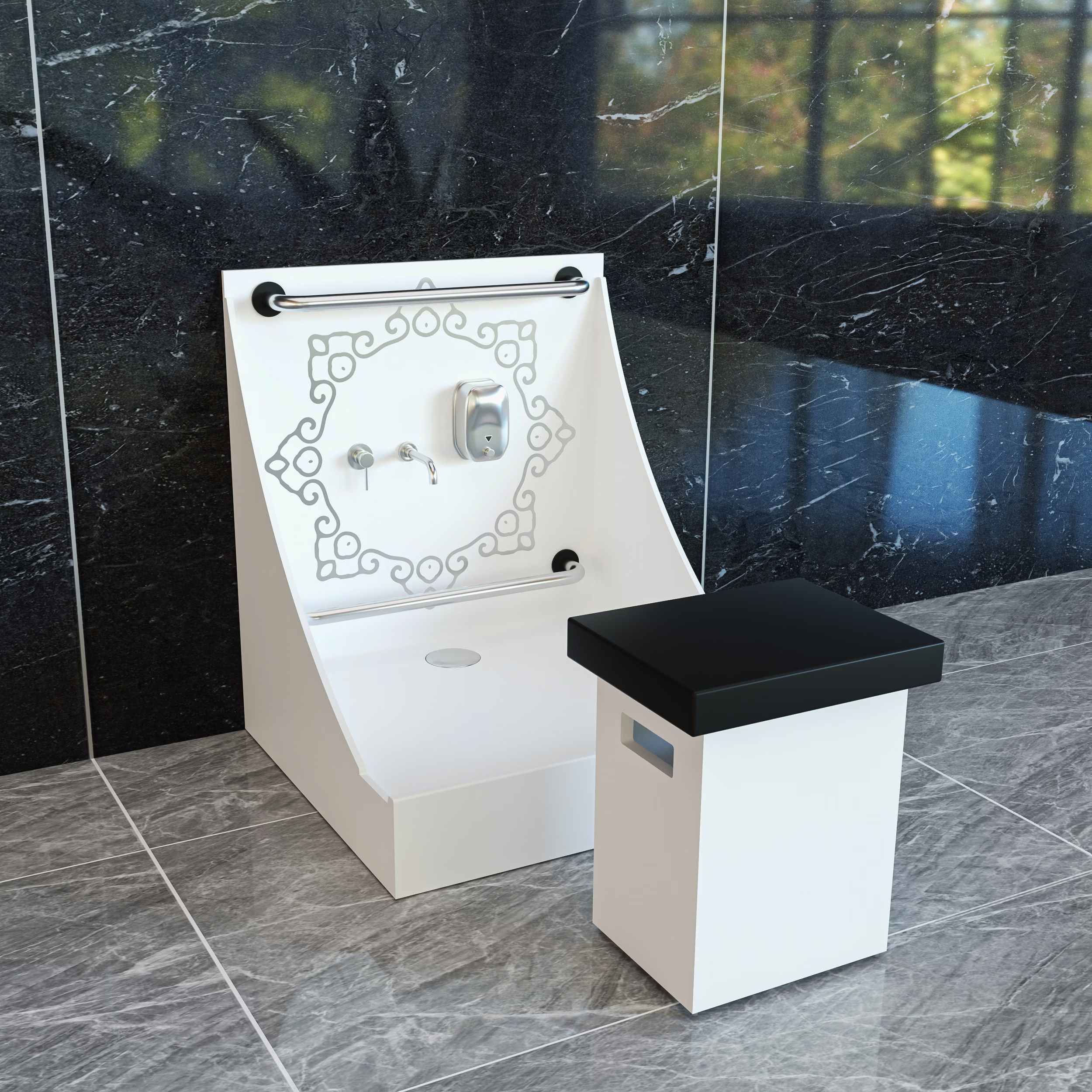
Wudu areas operate under conditions that expose material weaknesses quickly. Continuous use of water, constant cleaning, and high peak demands place high demands on fixtures that may not be met by standard fixtures.
Mosques that have high traffic volumes have repeating cycles of use every day. Each cycle involves the addition of water, frictional forces, and cleaning agents to the basin surfaces. Over time, small defects expand into visible performance issues.
Three factors intensify material stress:
- Repeated daily usage: The basins have to be used continuously without much idle time.
- Constant water exposure: The surfaces have to contend with being wet for long periods.
- Peak-time pressure: High user density increases contact and impact
In practice, this leads to:
- Surface wear becoming visible within a short period
- Cleaning requirements increasing without improving results
- Minor chips or cracks expanding into structural damage
Material selection must account for these conditions. A surface that performs well in low-use environments may fail under continuous demand. Once degradation begins, it accelerates. Cleaning cannot reverse it, and repairs are often limited.
Solid Surface vs Ceramic Wudu Basins: Core Differences
Material comparison should focus on how each option behaves over time, not just initial appearance.
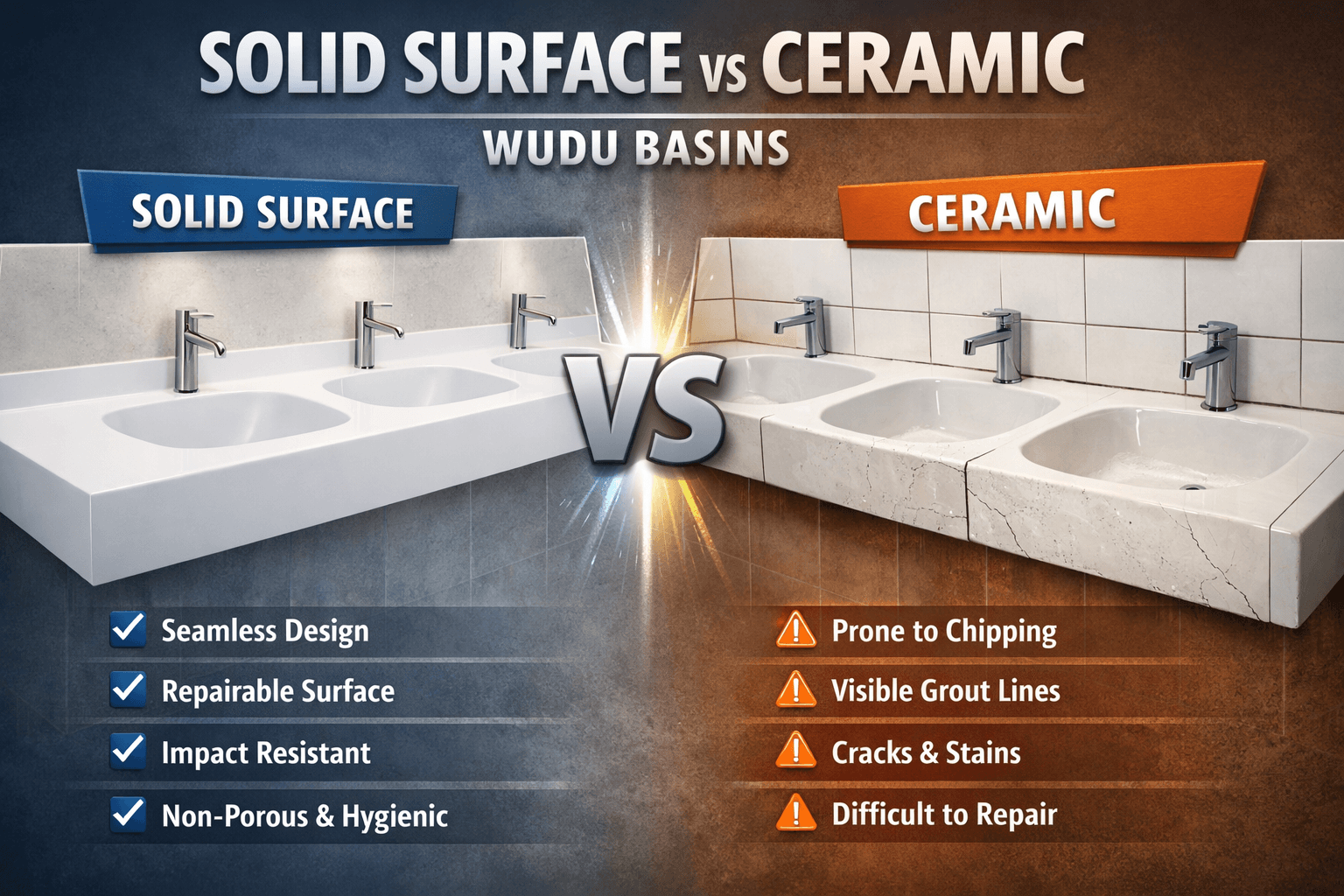
| Factor | Solid Surface | Ceramic |
| Surface Structure | Homogeneous, non-porous throughout | Glazed coating over ceramic base |
| Joints | Seamless integration possible | Multiple joints and grout lines |
| Repairability | Repairable and refinishable | Not repairable once damaged |
| Impact Resistance | Absorbs impact better | Brittle, prone to chipping |
| Long-term Condition | Maintains consistency | Surface degrades with use |
Ceramic relies on a surface glaze for protection. Once this layer is compromised, the underlying material becomes exposed. Solid surface maintains consistent properties throughout its thickness, allowing restoration without full replacement.
This distinction becomes critical in high-traffic environments where surface damage is not occasional but expected.
Material Performance Comparison in High-Traffic Wudu Areas
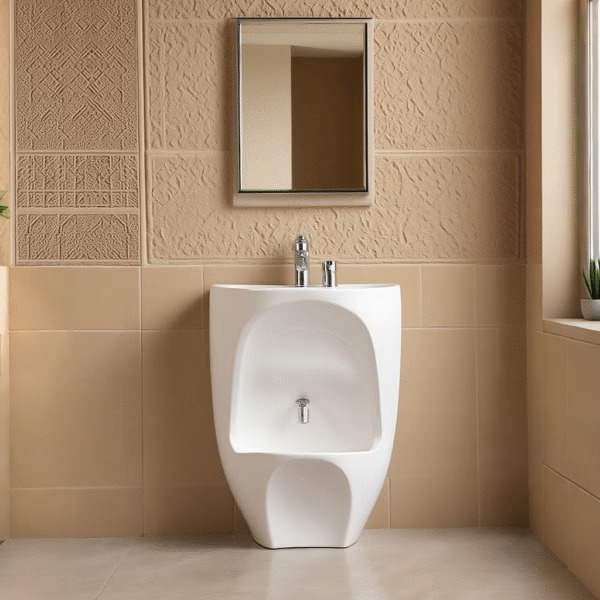
Material selection influences multiple performance layers at once. Hygiene, durability, repairability, joint performance, and basin shape are closely related when it comes to long-term usability.
Hygiene Performance
Hygiene in a wudu area depends on how well the surfaces can resist the onset of dirt and how easily they can be cleaned. Material behavior directly affects both outcomes.
The material’s consistent non-porous structure prevents the absorption of water, soap residue, and contaminants. The absence of joints, where dirt and bacteria accumulate, is another advantage. Even better, the consistent structure of the material does not change even after long periods of use, ensuring the cleaning process remains effective.
The glazed surface of the ceramic material serves as protection. However, with long use, micro-abrasions develop on the glazed surface, compromising its ability to protect against contaminants. Joints and grout lines create areas where water and residue accumulate. The frequency of cleaning increases, yet the appearance does not show significant improvements.
Durability Under Daily Use
Durability should be evaluated based on the material’s response to repetitive use rather than its initial strength.
Solid surface material maintains its integrity even when subjected to continuous contact. The material does not show signs of damage even after minor impacts. The edges are firm, even in areas where the material is subjected to concentrated use.
The same cannot be said of ceramic material, which fails when subjected to repetitive impacts. The impacts eventually lead to chipping, mostly around the edges of the material. Stress concentration in the drain area may even cause cracks in the material. Once damage begins, it progresses with continued use.
High-traffic mosques expose basin edges to constant contact. Edges are the first part of a ceramic material to deteriorate. Once the edges have started to chip, the deterioration process accelerates. This progression cannot be reversed, and replacement becomes necessary.
Repairability and Lifecycle Cost
The lifecycle cost of a material is based on its performance and not on the initial price.
The advantage of using a solid surface is that if there is damage on the surface, it can be repaired without having to remove or replace the basin.
This is not the case with ceramic. Once there is damage, it is permanent, and there is no way of repairing it. Replacement is the only viable solution.
This difference creates a cost shift over time. So, ceramic installations may seem affordable at the time, but the cost of repairing it makes it expensive. Solid surface lasts longer, proving its higher initial cost.
Impact on Basin Geometry and Splash Control
Material flexibility influences how effectively basin geometry can be optimized for performance.
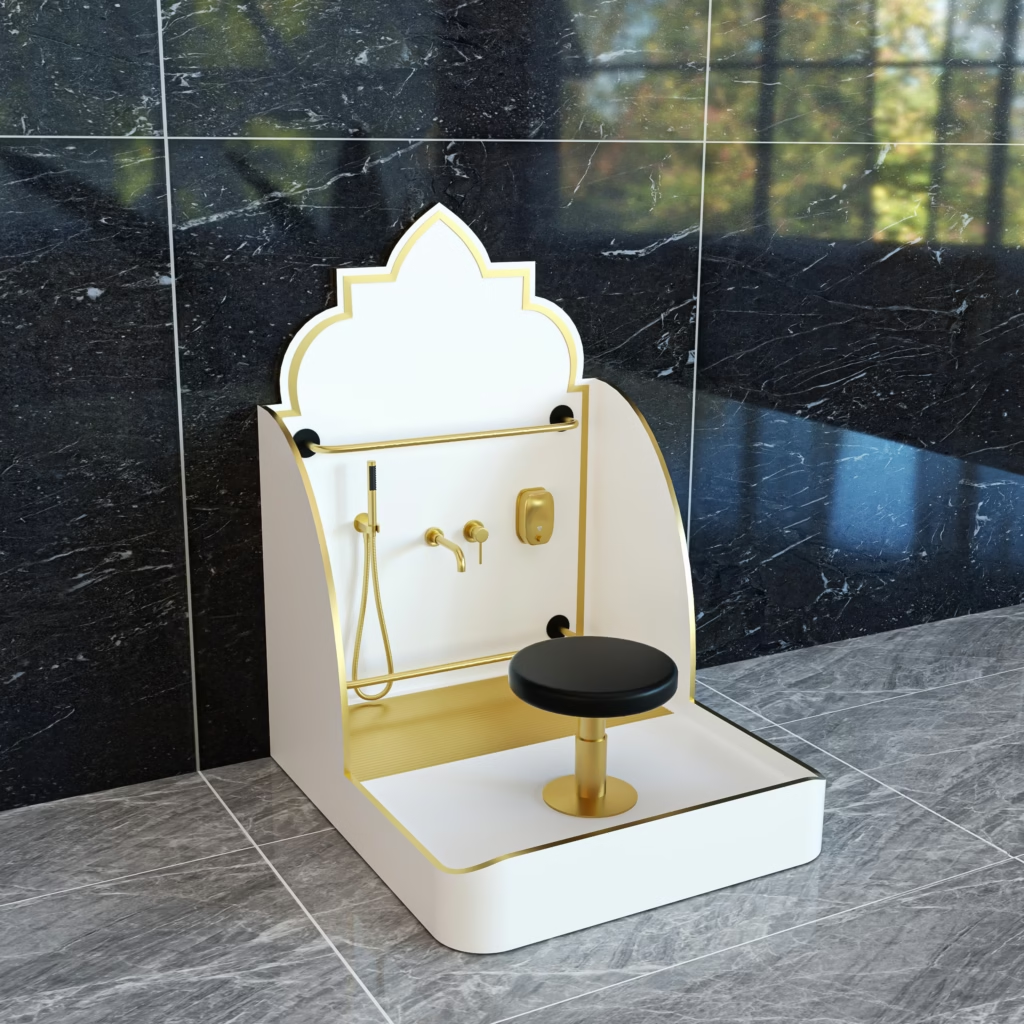
Solid surfaces enable integration to include depth, slope, and smooth transitions. These factors enhance water flow and minimize splash outside the basin area. Geometry can be customized to meet different use habits. This is beneficial for user experience and maintenance success.
Ceramic is typically limited to standard shapes and predefined forms. Adjustments to depth, edge profile, or slope are restricted. This limitation affects how well water is contained during use.
Poor geometry leads to water escaping the basin zone, resulting in wet floors and increased cleaning requirements. A material that allows precise control over geometry supports better containment and more efficient operation.
Common Failure Scenarios Seen in Ceramic Installations
Several recurring issues appear in ceramic-based wudu areas:
- Edge chipping: High-use areas show visible damage within a short period
- Cracking near drainage points: Stress concentrations lead to structural failure
- Persistent staining: Glaze wear exposes underlying material
- Grout deterioration: Joints become discolored and difficult to clean
These issues develop gradually but become permanent. Cleaning will not solve this issue. Surface treatments provide only temporary improvement. This cannot be corrected after installation without replacement.
When Ceramic May Still Be Used
Ceramic basins are not unsuitable in all cases. Certain conditions allow their use:
- Low-traffic mosques with limited daily usage
- Temporary installations where long-term durability is not required
- Projects with strict budget constraints and short lifecycle expectations
These scenarios involve lower stress on materials. Performance limitations remain, but impact is reduced due to lower usage intensity.
High-traffic environments require a different approach. Material selection must reflect operational demands rather than initial cost.
Which Is the Best Material for Wudu Basin?
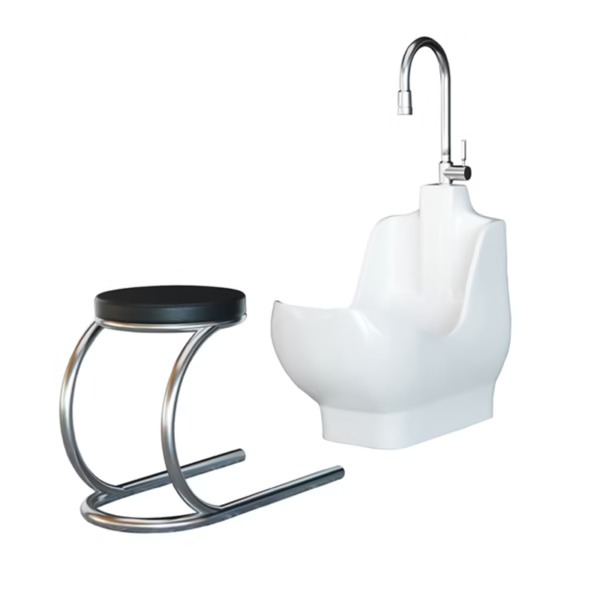
The best material for a wudu basin selection depends on usage intensity and performance expectations.
- High-traffic mosques: Solid surface provides consistent hygiene, durability, and repairability
- Moderate traffic: Decision depends on budget and maintenance strategy
- Low traffic: Ceramic may be acceptable with awareness of limitations
Material should be evaluated based on how it performs over time, not how it appears at installation.
For more wudu material choosing, check this article:Best materials for hygienic and easy-to-clean wudu basins
Conclusion
Material choice in a wudu area defines long-term performance more than any other single factor. High-traffic mosques place continuous stress on basin surfaces, joints, and edges. A material that cannot maintain integrity under these conditions creates ongoing maintenance pressure and a gradual loss of usability.
Solid surfaces are more likely to meet these needs. Surface consistency, lack of joints, and repairability are essential for long-term success. Ceramic surfaces, although popular, have weaknesses that become apparent when subjected to use. These weaknesses are not resolvable without replacement.
Systems designed from a material choice perspective, such as those from WuduWashPro, are effective in meeting long-term needs.
FAQs
Which material is best for wudu basin in the mosque in the long run?
Solid surface materials have a longer lifespan as they are more resistant to wear and can be repaired and refinished.
Are solid surface basins more difficult to keep?
Because the surface is non-porous and seamless, reducing buildup and making cleaning very easy, maintenance is, in fact, easier.
Why do ceramic basins break in very frequently used places?
Ceramic is a fragile material, and it cracks when it is continuously subjected to impacts and other stresses. The cracks often occur close to the edges and the draining points of the ceramic basins.
Is it possible to repair a wudu basin that has been damaged?
If you have solid surface basins, then they are reparable. Ceramic basins, however, mostly have to be replaced entirely when damaged.
Which material is best for the hygiene of wudu basins?
Non-porous, seamless materials such as solid surface offer great hygienic capabilities as compared to materials with joints and porous characteristics.