Wash areas in mosques are commonly referred to as wudu areas or ablution areas. A wudu area is important in a mosque because it enables the ritual purification required before every prayer while simultaneously managing water use, hygiene control, and congregation movement. Without a properly functioning wash area, the process of preparing for prayer would interfere with the cleanliness, safety, and order of the mosque itself.
The importance of a wudu area is not merely based on religious requirements. It is considered a performance space that must incorporate water management, crowd movement control, and protective considerations for the spaces adjacent to it.
Religious Function: The Most Important Requirement
Wudu is not optional within Islamic practice. Prayer is mandatory, and one must be in a state of ritual purity, which is done through ablution. Ablution is done before each of the five daily prayers and throughout the prayers of a congregation. This repetition creates predictable operational demand within the mosque.
The ablution area is a non-routine area in the house of worship. Whenever the congregational prayer time is about to start, worshippers come to the room for ablution in a wave-like manner. The availability of water, the number of basins, and the efficiency of the drainage system all determine if the preparation for the prayer is done smoothly or if it gets delayed.
Religious obligation produces measurable spatial consequences:
- Repetition: Multiple daily cycles require durable, resilient infrastructure.
- Scale: Congregation size multiplies simultaneous usage demand.
- Sequence: Purification must occur before entry into the prayer hall, influencing spatial order.
The wudu area exists because ritual purification is required. Its importance grows in proportion to congregation size and prayer frequency. Without a properly functioning wash area, the prayer sequence itself is disrupted.
Hygiene Control To Protect the Prayer Environment
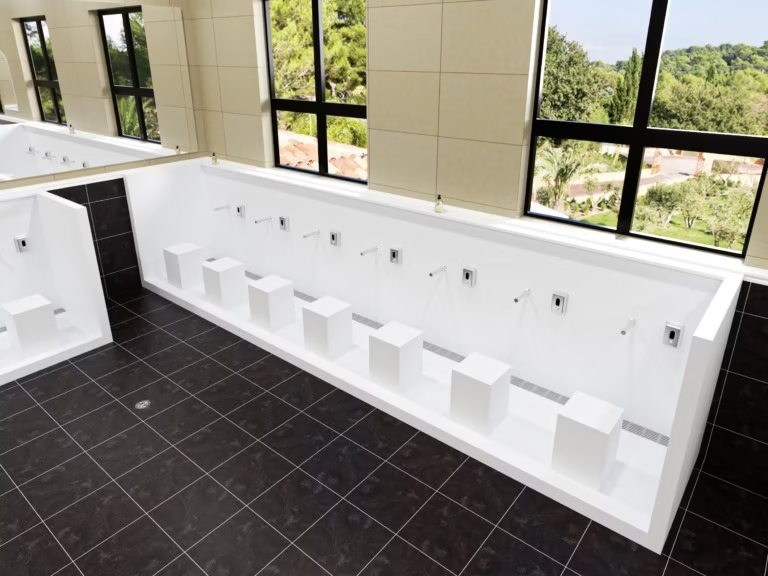
If the wudu areas are not cleaned or become dirty, the conditions in the prayer halls will deteriorate. Space planning and material selection play a major role in effective hygiene control. Cleaning alone cannot be relied upon.
Containment of Water
Water must remain confined within designated wet zones. When splash spreads into circulation paths or transitions toward the prayer hall, hygiene control weakens.
Containment relies on:
- Proper basin geometry to limit outward splash
- Adequate spacing to prevent water overlap between users
- Clear separation between wet and dry circulation
Surface Cleanability and Moisture Management
High-exposure surfaces to water, in the long run, require finishing that can resist absorption and staining. Porous materials or those with heavy joints retain water, thereby increasing the effort required to clean. It leads to perceived uncleanliness over time.
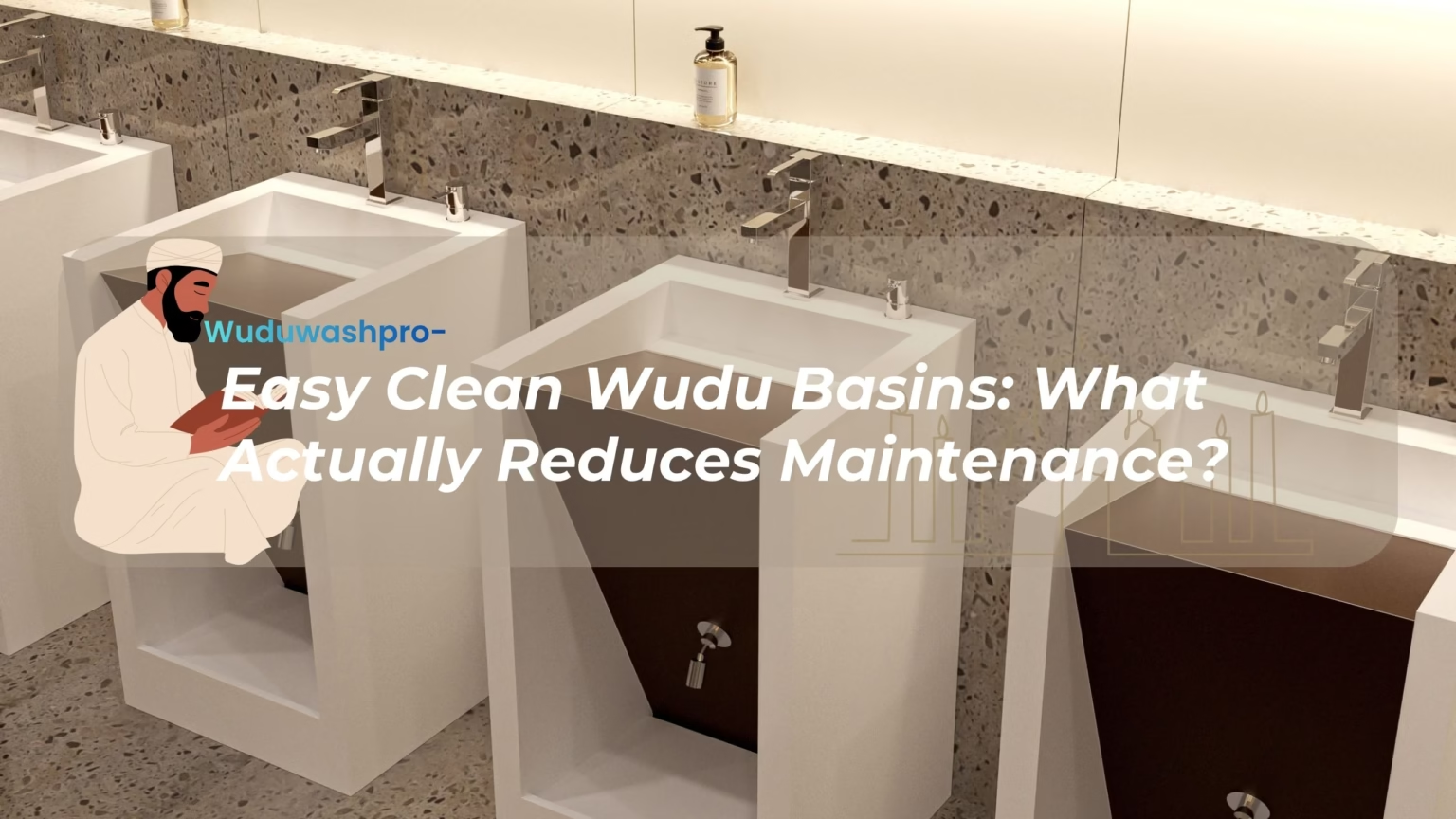
The choice of materials significantly affects the hygiene level. For instance, a solid surface design features non-porous, seamless construction, which results in fewer water traps and easier maintenance. This is why many mosque committees turn to solutions where solid surface fabrication supports hygiene performance without increasing maintenance burden.
Hygiene control in the ablution area is an effective means of protecting the whole prayer environment. If not done, the moisture will be dispersed, cleaning cycles will get more frequent, and the boundaries of the wet and dry areas will be lost.
Crowd Management To Prevent Bottlenecks Before Prayer
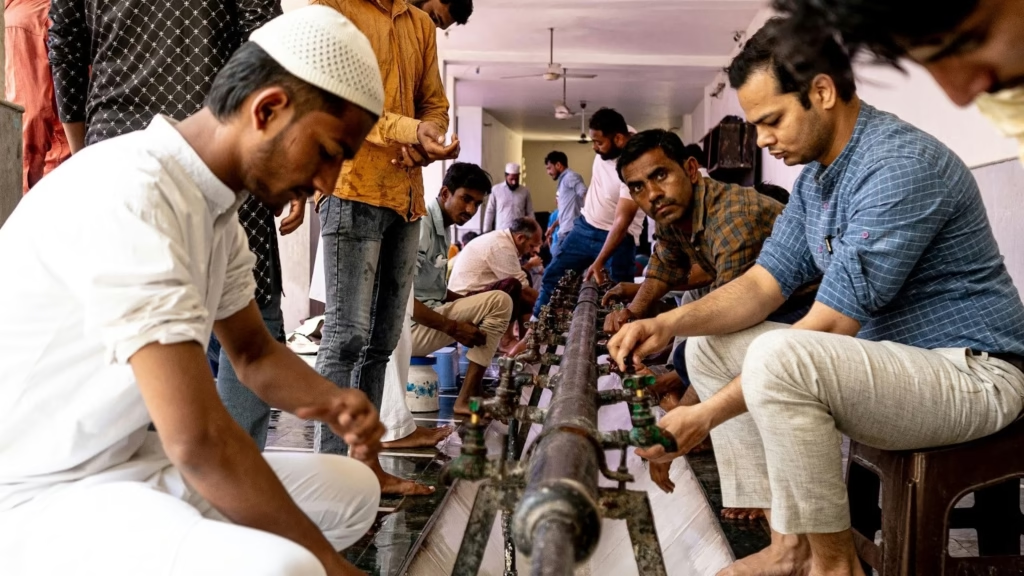
The ablution area is the place where the congregation uses intensively and heavily right before the prayer time. A poor layout or inadequate capacity can be such a hurdle that worshippers are delayed, and the orderly flow of the prayer hall is disrupted.
Crowd management in this context is architectural rather than behavioral.
Flow Before Congregation
Worshippers have to go through the wash area in the correct order: entry, washing, and departure. If entering and leaving happen at the same time or if the circulation paths cross the working basins, there will be hesitation and queues. More importantly, the splashes will create a slip risk.
Efficient layouts provide:
- Clear approach paths
- Defined basin zones
- Direct exit routes away from incoming users
Capacity and Peak-Time Logic
Usage spikes occur within narrow timeframes. The number of users who can perform wudu without the feeling of being disturbed is determined by the space between basins, the alignment of the seating, and the width of the circulation.
Oftentimes, merely increasing the number of sinks or basins without providing adequate space can cause unnecessary crowding. Effective planning considers movement per user, not only fixture count.
A poorly designed wudu space can cause congestion that spills over into the hallways, causing later prayer times. Crowd control starts with a clear space.
Managing Slip Risk and Structural Integrity
Water presence introduces inherent safety considerations. Slip, edge, and moisture-related problems all begin with the wudu space, which, if poorly designed, can be a source of problems.
Wet Floor Risk
Slips occur most frequently when the splash overruns the basin zones or the drainage gradients are inadequate.
Safety depends on:
- Correct floor slope directing water to drains
- Basin orientation that limits outward splash
- Surface materials that maintain grip under wet conditions
Geometry and material choice influence slip risk directly. Containment reduces hazard exposure.
Infrastructure Protection
Water, if it seeps into the structures, can be damaging. Waterproofing systems can be implemented for the slabs and the surrounding space. Drainage lines must be able to accommodate the highest volume without overflowing.
If the waterproofing systems fail, it can cause damage that results in costly renovations, mold, and damage to the structures.
The wudu space can be considered both a hygiene space and a risk control space.
Maintenance Impact: The Hidden Cost of Poor Design
Maintenance demands reveal whether a wudu area is functioning efficiently. When cleaning frequency increases without improving conditions, design limitations are usually the cause.
Cleaning Frequency and Labor
Constant water needs constant cleaning. Surfaces that absorb moisture, which can also cause discoloration, can increase the amount of time and money spent on maintenance.
Maintenance strain often appears through:
- Persistent discoloration near seating
- Roughened edges at high-contact points
- Water tracking beyond intended zones
Material Degradation Patterns
Over time, material performance determines long-term cost. Ceramic edges may chip. Joints may trap debris. Porous finishes may discolor permanently.
Solid surface systems offer measurable advantages in these conditions. Non-porous composition resists staining. Seamless fabrication reduces joint failure. Refinishing the surface can be a solution for extending the lifespan without having to replace the surface completely. This extends the lifespan, which is why manufacturers emphasize the longevity of the surfaces.
Maintenance impact extends beyond cleaning. It influences budget allocation, downtime, and facility reputation.
Long-Term Facility Planning Importance
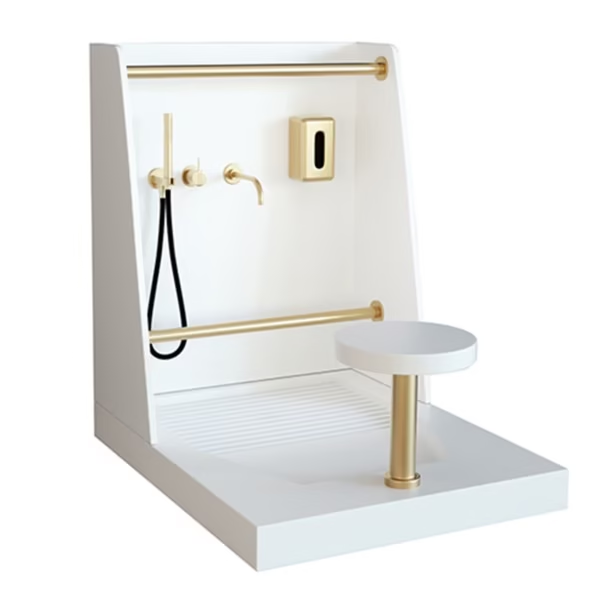
The wudu space can be the first place that shows signs of wear, especially with high usage. Inadequate planning leads to early renovation.
Lifecycle Cost Considerations
Poor drainage, insufficient spacing, and low-durability materials increase repair cycles. Renovations involving slab correction or waterproofing replacement carry high cost and disruption.
Long-term planning must evaluate:
- Material lifespan under continuous moisture
- Drainage capacity during peak demand
- Scalability for congregation growth
Future-Proofing for Congregation Growth
Mosques may expand over time. If the wash area is undersized or poorly configured, congestion intensifies as attendance increases.
Design flexibility supports:
- Re-spacing potential
- Modular basin systems
- Adaptation to changing usage patterns
Planning for growth protects investment.
Why Wudu Areas Often Drive Early Renovation
Among all mosque spaces, the wudu area experiences the most direct contact with water and constant movement. As a result, it often reaches functional limits before other areas.
Early renovation typically stems from:
- Chronic pooling
- Structural moisture concerns
- Hygiene perception decline
Long-term facility planning recognizes the wash area as a performance system requiring durable specification from the outset.
Strengthen Your Mosque’s Performance With Smarter Wudu Design
The wudu space has the greatest impact on hygiene control, safety, crowd control, and maintenance needs, compared with any other wet space in the mosque. Its performance depends on layout logic, drainage coordination, and material durability working together as a single system.
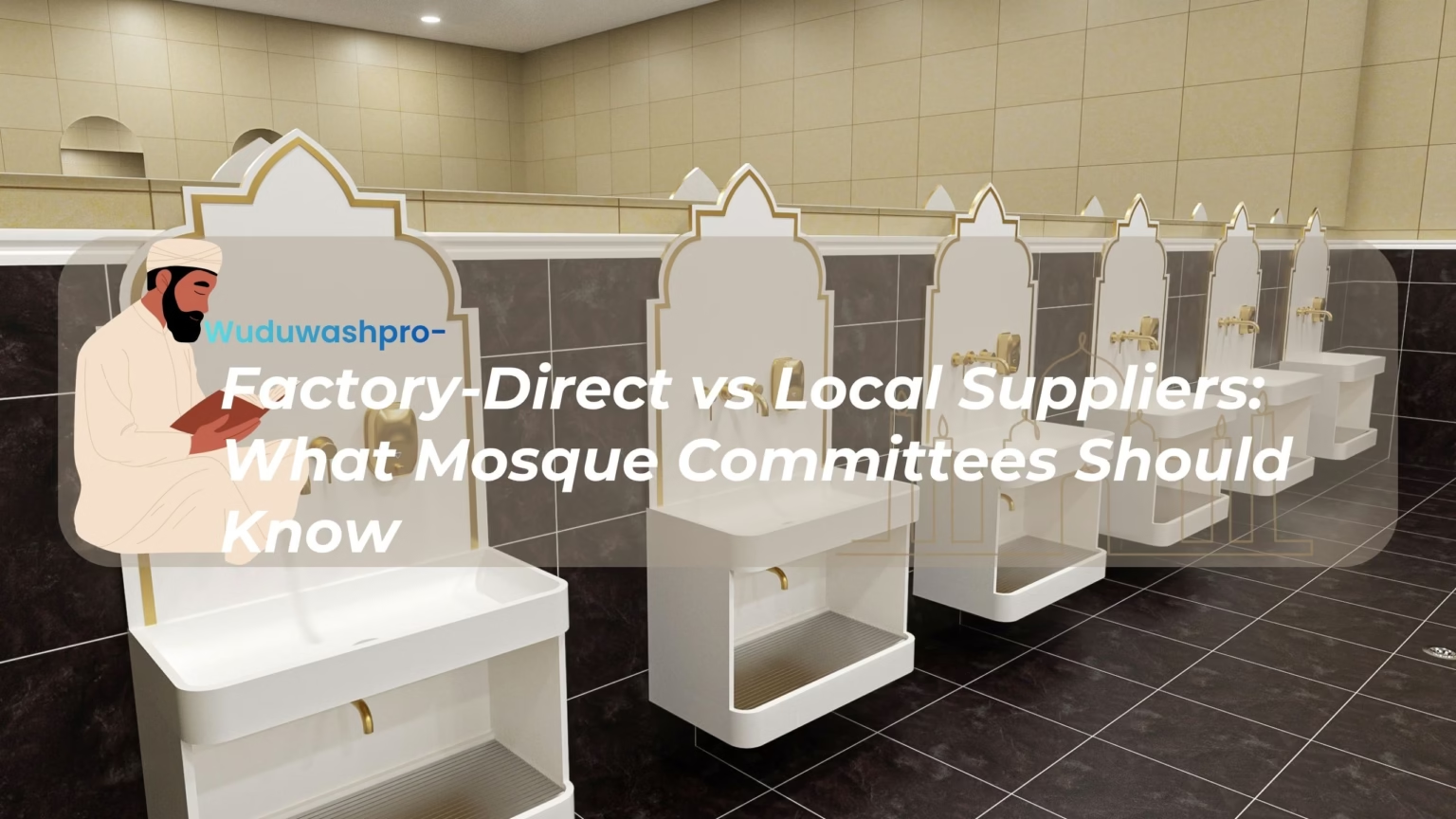
WuduWashPro supports mosque committees, architects, and planners in specifying solid surface wudu solutions that are built for high-frequency use. Factory direct fabrication can allow the needs for basin shape, seating, and edge reinforcement to be aligned with real-world needs, rather than standard fixtures.
Consider bringing in the team of WuduWashPro into your planning process early, so that your wudu space can provide the benefits of hygiene, improved flow, and durability without the need for unnecessary renovation cycles.