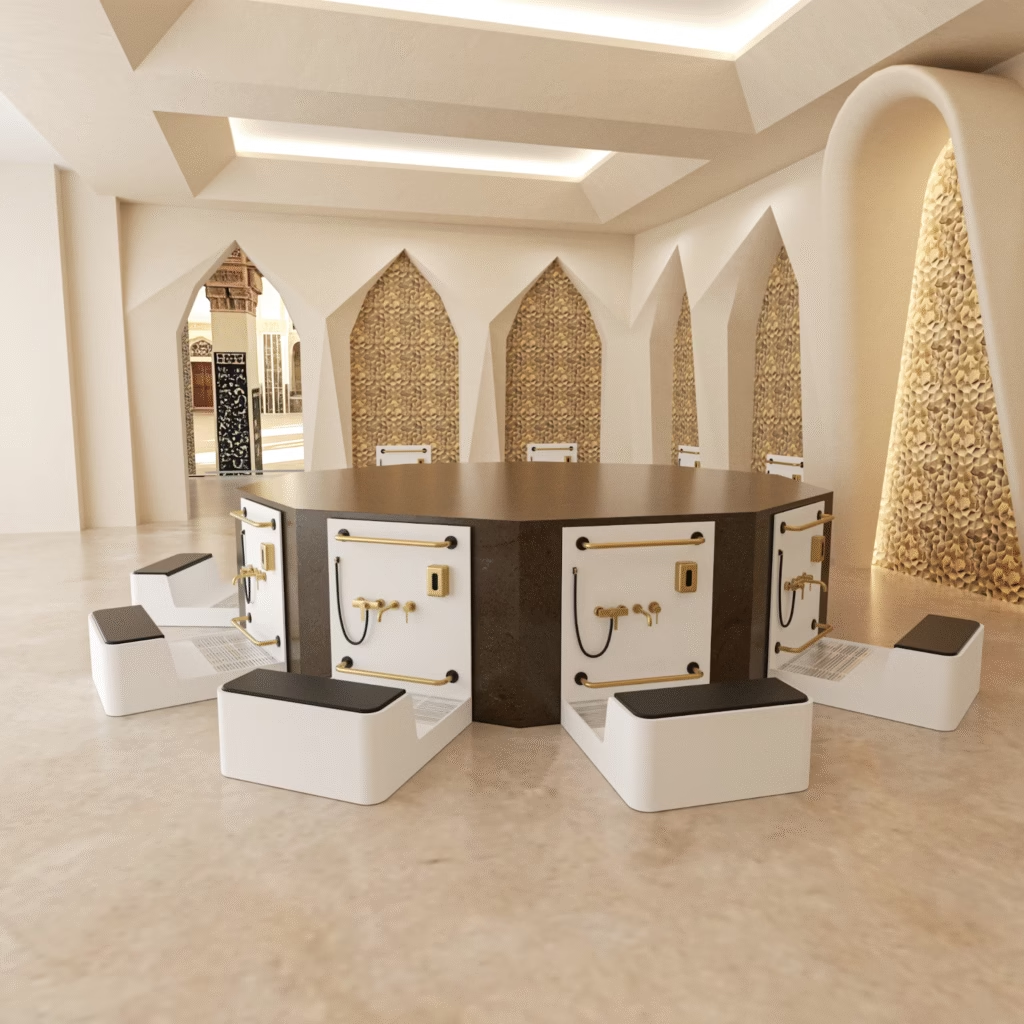
One of the most sensational aspects in the design of a mosque is the wudu area. Design a wudu in a mosque is not simply to place the basins on a wall. Correct design of spaces that are used in wudu in Mosque areas facilitates the normal daily activities, hygiene, safety and comfort of all the worshippers. To mosque committees and facility managers, it is necessary to know the practical side of planning or refurbishing an ablution area, particularly when there is very little space.
This guide helps mosque committees and facility managers in the planning or refurbishment phase and requires a practical opinion. You will gain understanding of layout issues, drainage requirements and guidance to choose the appropriate wudu basin before renovation or installation. It is centered on practical limitations, errors, and what is really important prior to the choice of wudu basins, neither theory, nor sales rhetoric.
The Real Challenges of Limited Space Wudu Areas
Most mosques did not have their architectural designs to accommodate the current number of attendants. Ablution facilities are rarely provided in old buildings, basements, and converted areas. This renders the wudu area design of mosque projects particularly difficult.
Limited space usually have challenges like:
- Large volumes of people focused in brief periods of time.
- The risk of water spillage is increased.
- There is too much congestion during prayer times.
- Increased wear and tear in case the materials are inappropriate.
Functional design begins with an acceptance of these realities and the design is made around them, instead of trying to apply a standard layout to an inappropriate space.
Measurements are not the Only Way to Start
See the way, the space will be used before making a layout or selecting a basin. Here are some key questions to ask.
- What is the usual number of times that a person takes wudu prior to a prayer?
- Are the users primarily the elderly, children or a combination of both?
- Is it going to be a continuous or peak operation?
- Does the space share circulation corridors or toilets?
In planning of small mosque wudu areas, movement issues are as important as the square area. Poor flow results in crowding, wet floors and frustration- although the space may appear good on paper.
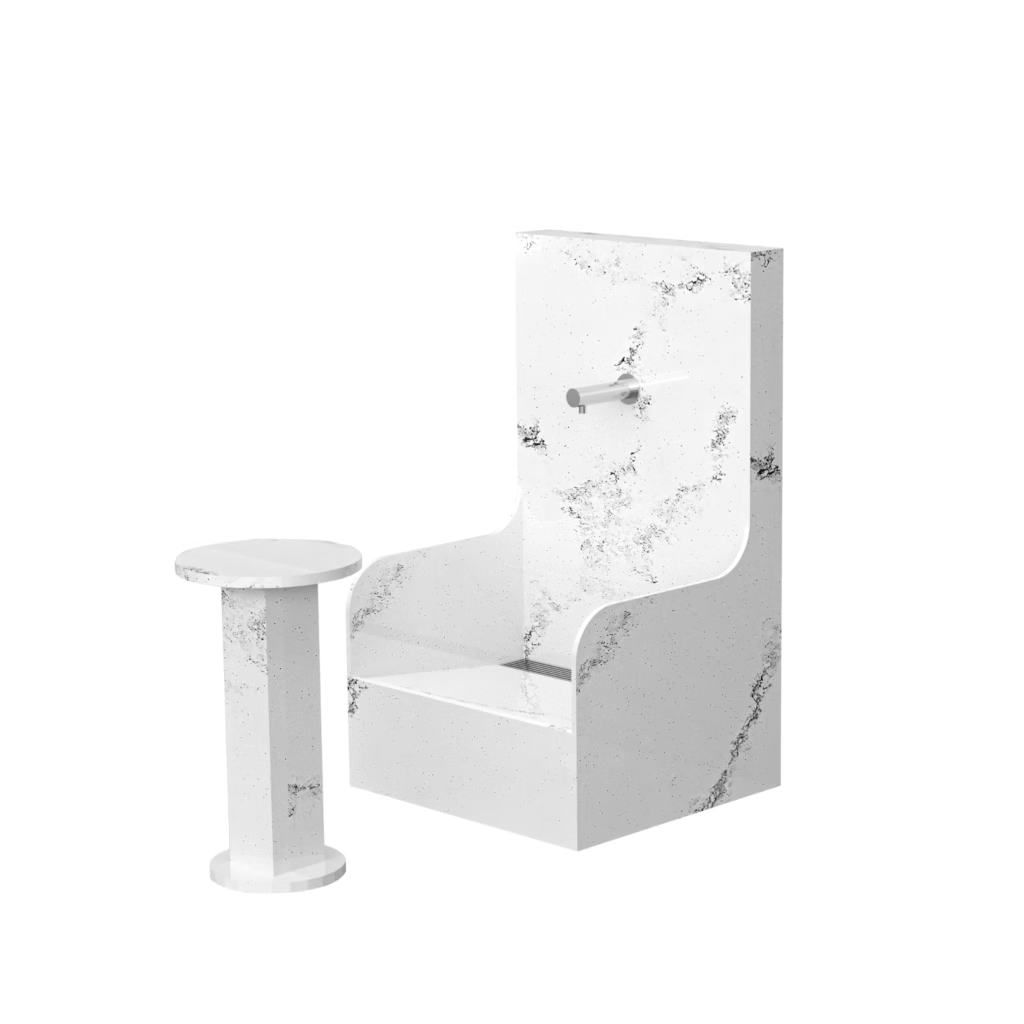
Why Linear Wudu Basin Layouts are better than Clusters
Space is a normed element whereby when there is a space constraint, wudu basins are packed together to enlarge space. Paperwise, clustered layouts seem to be efficient. They can cause more problems than solutions in actual mosque settings though.
Positioning the basins too near each other is one of the most widespread problems in the layout planning of wudu basins. This typically leads to:
- Elbow banging as the users do wudu simultaneously.
- Splash spillage that moistens other parts and garments.
- Splashing water between users, making it more dangerous to be on a slip floor, and more difficult to clean.
Such issues are more evident when they are at the busiest time of prayer, when several worshippers are in the facility concurrently.
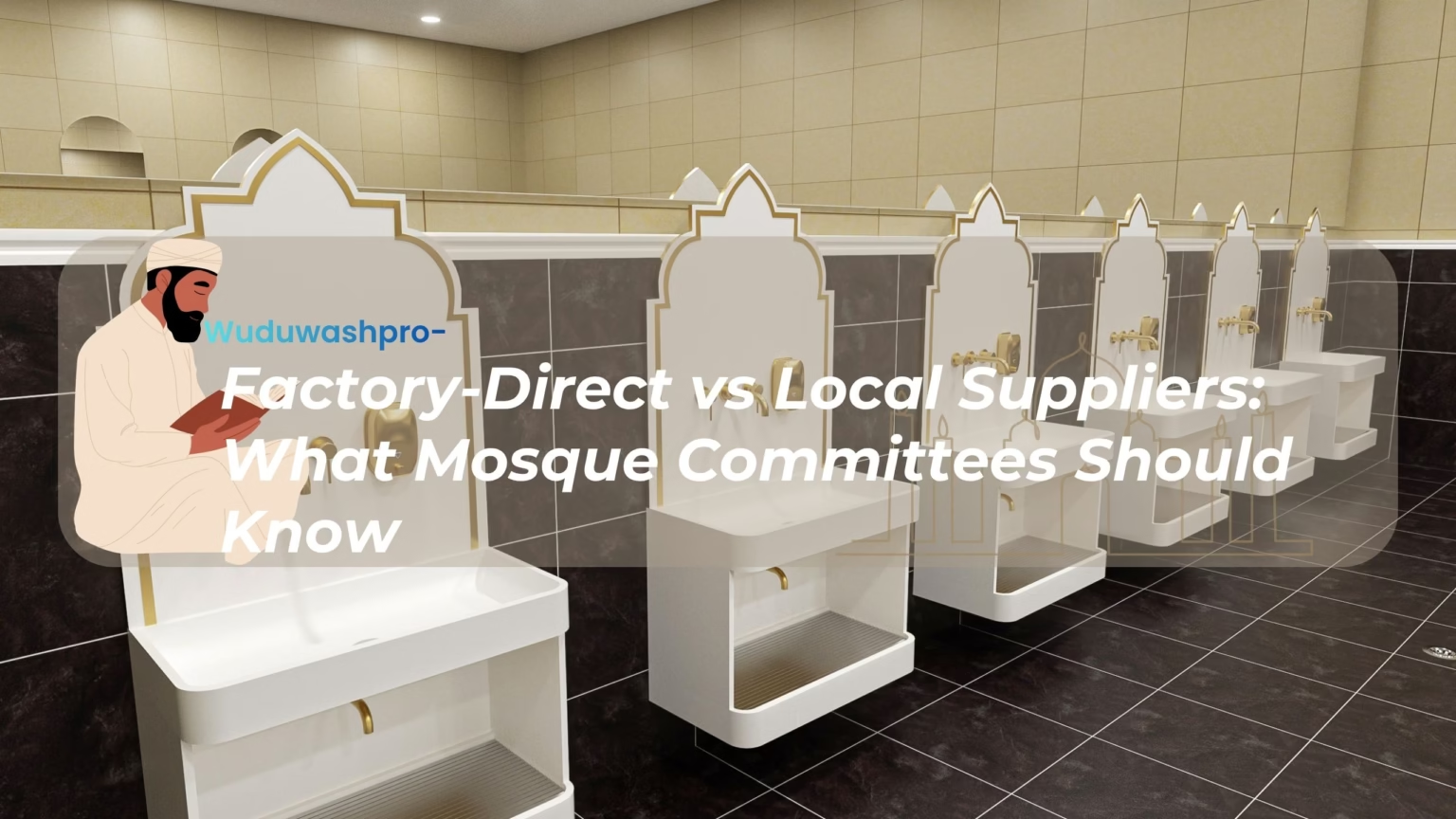
A wall or linear design works more within tight areas since it does not interfere with the natural movement and personal space. Planners could create: by positioning the basins in a straight line.
- The flow of entry and exit is clear, avoiding congestion.
- Better access to cleaning and maintenance personnel.
- Improved management of water dispersion over a specified postulation area.
Although there is a small space between basins, careful positioning can increase comfort and safety better than trying to fit more units in. In the small spaces, the ease of use and movement are more important than figures. Linear layout is planned properly and helps to make the wudu easier, floors drier, and space easier to manage in the long course.
Get acquainted with Wudu Basin Pro Solution and notice the way it helps to sustain secure, reliable, and scalable operations.
Ablution Area Planning: Drainage is Not an Option
Drainage can be regarded as a technical consideration. As a matter of fact, it dictates how safe and hygienic the wudu area is in the long run.
For limited spaces:
- Walking paths must be directed by floor slope.
- Drains must be positioned according to basins.
- Splash areas should not be guessed but predicted.
Lack of proper drainage creates slippery floors, continuous repair problems and deterioration in the long term. In the planning of the ablution areas the drainage should not be planned after installation, it must be planned together with the location of the basins.
Choose Space-Saving Wudu Basins Built to be used intensively
Basins do not necessarily fit into small mosque settings. Home-made sinks or homemade ones can be economical and can be used successfully, but they fail when used daily.
A wudu basin that is space saving must provide:
- Water flow is regulated in order to splash less.
- Inbuilt foot washing support.
- Hygienic smooth and non-porous surfaces.
- Fits on a small depth and does not lose comfort.
Wudu basins unique to mosques also prevent trade-offs in the design later on in the project. As opposed to modified household sinks or generic resources, mosque-specialized basins are designed keeping limited footprints, daily use, or shared-space in consideration. Their size, the height of mounting and their water regulation possibilities already correspond to the way the wudu spaces are worked in the actual praying situations.
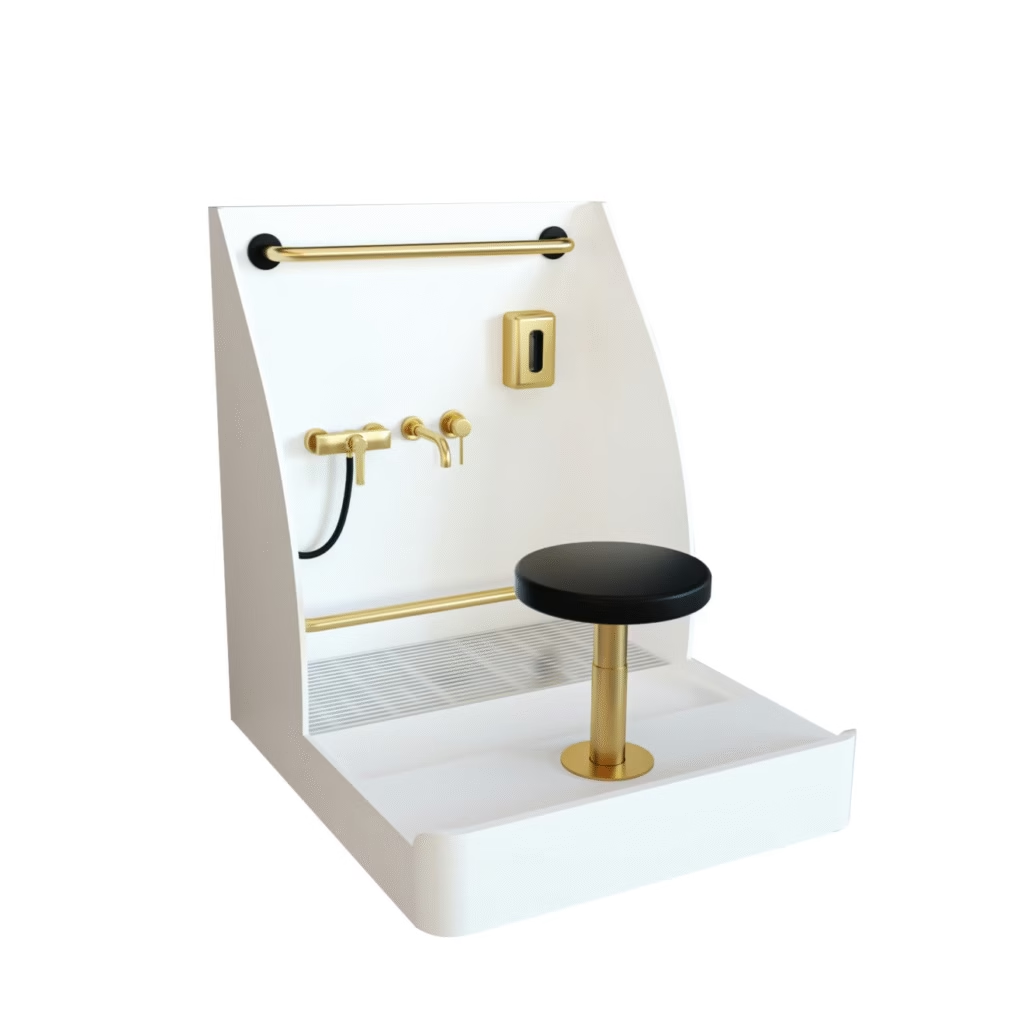
Spend some time to find the right wudu basin for your mosque and design the basin that naturally favour the linear layouts, controlled splash zones and safe spacing. This early understanding would avoid redesign of layouts once the building had started.
Planning and renovation committees are often more likely to see a purpose built basin option at the outset and thus an examination of the layouts that will actually fit in the small areas becomes simpler. They do not need to redesign the design to fit inappropriate fixtures in the future because they can design the wudu area around already proven solutions to work well even in mosque footprints that are small.
The Top Design Challenges to avoid
Most of these issues are not evident when designing or remodeling a wudu space. They are formed with time use, large crowds of prayer and cleanliness. According to the experience of mosque renovation and feedback delivered after installing it, the following are the most frequent errors in design, the most expensive ones in case they are overlooked.
Focusing on the quantity of basin rather than usability:
The installation of the excessive number of basins in a small space frequently results in congestion, splashing, and uncomfortable usage. Practically, fewer basins with good spacing will enable the basins to have a better flow and quicker overall use during the many prayer times.
Ignoring access behind and under basins cleaning:
Narrow setups might appear to be well-presented initially, but with narrow accessibility, it is hard to clean up. With time, the accumulation of moisture and residue traps and causes hygienic problems and maintenance problems that cannot be addressed easily unless they are redesigned.
Choosing materials that are unsuitable in moisture:
Surfaces which are not intended to be exposed to water so frequently can be stained, cracked or deteriorated within a short period of time. This increases the maintenance cost and early replacement particularly in areas of high traffic wudu.
Ignoring airflow and ventilation:
Lack of ventilation causes moisture to persist and causes damp odor, slippery floors and prolonged degradation. The space needs a sufficient amount of air to keep it dry, safe, and comfortable to use on a daily basis.
Designing that does not accommodate the elderly or the mobility challenged.
Some worshipers may find wudu hard or even dangerous with basins that are installed at improper levels, restricted walkways and slippery floors. The inclusive design will make sure that the space is helpful to the whole congregation and not only to the majority.
The effectiveness of wudu area design of a mosque is measured by its effectiveness several years after installation. Several challenges can be faced and these errors can be prevented to make the space both functional, safe, and easy to maintain, and not only beautiful on the first day.
Learn From Mosque Projects and Plan Basins Before Finalizing the Layout
It is one of the most efficient methods to prevent design errors and to learn about the projects of mosques that are already adopted. Actual installations demonstrate the performance of the decisions of planning in everyday circumstances, not only their appearance in drawings. They expose the way space was managed, the layouts that were used to cope with times of peak prayers and where corrections had to be done once installed.
The evaluation of completed mosque projects assists the committees in getting out of assumption. It enables the planners to have a glimpse of the manner in which circulation, spacing, drainage, and placement of basins interact on the ground.
The examples of mosque projects published provide a good insight into the solutions which have been tested not planned on paper but in the real setting of worship. These installations demonstrate the performance of layout decisions when used daily, large groups of people praying, and the maintenance status.
The correct choice of the wudu basin is also of importance before making the layout final. The most frequent mistake in planning is the lock-in error where we plan the layout and later attempt to fit basins into the layout. The layout should be based on the basin dimensions, the mounting height, water control features, and the things that need to be spaced.
It is better to find an effective solution designed to perform, secure and grow. It helps planners plan in parameters that are realistic in size and utility. This method minimizes changes at the end stage, compromised spacing and the ultimate layout is able to provide safe movement, good drainage and long time use.
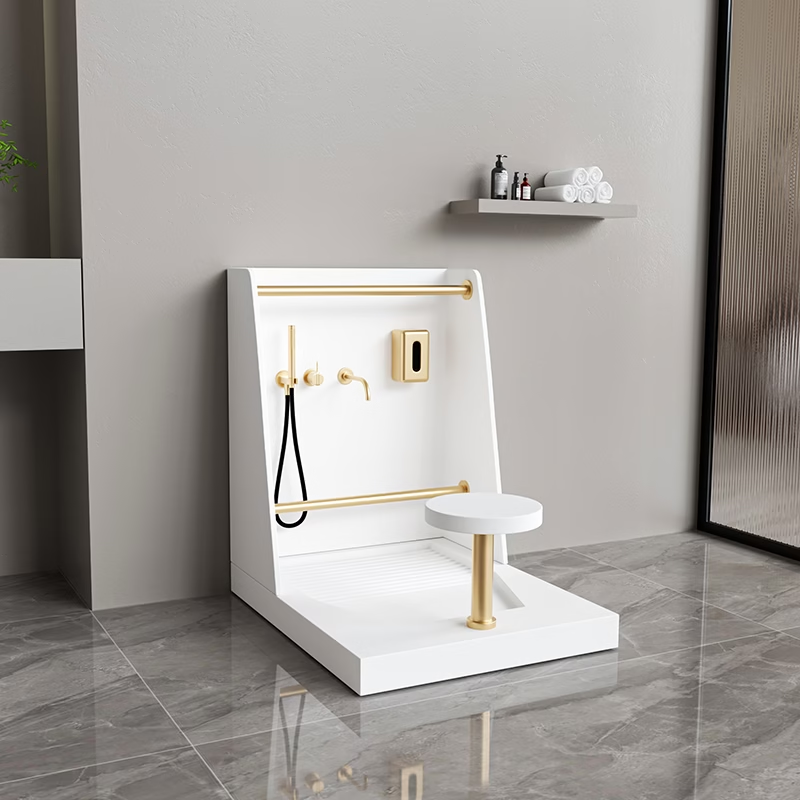
A layout planning that is guided by the actual project deliverables and feasible basin requirements would ensure that the wudu area can be used well on the first day and serves the congregation well in the long run.
Conclusion
A functional wudu area has to be designed in a small space, which has to be a room to accommodate the wudu basins. It requires one to have a clear knowledge of how the space will be utilized on a day to day basis, how the crowds are going to be moved during the peak prayer times, and how water, drainage as well as the materials would perform in years of constant servicing.
An effective wudu area design to mosque projects should be designed according to functionality rather than appearance. Considerable designs, reasonable spacing, good drainage and initial choice of suitable basins all help in safer movement, drier floors, and simple maintenance. These choices impact the comfort of worshippers and sustainability of the facility in the long run.
In the case of a small mosque wudu, planning based on actual restrictions instead of ideal drawings will be successful. The basin layouts are designed in linear wudu basins, durable materials, the design is made to accommodate old people, and the basin choice is made to make the space useful even after many years.
In a cramped space, the trick to good planning is not to add more fixtures, but to make all elements harmonise with each other. The well prepared ablution facility serves the mosque in its daily running, maintains high standards of hygiene and will be of service to the congregation even after several years.
Explore Wudu Area Design Guide: Complete Standards, Layouts, Dimensions, and Materials
Frequently Asked Questions
Q. How can we design the wudu area of a mosque that does not have enough space?
Ans. An optimistic design of wudu area in the mosque projects with small space puts emphasis on the user movement, water usage controls, and safe movement rather than installing the maximum number of basins. Linear or wall-mounted plan, good drainage alignment and specially designed wudu basins contribute towards the functionality without overcrowding.
Q. What number of wudu basins do we put in a small mosque?
Ans. There is no fixed number. The optimal figure in the case of a small mosque wudu area is determined by the attendance of prayers, the busiest periods, as well as the free space on the floor. Smaller, spaced out basins with good flow should be used as opposed to crowded basins that result in overcrowding and spillage of water.
Q.Which design can be best used in wudu spaces in small spaces?
Ans. A linear, wall-aligned wudu basin design is normally suitable to work well in slender, or restricted, spaces. This design facilitates ease of entry and exit, minimizes splash spillover, and ease of cleaning and maintenance, which are important issues in may be highly utilized mosque settings.
Q. The importance of drainage in the planning of the ablution area?
Ans. Drainage is what defines the safety and longevity in the planning of an ablution area. Due to poor drainage, wet floors and slipping hazards are experienced together with frequent maintenance problems. The slope of drains and location should be designed with the location of basins such that water flows people out.
Q. Are space saving wudu basins appropriate to use on a daily basis in the mosque?
Ans. Yes! when they are specially made to suit mosque situations. An appropriate space-saving wudu basin provides a comfortable balance on the small size, water flow regulation, and long-term materials. Home-made basins or improvised basins do not last long and need to be avoided with constant daily usage.
Q. Is the basin selection to be done prior to or after the layout is finalized?
Ans. Before the layout is finalized, basin selection is to be made. The size of the basin, the level of mounting and clearance have a direct impact on the spacing, drainage, and circulation.
Q. What are the errors that should be avoided by the mosque committees in renovating the wudu areas?
Ans. Underestimating peak use, focusing on aesthetics instead of functionality, not taking the older generation into consideration, as well as the use of materials that are not heavy moisture, are some of the common errors. Effective renovations are aimed at permanence, security and ease in maintenance in the long run.