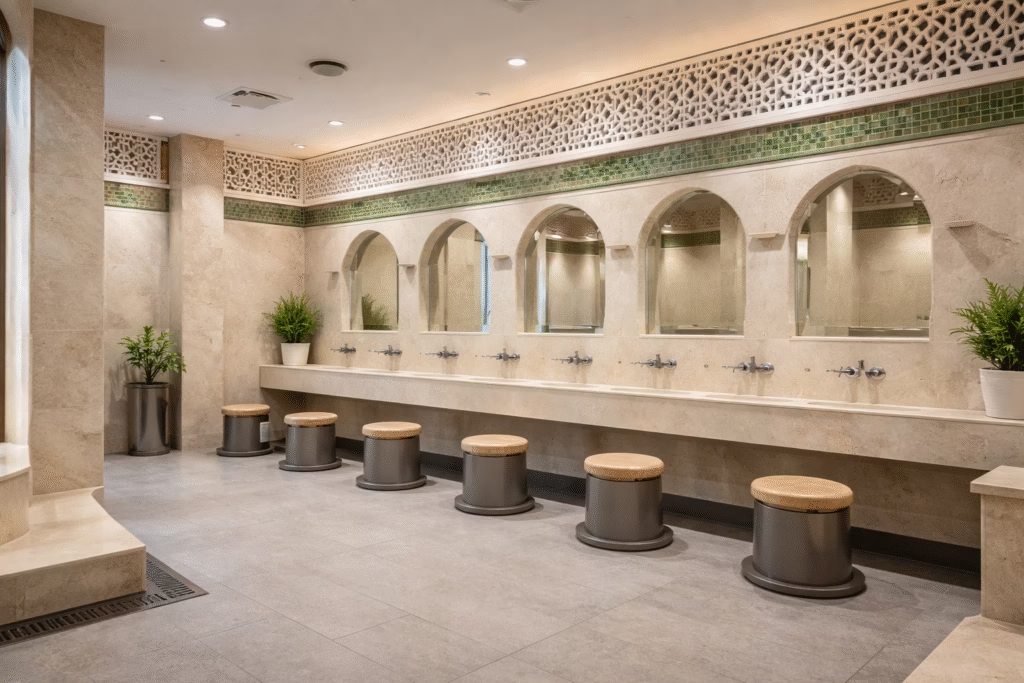
Wudu areas are one of the most commonly used spaces in any mosque. And with several prayer times daily, there will be steady foot traffic from people of different age groups. The area will be continually exposed to water and cleaning products.
However, many upgrade or renovation projects still consider the ablution area as a secondary concern, which is usually the main reason for wudu area problems that result in safety issues, uncleanliness, high maintenance costs, and low user satisfaction.
In most cases, mosque committees become aware of such problems only after the installations have been done, when the complaints increase or the repair bills start to get very high. Early planning is the best way to identify the hidden risks involved with poor wudu area design before it’s too late.
The following sections deal with the most frequent problems in mosque wudu areas. They explain the reasons behind these problems and why they become expensive or disruptive if left unattended for a long time.
1. Slippery Surfaces and Safety Concerns
Water, soap residue, and bare feet combine to create a high-risk environment in ablution areas. That is especially true when unsuitable surface finishes get installed. Smooth tiles and polished stones might be visually attractive at the time of handing over, but their performance under the daily wet use usually tells a different story.
Slip accidents tend to increase significantly at the peak of prayer times when there is more movement, and the cleaning staff are not able to dry the surfaces quickly enough. Elderly worshippers are the ones running the highest risk of such incidents.
However, children and regular worshippers continue to be at risk. Besides exposing the mosque committees to legal consequences, these injury cases also disrupt the harmony of the community.
The safer option is to combine flooring with the right level of wet-area slip resistance and controlled water flow. This way, you won’t have to rely on short-term solutions that only add to the maintenance work.
2. Drainage Problems That Never Fully Resolve
Drainage failures represent a large portion of the problems related to the maintenance of mosque wudu facilities. This pattern signals underlying layout and capacity issues rather than cleaning gaps. Persistent moisture then sets the stage for broader operational concerns.
Design Factors That Disrupt Water Flow
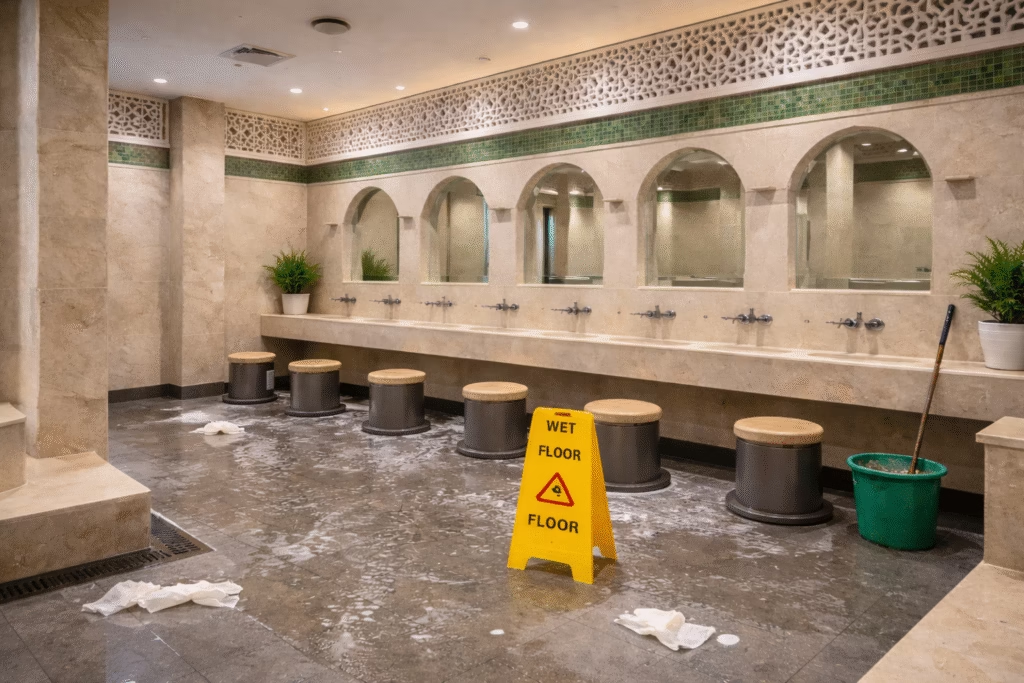
Water stagnation is one of the most visible signs that a space has not been properly maintained. The water will continue to be there even if the space is cleaned very frequently. Several wudu area renovation mistakes lead to drainage problems that overlap in their effects.
One such mistake is the use of flat floors, which causes water that has been spilled to remain there instead of flowing towards the drains. If the drains are badly placed, there will always be some parts of the space where water from gravity flow will never reach. One issue can impair the flow of water, but if all three issues are related, then surely water will pool over time.
Safety, Wear, and Hygiene Consequences
Water pooling wears out the surface since the trapped water will eventually cause the finish to break down. Besides that, water can mix with dirt and trash to create bad smells. Since it is harder for the cleaners to keep the surfaces clean, they have to use stronger chemicals or longer cleaning cycles, which will also further damage the floors and sealants.
Peak-Time Usage Is Often Misjudged
Many committees underestimate how wudu areas are actually used. Short bursts of heavy demand place far greater pressure on drainage than steady, low-volume flow. Systems sized around average use struggle just before prayer times, when multiple users rely on the space simultaneously. Drainage that ignores these peaks rarely performs well over the long term.
Post-Installation Fixes Carry High Costs
Correcting drainage after completion usually involves breaking finished floors and restricting access. Such work disrupts daily operations and increases project costs significantly. Planning in advance for slopes, outlet placement, and flow capacity is one of the most financially wise decisions that you can make to prevent mosque wudu maintenance problems.
3. Layout Choices That Create Congestion
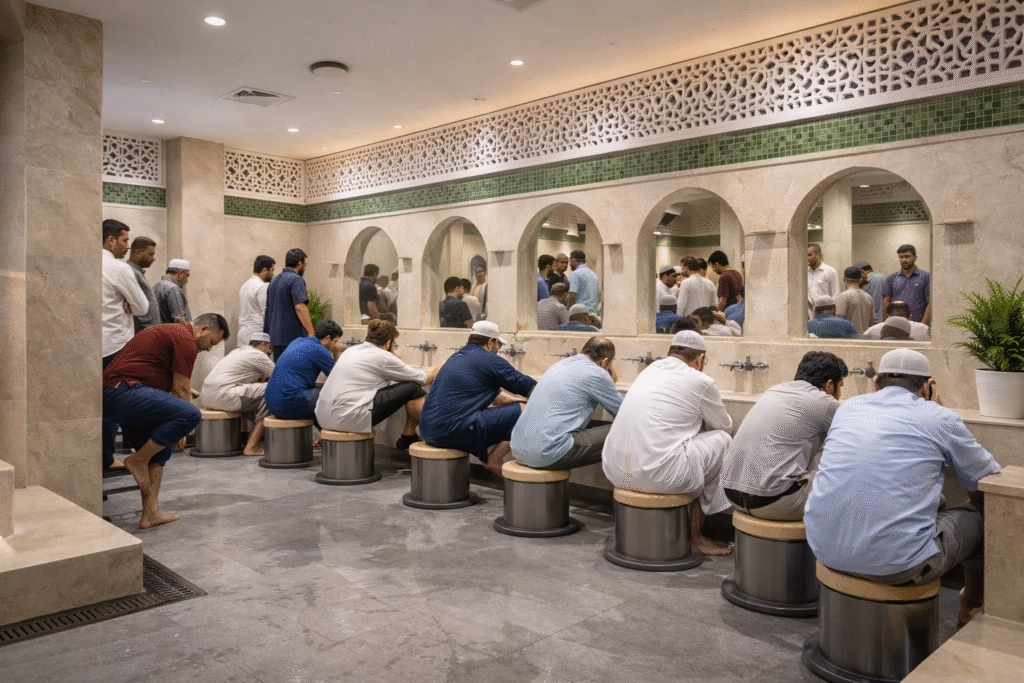
Congestion during prayer time is usually the result of a poorly designed wudu area. The lines become longer as the area is not built according to how people will realistically move and grow frustrated. You’re left with ablution area safety issues that could have been avoided.
Spacing That Restricts Movement
Tight spacing between taps limits comfortable use and increases contact between users. Narrow pathways make it difficult to move behind the worshippers who are already sitting, and this causes bottlenecks during the busiest times.
It is these restrictions that will be most felt just before the congregational prayer, when there is a rush for wudu, as many people need to do it at the same time.
Safety and Comfort Are Compromised
Cramped spaces make for more accidental splashes and slip hazards. Moreover, if worshippers feel that they are being rushed or that the space is too small, the level of discomfort increases. That can affect the worshippers’ peace. Over time, these conditions can discourage consistent use of the facility.
Flow Matters as Much as Fixtures
Effective layouts not only focus on the arrangement of fittings, but also on circulation. Separating entry and exit lanes clearly is a great way to reduce cross-traffic. Seating and tap spacing need to have realistic allowances for body movements. Visibility also has an impact since clear sightlines prevent users from hesitating in their movement.
Planning Decisions Are Hard to Reverse
Layout problems rarely disappear after installation. The only solution left to correct spacing or circulation problems is a major renovation. Committee members can avoid compromises that later disrupt daily use and only increase renovation costs if they are aware of this during early planning.
4. Materials That Fail Under Daily Use
A lot of wudu area problems are related to fittings or finishes that are selected only based on appearance or cost rather than their strength and durability. But people fail to realize that communal ablution areas face very harsh conditions.
Low-quality taps will be the first to corrode and become loose. Poor sealant is also one of the reasons the color changes and cracks appear, due to the constant presence of water. As a result, porous walls will be stained.
These are generally followed by frequent repair work, less reliable operation, and visible signs of wear and tear. People coming for worship will quickly notice these points and associate them with intentional neglect, even though the maintenance crew is very diligent in their work.
Choosing purpose-built wudu basin systems helps avoid corrosion, loose fittings, and premature replacement in the high-traffic ablution area.
5. Cleaning Challenges and Hygiene Risks
Committee members are usually surprised at how much design can have an impact on the amount of cleaning required. Some layouts are designed in such a way that they will unintentionally cause an increase in labor requirements, which in turn compromises hygiene standards.
If the corners are hard-to-reach, they will collect residue. Excessive grout lines will trap moisture and dirt. Additionally, exposed pipework creates surfaces that require detailed manual cleaning. Each element adds minutes to every cleaning cycle.
Over weeks and months, these challenges contribute to visible buildup and lingering odours. Complaints then arise despite regular cleaning schedules.
6. Accessibility Gaps That Affect Worshippers
Accessibility concerns frequently surface after renovations, particularly when elderly members raise concerns. A person with limited mobility cannot safely use fixed-height stations, unsupported seating, and slippery step-ups.
Such lapses are hardly the outcome of malicious intent. They are mostly due to insufficient consultations or overreliance on standard layouts. Subsequent changes then require modifications of the structure, fresh permissions, and increased spending.
Planning involves the consideration of stability, accessibility, and ease for a large variety of users. When thought about in advance, it assists in maintaining the dignity and independence of all the worshippers.
7. Supplier Limitations and Specification Gaps
The capability of the supplier highly influences the quality of the outcome. Some suppliers do not have an adequate background with mosque requirements specifically, and hence provide solutions that are generic and miss out on patterns of usage and cultural needs.
Specification gaps occur when committees depend on supplier recommendations without independent checks. Eventually, these gaps show up as maintenance problems or unhappy users.
Good documentation, making assumptions about usage that are realistic, and specifications based on performance make for fewer assumptions. Talking to suppliers who have real experience also lowers risk in the execution.
Getting suppliers involved early on with a focus on the long-term wudu area performance helps committees avoid design compromises that turn into recurring maintenance issues.
Common Oversights Seen During Renovation Projects
Several recurring mistakes appear across mosque projects, regardless of scale. Awareness of these patterns helps committees avoid repeating them.
- Selection of domestic-grade fixtures for communal use
- Emphasis on appearance over long-term maintenance effort
- Underestimation of peak-time usage patterns
- Limited consultation with the cleaning staff
- Assumptions that small issues can be corrected later
Each oversight contributes incrementally to larger wudu area problems. Addressing them early often costs less than resolving compounded failures later.
How Design Choices Affect Long-Term Costs
Short-term savings often motivate compromised decisions. Lower upfront spend may appear attractive during budgeting discussions, yet the total cost over several years frequently tells a different story.
| Design Decision Area | Short-Term Outcome | Long-Term Impact |
| Flooring Selection | Lower material cost | Increased slip risk and early replacement |
| Drainage Capacity | Faster installation | Persistent pooling and repair work |
| Fixture Quality | Reduced initial spend | Frequent breakdowns and downtime |
| Layout Spacing | Higher capacity count | Congestion and safety complaints |
| Cleaning access | Minimal design input | Higher ongoing labor cost |
Lifecycle cost analysis reveals that modest upfront investment often reduces overall expenditure. Committees that evaluate decisions across a ten or fifteen-year horizon tend to achieve better value.
Plan a Wudu Area That Serves Worshippers for Years with WuduWashPro
WuduWashPro provides purpose-built wudu basin solutions for mosques, airports, hotels, and public spaces where daily devotion and heavy use must coexist without compromise.
Every piece shows a rich grasp of cleansing methods, combined with direct-from-maker accuracy and easy-to-use controls. Thoughtful design focuses on comfort, cleanliness, water saving, and simple upkeep that helps mosque groups sidestep rebuild errors that cause repeat expenses.
We offer:
- High-End Wudu Station: Sensor-controlled water flow with foot pedal operation.
- Marble Wudu Basin: A luxury marble-pattern finish combined with durable, water-resistant construction.
- Wudu Foot Wash Trough: An ergonomic, shared-use solution with custom sizing options that simplify cleaning and daily maintenance.
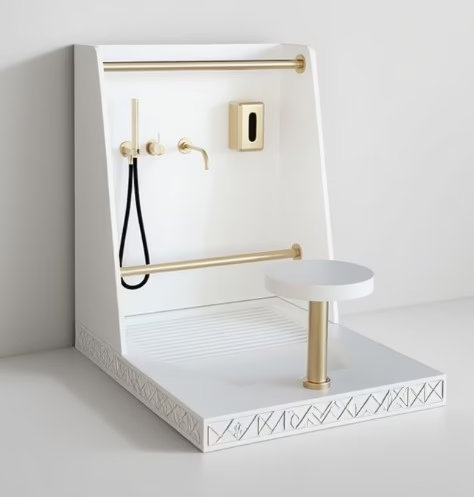
- All-in-One Wudu Unit: A tall setup mixing hand wash and foot wash, perfect for new looks where space and style count.
Request the full catalogue or connect with the WuduWashPro team to discuss a wudu solution tailored to your space and maintenance expectations.