Sizing a wudu area is one of those decisions that feels straightforward during planning and becomes painfully visible after opening. We’ve seen it happen quite often. Wudu spaces feel crowded and difficult to manage, especially before prayers start. When this happens, the issue is rarely the quality of the basins themselves. It is almost always a capacity problem rooted in early planning assumptions.
This article focuses on wudu area size calculation as a practical planning exercise, not a theoretical one. It is written for mosque committees and facility managers who want to avoid congestion during peak prayer times and create ablution spaces that function calmly under pressure.
Why Wudu Area Sizing Fails in Real Projects
Many mosque projects start with a simple question: How many people does the mosque hold? That number is then used, directly or indirectly, to estimate the wudu area size. In practice, this approach consistently leads to underestimation.
We’ve noticed that wudu usage is not spread evenly across the day. Instead, it compresses into short, intense periods. A space that works well for daily prayers can struggle significantly on Fridays or during Ramadan. Once the mosque is in use, these issues become highly visible and difficult to correct.
Incorrect wudu area size calculation usually results in:
- Long queues forming just before prayer
- Worshippers rushing wudu to avoid missing jama’ah
- Increased splash and wet floors due to crowding
- Frustration for both users and facility staff
These are capacity planning problems. Correct wudu area size calculation starts with understanding how people actually use the space, not how many people the mosque can hold.
Congregation Size vs Actual Wudu Demand
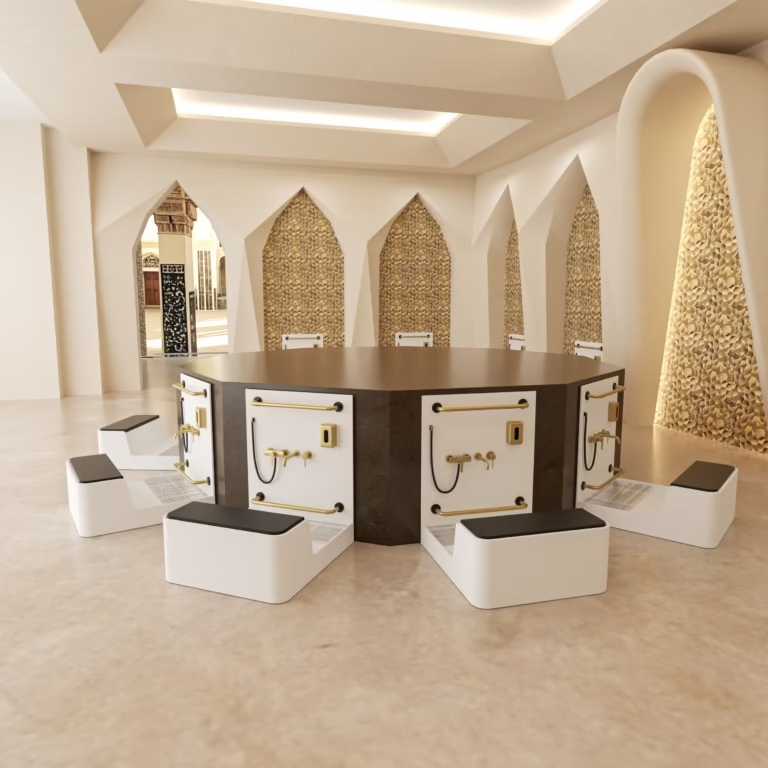
We often see congregation size used as the main input for planning wudu capacity, but in real mosque operations, it rarely reflects actual demand. What matters far more is how many people need to perform wudu at the mosque within a short period before prayer.
From our experience working with mosque projects, some worshippers arrive already in wudu, while others rely entirely on on-site facilities due to distance, work schedules, or timing. This creates uneven demand that concentrates around peak prayer times rather than spreading evenly across attendance.
Key realities we account for during planning include:
- Total attendance: We treat this as a reference point, not a direct indicator of wudu demand
- Arrival behavior: We commonly observe worshippers arriving in tight clusters just before prayer
- Peak timing: We see Friday prayers and special events compress wudu use into short time windows
This is why we approach wudu area planning by adjusting congregation size for real usage patterns. When this step is skipped, even well-finished wudu areas struggle during the moments when capacity matters most.
Logic Behind Wudu Area Size Calculation

We approach wudu area size calculation as a practical exercise grounded in how mosques actually operate, not as a fixed formula. In real projects, capacity issues usually appear when one or more real-world factors are overlooked during planning.
At its core, wudu area sizing balances a small set of interrelated inputs. Each one affects how many people can realistically use the space during peak periods.
The core factors we rely on include:
- Peak wudu users: The number of worshippers likely to need wudu on site during the busiest prayer window
- Average wudu duration: The typical time a user occupies a basin under peak conditions
- Peak time window: The limited period when most users arrive before prayer
- Turnover efficiency: How quickly one user can finish, and the next can step in without obstruction
When these factors are considered together, basin counts become more realistic and defensible. When even one is ignored, congestion tends to appear quickly, regardless of how well the space is built.
How Many Wudu Basins Does a Mosque Really Need?
Committees often ask directly: how many wudu basins mosque projects should include? There is no universal answer, but there are consistent patterns.
When we assess basin requirements, we focus on practical capacity rather than theoretical limits. That means allowing room for slower users, brief interruptions, and natural variation in how people perform wudu.
Key considerations we apply include:
- Peak user volume: How many worshippers realistically need wudu on site at the same time
- Time pressure: How much time is available before prayer begins
- Buffer capacity: Extra basins that absorb delays without creating queues
Mosques that include this buffer tend to feel calmer and more organized during busy periods. In fact, a small surplus of basins makes a significant difference. That extra capacity absorbs delays without creating stress or disorder.
Example Capacity Scenarios Based on Real Use
The table below illustrates how basin requirements shift depending on congregation size and peak behavior. These figures are illustrative, based on observed mosque usage patterns, not rigid rules.
| Mosque Type | Peak Attendance | Estimated Wudu Users | Peak Window | Wudu Time | Suggested Basin Range |
| Neighborhood mosque | 150 | 40–60 | 15 minutes | 3 minutes | 10–12 |
| Medium community mosque | 300 | 100–140 | 20 minutes | 3 minutes | 18–22 |
| Friday prayer mosque | 600 | 250–320 | 25 minutes | 2.5 minutes | 30–36 |
| Large urban mosque | 1,000 | 400–500 | 30 minutes | 2.5 minutes | 40–48 |
This kind of wudu area size calculation helps planners visualize how quickly congestion develops when basin numbers fall short.
Why Layout Directly Affects Effective Capacity
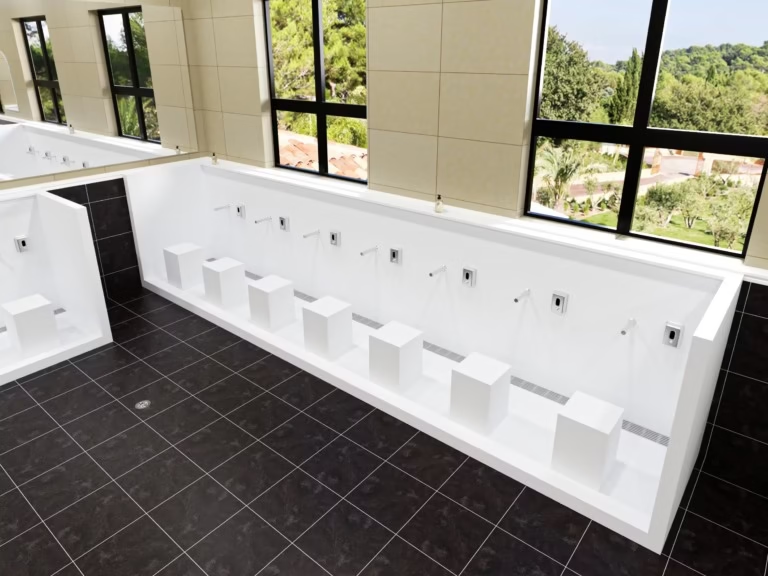
Wudu areas can struggle during prayer times even when the basin count appears sufficient. In most cases, the problem is not of quantity but of layout.
The ease with which worshippers can approach a basin, complete wudu, and move away without obstructing others depends on the layout. Where circulation paths are tight or where they overlap, there is slow movement, and hence, capacity is not attained. Basins that are available on paper become difficult to access in practice.
Bad layout choices mostly cause backup behind seated users, entry hesitations, and delays as people wait for the space to clear. This gets worse during peak periods, thereby building up queues and discomfort even in good spaces.
Where spacing, circulation, and flow are planned right, a wudu area shall take far more users without adding basins. When layout is treated as secondary, capacity is lost long before every basin is in use.
Different Mosques, Different Capacity Needs
Not all mosques experience peak demand in the same way.
- Neighborhood mosques often have steadier daily use, with moderate Friday peaks. These spaces still need buffer capacity, but may not require extreme basin counts.
- Friday prayer mosques experience sharp, concentrated demand. Undersizing here almost always leads to visible congestion.
- Large urban or campus mosques face mixed usage patterns, including visitors unfamiliar with the layout. Extra capacity and clear circulation become critical.
Understanding the mosque’s role helps refine mosque wudu capacity planning.
Common Sizing Mistakes Seen After Opening
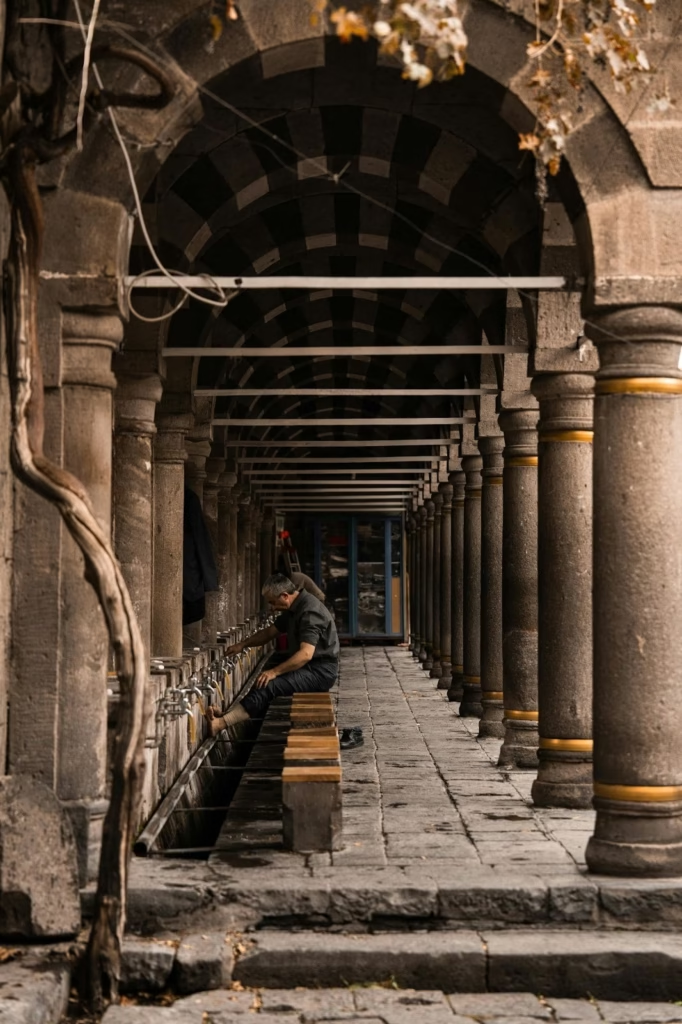
The weakness of many wudu areas does not show until the mosque is put into regular use. Decisions that seem reasonable during planning usually do not work under real peak conditions, and this is how congestion turns out to be a daily operational issue.
The most common sizing mistakes include:
- Planning for average attendance: Capacity is based on typical daily use rather than peak prayer demand, causing bottlenecks before Jumu’ah and special prayers
- Underestimating wudu duration: Assumptions are made that users move faster than they do during busy periods, especially when elderly worshippers are present
- Ignoring circulation space: Basin count is prioritized while movement paths are constrained, reducing effective capacity
- No buffer allowance: The design leaves no margin for delays, maintenance issues, or slower users
- Overlooking future growth: The wudu area works at opening, but becomes inadequate as attendance increases
Once a mosque opens, correcting these mistakes usually requires major renovation rather than minor adjustment. Realistic sizing during early planning is far more effective than attempting to manage congestion later.
Balancing Capacity With Comfort in Wudu Area Design
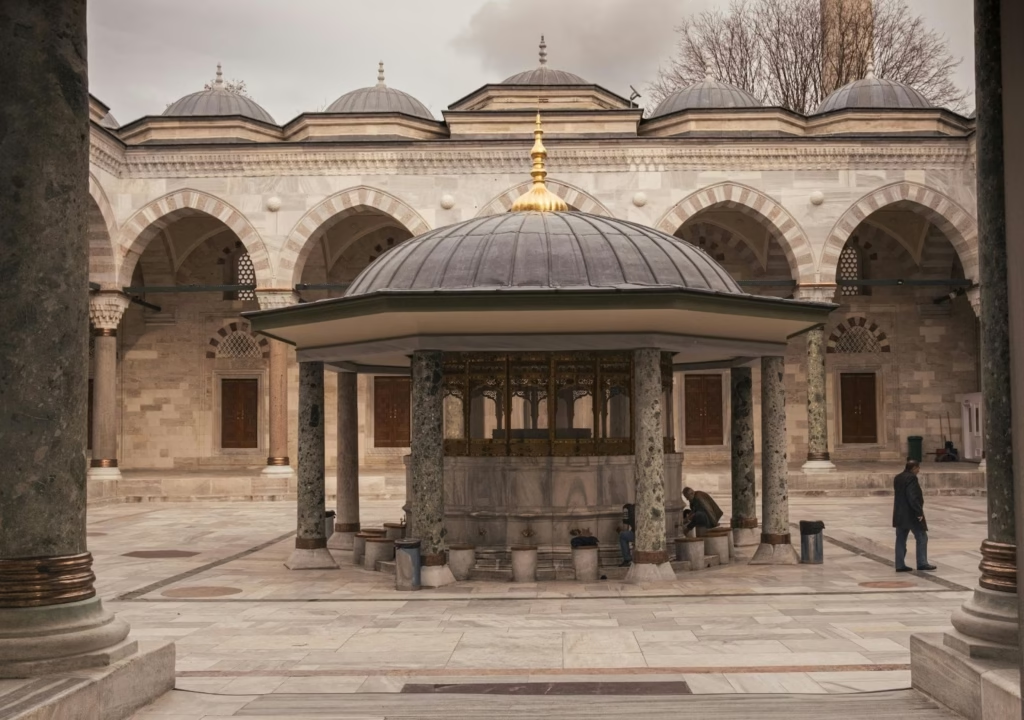
Capacity planning should never come at the expense of comfort. In wudu areas, speed alone does not define success. A space that moves people quickly but creates stress, crowding, or discomfort undermines the purpose of ablution itself.
Overly aggressive capacity planning in practice mostly results in narrow spacing, rushed movement, and increased splash. Worshippers feel pressured to hurry; safety as well as the quality of the wudu experience gets compromised. There is more strain on floors, drainage, and cleaning staff during peak periods.
Comfort and capacity are best when designed in unison. Spacious area, clear circulation, realistic basin counts enable the worshippers to complete wudu comfortably, hence not feeling rushed even during peak prayer windows. When movement is natural and unforced, organic improvement of turnover happens, reducing congestion without loss of dignity.
Well-balanced wudu areas remain calm under pressure. It supports steady flow, safer conditions, and a more respectful environment before prayer for both worshippers and those responsible for managing the space.
Plan Wudu Areas for Real Peak-Time Use
Wudu areas that function well during busy prayer times are rarely the result of guesswork. These are early decisions based on real congregational behavior, realistic capacity planning, and an understanding of how spaces work under pressure.
Correct wudu area size calculation enables the mosque committees to avoid congestion, reduce safety risks, and support a calm, dignified wudu experience for the whole year. When layouts and plumbing get fixed, chances for improvement reduce; hence, late planning loses its value.
WuduWashPro supports mosque committees and facility managers during this early stage, helping translate congregation size and peak prayer patterns into practical wudu area capacity. With experience across high-traffic mosque environments, the focus remains on solutions that perform reliably when demand is highest.
Speak with the WuduWashPro team to plan a wudu area that balances capacity and long-term usability, before constraints are locked in.