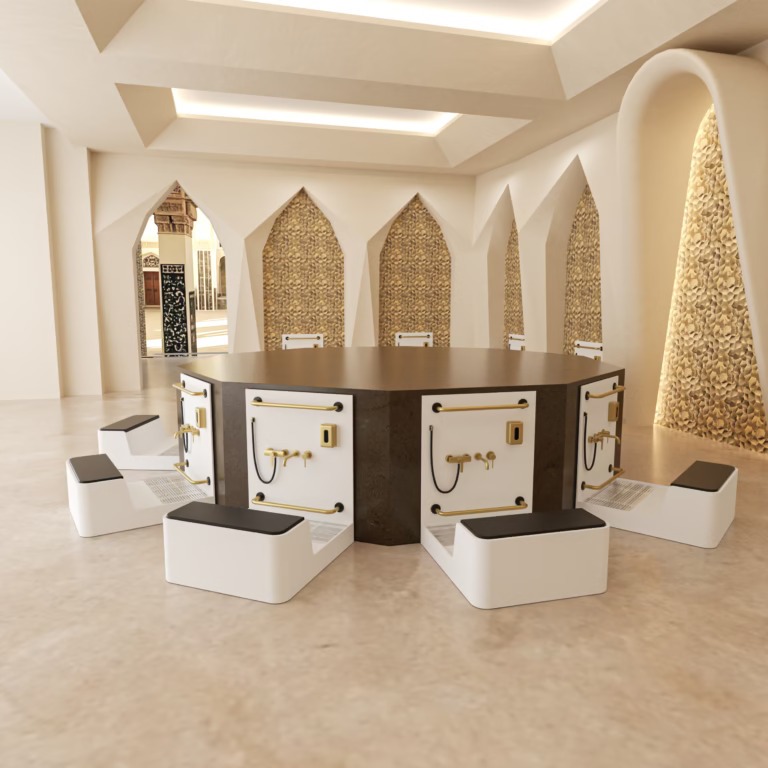
The ideal wudu basin height for mosques is 25 to 30 inches from the floor to the basin rim to allow for comfortable foot washing. This particular height is for seated wudu basins. It will change depending on the seating configuration.
A commercial wudu basin should be the correct size because a small basin might cause splashes that leave clothes damp and unsanitary. In a similar way, an enormous basin may make it difficult to clean and perform wudu comfortably. Ergonomics and hygiene should be combined with extra features like splash shields or high edges to create the perfect size.
It is very important for architects and mosque authorities to realize the impact of the height of a wudu basin on its performance in mosque wash areas.
Recommended Wudu Basin Height for Mosques
The recommended height of a wudu basin depends on how the basin is used and the type of washing posture supported in the mosque.
Architectural guides suggest the following ranges:
| Configuration | Basin Height | Design Purpose |
| Seated | 65–75 cm | Aligns with seat height so the user can lift the foot comfortably into the basin |
| Standing | 75–85 cm | Allows foot washing while standing without excessive bending |
| Home / low-traffic installations | 60–65 cm | Suitable for single-user environments with lower splash risk |
Typically, dimensions for the wudu area of a mosque will be specified together as a group to facilitate comfortable sitting and maintaining control over splashes.
- Seat height: Average of approximately 40–45 cm above floor level. This allows users to sit in a comfortable position while maintaining a safe and stable posture when washing their feet.
- Basin rim height: Average of approximately 65–75 cm (25–30 inches) above floor level. This enables the user to lift their foot into the basin without experiencing excessive strain, and the water will stay in the bowl. Most commonly, basins used for foot washing will be designed to accommodate seated users.
- Seat-to-basin height: The distance between the seat surface and the top of the basin rim is typically 20–30 cm (8–12 inches). A gap of this range will help to maximize the natural movement of the legs and allow for splash control when washing feet.
- Spacing between basins: The basins are spaced 80–100 cm (31–39 inches) apart. This allows sufficient space for seated users without interference in feet washing.
Why Wudu Basin Height Matters
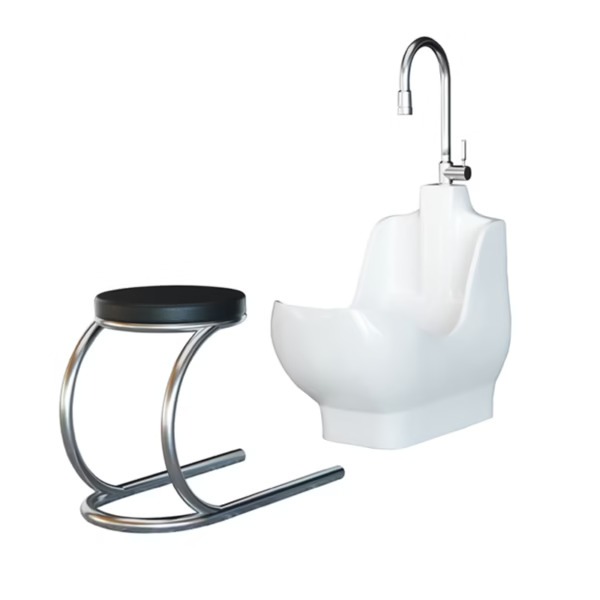
The wudu basin height directly impacts the level of comfort and security involved in the ablution. Foot washing requires lifting the legs towards the basin. The distance between the sitting position and the edge of the basin is an important ergonomic factor.
When the height is correctly identified, the ablution can be performed easily with a seated posture. Water is retained within the basin, and the movement of people through the wash area remains organized.
When the height is not correctly identified, the following issues arise:
- The legs have to be lifted to a higher level than what is comfortable.
- There is too much bending or leaning.
- Water splashes out of the basin.
- Older people cannot balance their posture
In a high-population mosque environment, even small issues of ergonomics can quickly escalate to larger issues.
Seated vs Standing Wudu Basin Configurations
Among the mosque wudu basin options are seated and standing basins. The appropriate basin height varies depending on whether the wash area is designed for seated or standing use.
| Consideration | Seated Wudu Basin | Standing Wudu Basin |
|---|---|---|
| Environment | Medium to large mosques with dedicated wash areas | Small prayer rooms or compact facilities |
| User posture | User sits while performing foot washing | User remains standing during washing |
| Stability and Safety | Higher stability due to seated posture | Requires careful balance on wet floors |
| Splash control | Easier to contain water due to stable posture | Greater splash risk |
| Height specification | Basin height must align with seat height | Basin height must allow comfortable foot lifting while standing |
| Suitability for large congregations | Easier to standardize for communal use | More suitable for limited-use spaces |
Important Installation Dimensions and Layout Planning for Wudu Basins
Compared to ordinary basins, a wudu station takes up a lot more room. Therefore, for the best installation of wash basins for wudu, a bathroom or wudu area needs to have a significantly wider footprint. Additionally, more room on the side is required for the convenience of washing because performing wudu necessitates cleaning several body regions.
Spacing and Elbow Room
A public ablution basin needs gaps on both sides of the basin in addition to dimensions. To wash elbows comfortably, there must be a gap of 150 to 200 mm between each unit. This spacing also helps to prevent water from pouring onto neighbors in mosques or the wudu area, where numerous wudu stations are situated.
This gives users the best possible room to wash their feet and arms without running into one another.
Rough-In Dimensions for Plumbing
Wudu basins usually have two drainage systems or waste outputs for the top basin and the bottom basin, in contrast to a basic basin with a single drainage system.
- Upper Basin: The upper basin’s waste outlet should be fixed to the wall between 640 and 645 mm in height.
- Lower Basin: The waste exit for the foot basin should be placed on the floor. The drainage pipe should be installed between 175 and 200 mm in height.
Make sure the hot and cold water lines are positioned in the middle of the unit when installing the supply lines for wudu wash basins to prevent visible pipework.
Faucet Reach & Height
Two criteria should be used to determine the wudu basin height between the faucet and the basin: it shouldn’t be so high that water begins to splash, and it shouldn’t be so low that hands or arms can’t fit below the faucet. The spout should be positioned at the ideal length so that water flows straight down the drain or into the middle of the bowl, avoiding the rims.
Ergonomics
Ergonomics are very important when performing wudu. The distance between the tap and the seat in a wudu wash basin designed with ergonomics in mind should be between 300 and 400 mm to allow people to wash without bending or excessively leaning forward.
Accessibility and Elderly Considerations
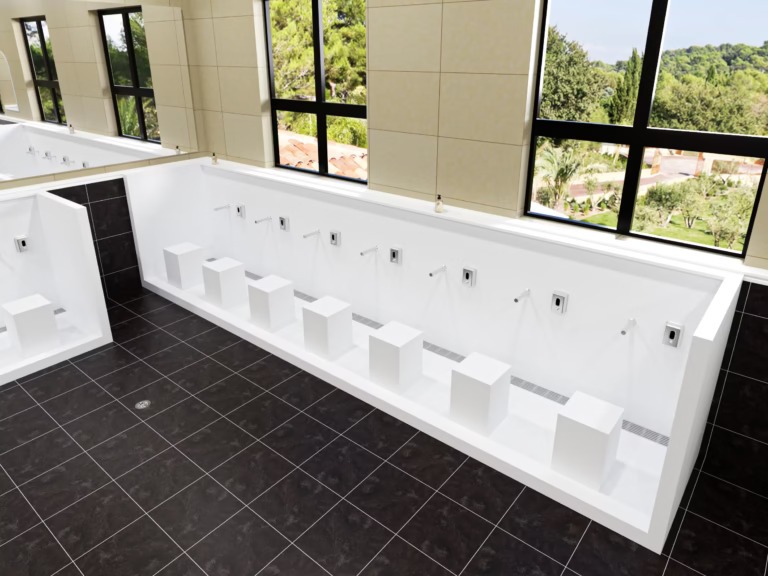
Mosques are for people of all ages. The elderly and those who cannot move around easily may find some heights difficult to use.
Accessibility considerations play an important part in determining the height of the basin. The ideal height for the seat of a commercial wudu basin should be between 430 and 480 mm so that users can sit or stand without straining their legs too much.
Stability During Foot Washing
The seated basin type allows for balance while washing the feet. However, consideration should be given to the basin’s height to ensure the foot can be lifted without straining the knees and hips. The shorter the seat-to-basin distance, the easier it is for the user to access the basin, since less strain is required to raise the foot.
Seating Support
Integrated seating systems help users maintain stable posture. When the seat height and basin height align correctly, the user can easily switch from one process to another. When the heights do not align correctly, the user is forced to keep changing position. The user can easily lose balance and slip.
Inclusive Design
In larger mosques, it is sometimes beneficial to provide a small number of basins designed specifically for improved accessibility. These basins may feature slightly adjusted heights or additional support features.
Accessibility considerations ensure that the wash area remains usable for the entire congregation.
Risks of Incorrect Wudu Basin Height
Incorrect basin height affects both individual users and overall wash area performance.
Increased Splash
When the basin edge is raised too high in relation to the seat height, the angle at which the user’s foot enters the basin is increased. The water splashes away from the user instead of down towards the floor.
Over time, this leads to larger wet zones and increased cleaning requirements.
Unstable Posture
Users forced to lean forward or lift their legs excessively may struggle to maintain balance. This is particularly problematic in wet environments where floor traction may already be reduced.
Stable posture is essential to maintaining safe movement through the wash area.
Congestion
If the height of the basin is uncomfortable, it may take a longer time to complete ablution. This causes congestion during peak prayer times as the delay is added up.
Efficient movement depends partly on ergonomic basin design.
Height and Splash Control
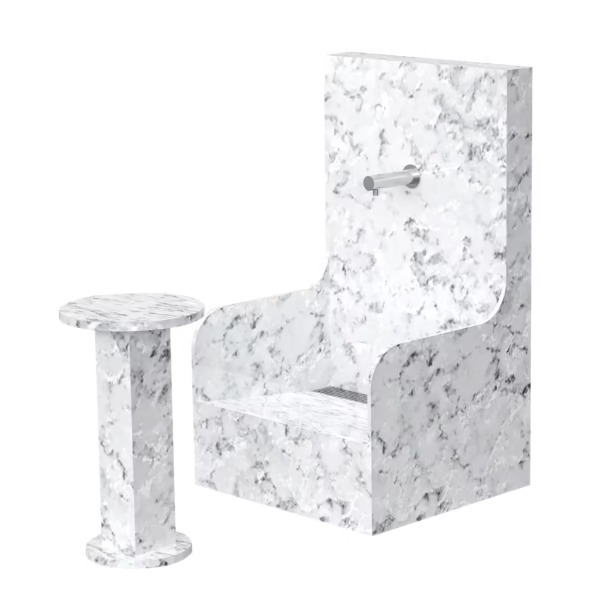
Basin height works together with basin geometry to control splash. Even well-shaped basins cannot perform effectively if the vertical relationship between the seat and basin is incorrect.
Several factors influence splash control:
- The height difference between the seat and the basin edge
- Basin depth and water landing zone
- Foot entry angle during washing
If all these factors are properly aligned, the water will be contained within the basin. The water will then drain properly to the outlets on the floor. Otherwise, the water will spill out of the basin. This will cause a slippery surface as well as make the ablution process more difficult.
Coordinating Basin Height With Wash Area Layout
Basin height must also be compatible with the overall layout of the wash area. Plumbing lines, floor drainage, and seating placement all influence the final specification.
For example:
- Floor slopes must direct water toward drains positioned near the basin.
- Basin outlets must align with plumbing connections.
- Seating height must coordinate with basin edge height.
These factors are usually determined during the specification stage. Early coordination prevents costly adjustments after installation.
Practical Height Planning for Mosque Projects
The basin height may vary from project to project. However, the determination of the height begins with the evaluation of the position of the seated individual.
Architects and planners often consider:
- Seat height appropriate for comfortable sitting
- Basin edge height relative to the seat
- Clearance for lifting the foot into the basin
- Alignment between basin outlets and drainage points
A mock-up or a prototype may be implemented to ensure that the height of the basin is adequate for natural movement during ablution. This is particularly important for large mosques that will include many ablution basins.
Conclusion
The optimal height of a wudu basin in mosques depends on how well it facilitates safe, comfortable wudu. The height of the commercial wudu basin is an important factor that affects the efficiency of the wash area.
Seated basin systems are easier to standardize on, as the user’s stability is ensured. However, the case is different for standing basin systems, as the design efficiency depends on the coordination between the standing basin geometry and the drainage system.
The wudu basin height should be considered in conjunction with the geometry of the basin. Early coordination of the design requirements with suppliers will ensure efficient design.
FAQS
What is the standard height of a wudu basin?
The normal height for a seated wudu basin would be approximately between 65-75 cm (25-30 inches) off the ground to the top of the basin lip. This size of range will provide a comfortable lift of the legs into the basin for good stability of the body while performing the washing of the feet.
What seat height works best with a wudu basin?
The most common seat heights used with wudu basins are around 40-45 cm (16-18 inches). This height works comfortably when the seat is positioned correctly with respect to the top of the basin.
Why are seated basins commonly used in mosques?
Seated basins offer increased stability, greater safety, and reduced splashing while performing wudhu.