In many mosque cases, mosque renovation projects, the maintenance problem is an operational problem, not a failure in design. In reality, the majority of mosque wudu maintenance problems are set long before the initial cleaning schedule is created. They are constructed in the space based on the initial planning choices that do not take into consideration the operational nature of ablution areas in the daily operations.
These design errors are critical for mosque committees and renovation planners. Ineffective design not only makes it harder to clean but also propels repair expenses over the long run, impacting the daily workflow and reducing the facility’s lifespan.
This article highlights the most common wudu area design mistakes that contribute to persistent maintenance problems and reasons why they are important in actual mosque construction.
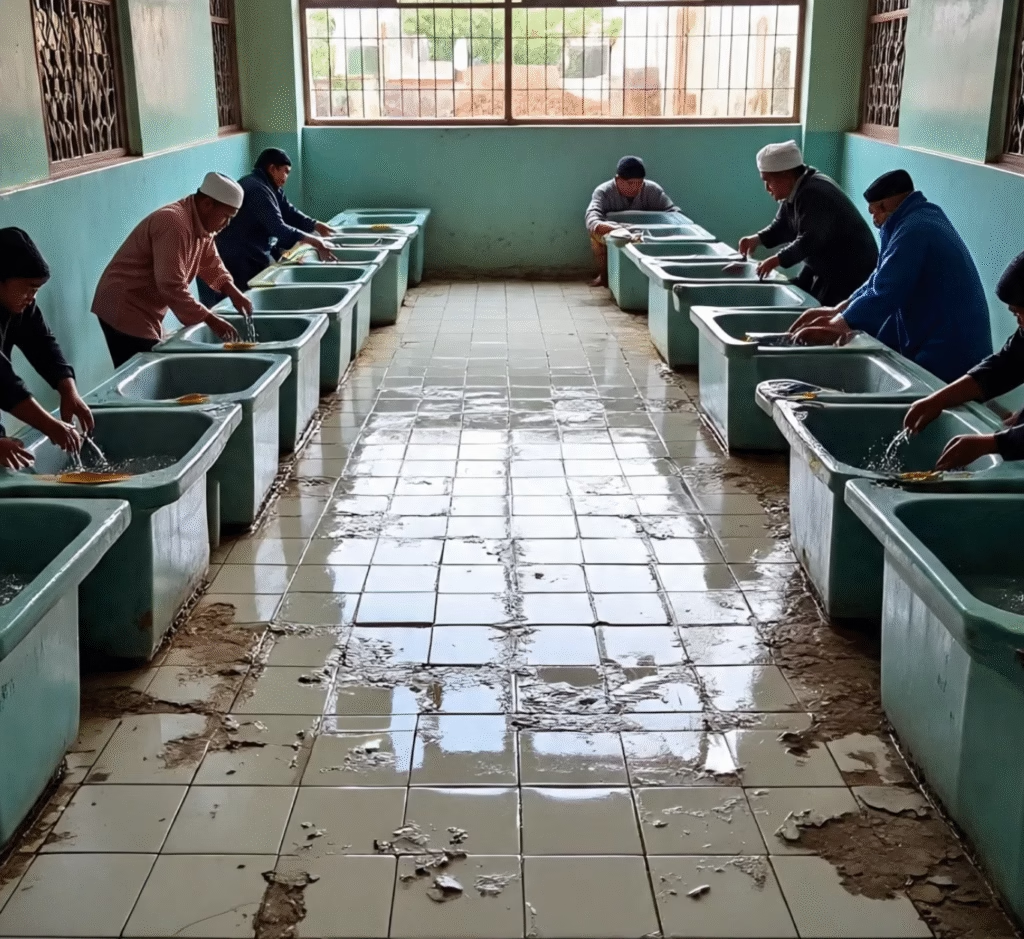
The Core Design Mistakes in the Mosque Wudu Area
Even though the issues with wudu maintenance in the mosques might seem diverse to the observer, they can be related to a few repetitive decisions in terms of design. As a matter of fact, most of the wudu care problems are not due to single faults, poor cleaning or mishandling, but rather due to a few basic wudu area design errors that are duplicated over the projects.
To be more specific and operational, these issues may be divided into four main-line design mistakes which directly result in cleaning workloads, faster wear of surfaces, periodic repairs, and higher maintenance expenses in the long-term. These design-driven failures need to be understood, as none of the attendant maintenance issues can be addressed by cleaning procedures, and they have to be avoided at the design level. Let’s explore the core mistakes that increase minentnace consequences.
1. Proor Drainage Design Treated as Secondary, Not Structural
One of the most ignored problems in the maintenance of the mosque wudu is drainage. Treatment of drainage as a secondary issue instead of a driver of design comes at a long-term cost to the maintenance personnel.
The most frequent mistakes in drainage are:
- Drains that are not placed based on the splash zones.
- Flat floors, which enable pooling of water.
- Slopes that are added at later stages of layout.
Cleaning alone is hardly a solution to these problems. Constant wetness causes surface deterioration, smell, and constant repair.
According to independent studies in the areas of building science, moisture is the greatest risk factor that undermines the functionality and longevity of building materials. Even in wet conditions, overexposure results in a chain reaction of material failures and a substantial increase in the maintenance requirements.
Maintenance Consequences
- Even after cleaning, persistent water pooling still occurs.
- Repeating renovations of tiles, grout, and underlay.
- Smelly odour and constant hygiene complaints.
- More labour time is used in drying and in corrective cleaning.
The Problem of Failure in Maintenance Routines
Cleaning considers the surface water but does not correct the lack of slopes, improperly placed drainage, or inadequate outlay capacity. Moisture will persist provided that drainage is not in line with the splash zones. These are structural conditions, whereby maintenance teams are pushed into the same repetitive interventions without finding out the root cause of the issue.
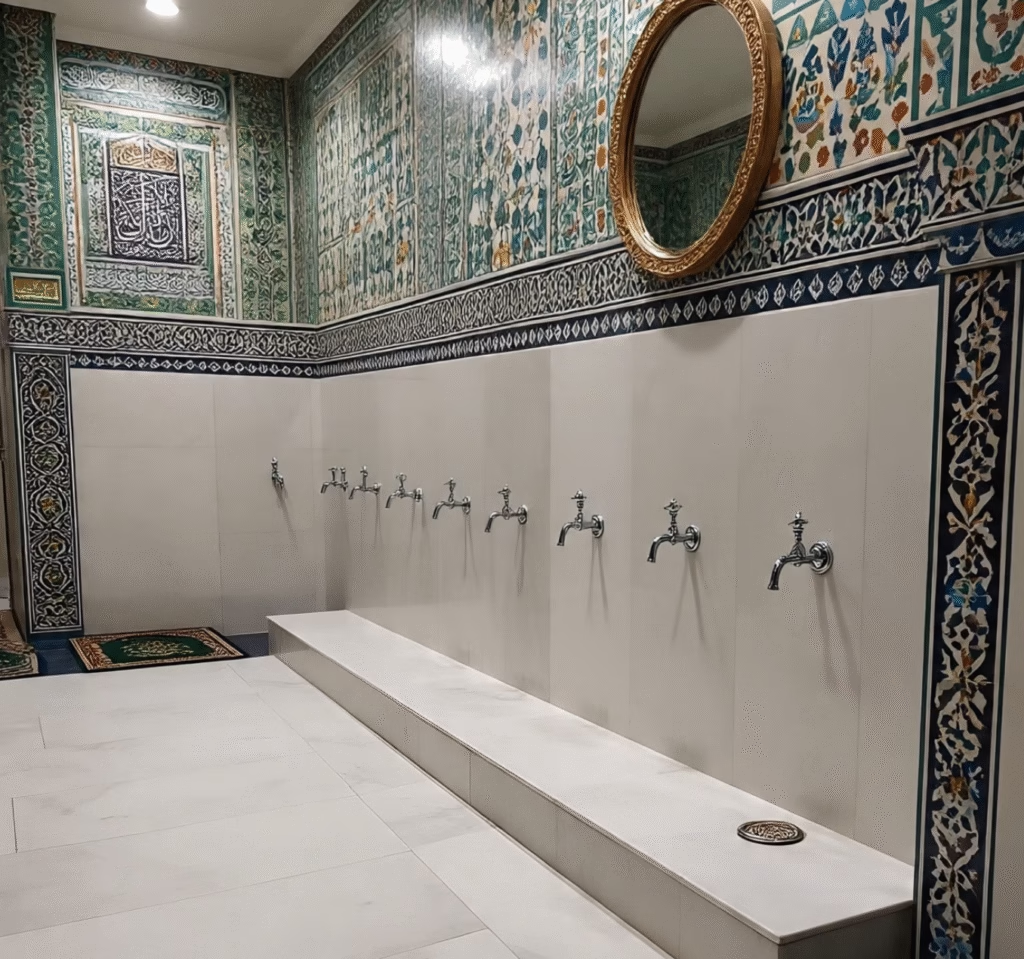
2. Ignoring Cleaning Access and Fixture Coordination
The design of layouts before the coordination of basin size, drainage alignment, and access to cleaning is a typical planning mistake that has a direct negative impact on maintainability. By mounting fixtures without proper spacing or installation, space is left behind by maintenance teams that they cannot clean properly.
Maintenance Consequences
- Areas behind, under, or in between fixtures are not cleaned ever.
- Stagnation of water and dirt in unreachable areas.
- Hypocritical cleanliness grievances and visual degradation.
- Constant minor repairs that do not altogether dry up wetness.
The Reason behind the failure of Maintenance Routines.
Maintenance teams are unable to clean the areas that are not physically accessible. Washing habits do not rearrange basins, realign drains, or form clearance where none. These failures are entrenched in the design and can only be avoided in the design.
3. Choosing Materials That Are Unable to Sustain Continuous Moisture
The main causes of many wudu maintenance problems are the material decisions taken, which were inappropriate in the case of the light-use washrooms and inappropriate in the case of the mosques.
We often hear of renovations that were made on the mosques:
- Porous surfaces that stain in months.
- Cracking caused by continuous exposure to water.
- Furnishes which are ruined by frequent cleaning.
The reduced initial material cost oftenly turn out to be more expensive in the long run as a result of replacement and repairs. Durability in public wudu places is not an option; it is a requirement.
Specific basin solutions, like Wudu Wash Pro basins, show the direct connection between the choice of the material and the results of maintenance in the long term.
Maintenance Consequences
- Quick stains, which necessitate harsh and frequent washing.
- Surface or under constant wet usage, cracking, chipping, or surface breakdown.
- Reduced replacement cycles and the cost of life cycle maintenance.
- More downtime when repairing and refurbishing.
The reasons why all maintenance routines fail
Frequent cleaning of materials that are not meant to be subjected to constant moisture conditions also consumes materials at a higher rate. In such situations, it is the maintenance activity itself that hastens damage and does not inhibit it.
There is no cleaning technique that can help cover up the lack of finishes that cannot stand wet conditions all the time, so the issue of the problem is not a failure of maintenance, but a design choice.
4. Finalising Layouts Before Basin Selections
Finalisation of the wudu area design, then choosing basins, is one of the most expensive mistakes made during planning. Layouts are usually compromised in such instances when basin dimensions and mounting requirements are introduced towards the end.
This mistake leads to:
- Awkward distance that amplifies splash.
- Drainage misalignment
- Restricted cleaning access
Review the best basin configurations that enable planners to plan with realistic dimensions and eliminate the maintenance-driven redesigns later.
Maintenance Consequences
- Mismatched drains that do not pick up splash well.
- Reduced floor and wall cover.
- Hampered cleaning patterns and unproductive repair processes.
- Repairs that keep being made never completely fix the wetness.
The reasons why Maintenance Routines Fail
Waters are a permanent occurrence once the conflict between basin and splash behavior conflicts with the layout that is fixed. Cleaning is able to deal with visible moisture, but not reposition drains, basin height, or spacing mistakes. These discrepancies cannot be fixed later on by maintenance, but during design.
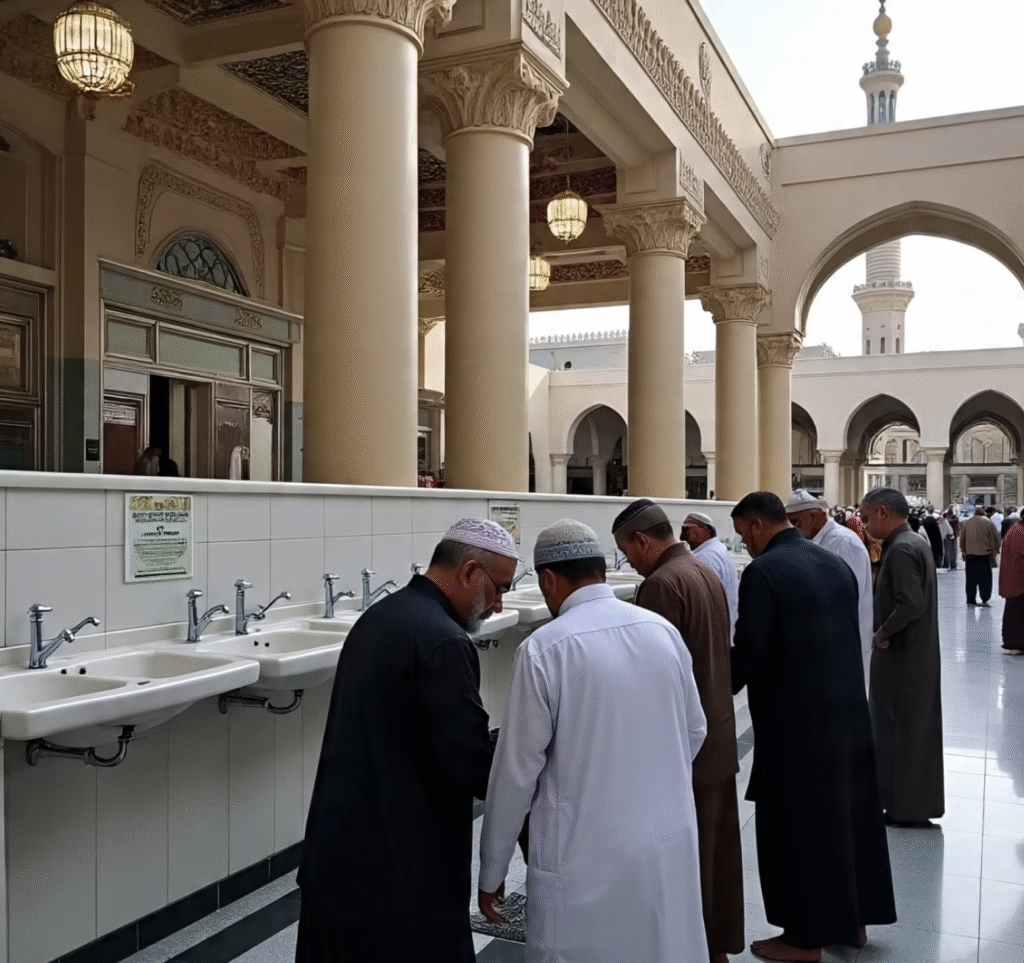
5. Inability of Design to Support Continuous and High-traffic Wet Use
There is an imperfect correlation between the damage and the time span (long-term deterioration failure).
Wudu spaces are hygienically wet and have a high flow of users, especially in mosques with a large number of people attending. The lack of this level of use in the design of surfaces and fixtures causes the surfaces and fixtures to wear quickly, and hence the repetition of maintenance processes.
Maintenance Consequences
- Fast wear in traffic areas.
- Frequent maintenance at similar sites.
- More labour in peak usage periods.
- Reduced finishes and fixtures.
Reasons behind Maintenance Routines Failure
Wudu areas with high traffic are characterised by wet exposure that is beyond the limits of poorly designed surfaces. Cleaning may superficially beautify the look, but cannot be used to stop the gradual deterioration of the structure through constant use. In the absence of design stage reinforcement, it will deteriorate.
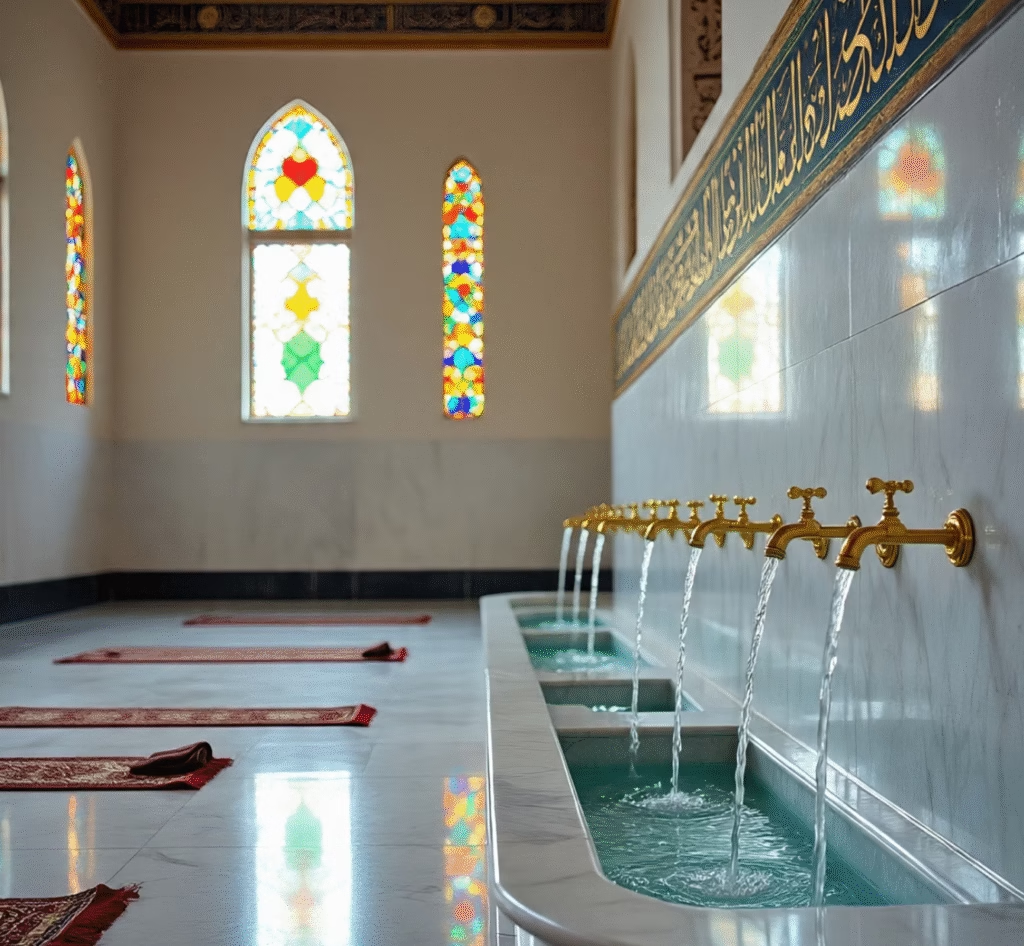
Lessons Learned on the Renovations of Successful Mosques
Some of the most chronic mosque wudu maintenance issues can be anticipated. They are found in redesigns many times over, where design choices were not made using actual observations of use.
Examination of the projects that have been completed on mosques, including the ones recorded at Wudu Wash Pro, helps committees and planners know that layouts, materials, and drainage do not work as well at handover as they are meant to work at the end of the project.
This evidence methodology minimises the guesswork and eliminates the repetition of the same mistakes that are heavy on maintenance.
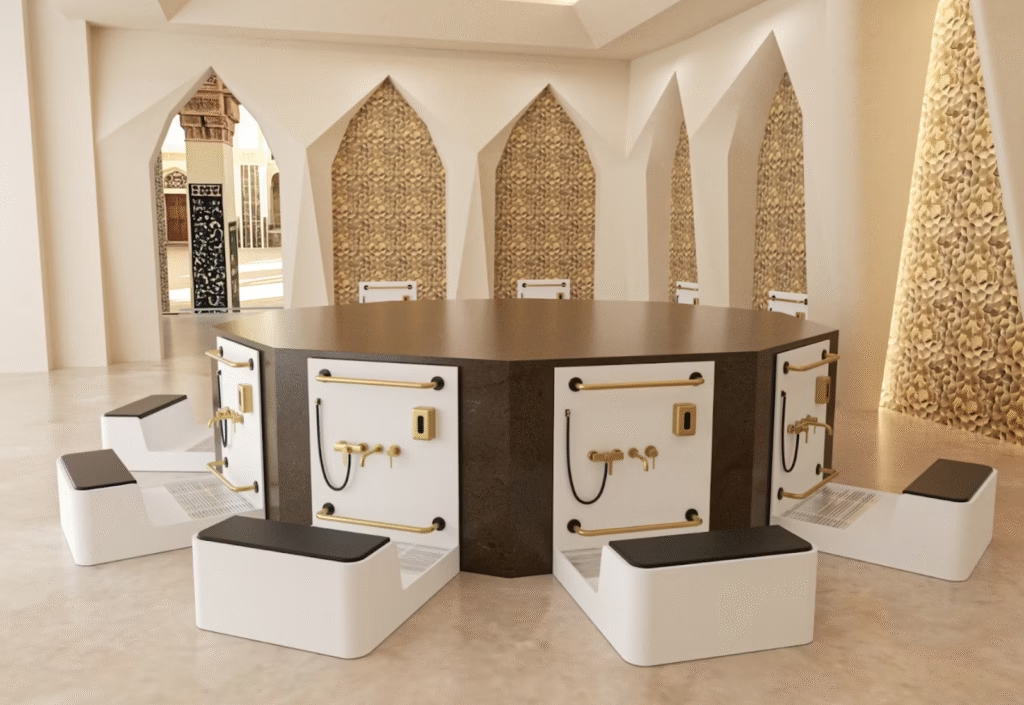
Why are The Design Flaws Important in the Long Run?
Maintenance is accruing, a cumulative cost. Every design concession gets compounded over time with increased labour in cleaning, diminished lifespan of the components, and increased repairs.
Practically, the majority of long-term wudu maintenance problems are not due to the bad cleaning, but the consequence of the bad design choices taken at the early stages of the project.
This is the reason why, when reading about unique mosque wudu requirements and renovation plans, many planners refer to the works of such a specific provider. Contact Now!
Conclusion
For the mosque committees and renovation planners, the issue of lowering maintenance expenses begins with design, not the cleaning schedule. The prevention of typical mistakes in the design of wudu areas contributes to safer environments, minimisation of maintenance costs, and reduced spending on the issue.
The properly designed wudu spaces are not only easier to clean, but they are also practical and hygienic over the years, and do not require regular intervention to serve the congregation with the purpose they are designed for.
Frequently Asked Questions
Q. What are the leading mosque wudu care issues?
Ans. Most of the leading mosque wudu caste issues include poor planning of layout, poor drainage, improper selection of materials, and the inability to clean them during the design.
Q. Why should additional basins tend to add to the maintenance?
Ans. Overcrowded layouts enhance the splash, crowding, and wetness of the floor, which results in an increased rate of cleaning and accelerated surface degeneration.
Q. What is the impact of basin selection on the costs of maintenance?
Ans. The size of the basins, splash prevention, and mounting height have a direct relationship with the spread of water, the alignment of the drainage, and ease of cleaning.
Q. Is it possible to repair the problems of maintenance without renovation?
Ans. Yes! It is possible to alleviate some of the issues, whereas the design-related ones, like poor drainage and spacing, are normally addressed through structural correction.
Q. What can the mosque committees do to minimise the long-term wudu maintenance expenses?
Ans. This was done by focusing on durability, examining actual project performance, choosing basins at early stages, and using established mosque-specific design criteria when making design decisions.