Introduction
If you are a mosque project owner or decision maker, choosing the right wudu basin is necessary for heavy usage. Commercial wudu basins handle the heavy public use with excellent material quality, drainage, and ergonomic designs.
Real-world applications fail any mosque wudu basin project if not properly planned. Heavy public use has aggressive requirements for wudu basins.
Today, we will elaborate on the wudu basins and understand material, specs, and drainage needs.
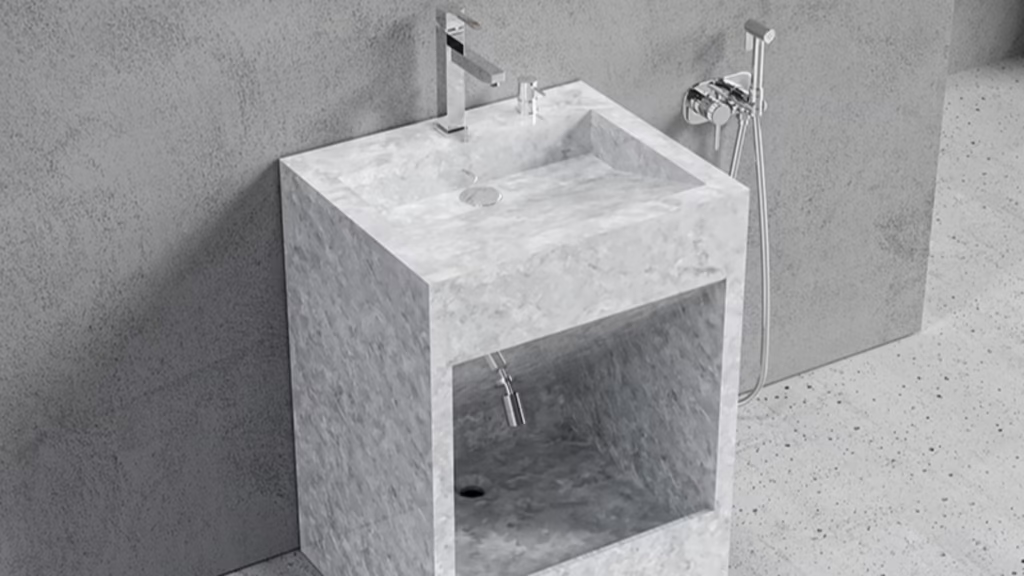
What does it mean by Heavy Daily Public Use?
Heavy daily use of durable wudu basins depends on the user count, demands, and public stress. Let’s take a look at all these factors.
User Volume
User volume is the number of users who daily attend mosques and perform wudu. High user volume places greater strain on the commercial wudu basins. While a low user volume reduces the chances of early wear and tear.
Consider the following aspects in user volume.
- Hundreds to thousands of users per day
- Continuous use across prayer times
- Users of different ages, weights, and physical abilities
- Minimal recovery time between uses
Peak-Time Demand
Mosques definitely have five prayers. User count peaks at this time, and the burden is the highest. However, midnight prayers can have a user count, but that doesn’t reach the peak demand.
Moreover, Ramadan and Friday prayers have the peak demands. During peak demands, here is what happens.
- Heavy congestion before and after prayer times
- Simultaneous use of multiple basins
- Increased water flow demand
- Higher risk of splashing, impact, and misuse
Public Use Stress
Public ablution basins have a different and unique use stress. A wide range of users, with different ages and unpredictable behaviors, impacts the basin facilities as follows.
- Users leaning their body weight on basins
- Foot pressure on basin edges
- Accidental impacts from footwear or buckets
- Misuse due to lack of supervision
Domestic vs Commercial Basins
Domestic wudu basins are designed to handle mild traffic. There are no insights for the large traffic handling. Therefore, they are not suitable for the mosques and other relevant public ablution basin projects.
While a commercial wudu basin has the following features for heavy-use wudu basins.
- Designed for continuous operation, not occasional use
- Thicker materials and reinforced structures
- Higher load-bearing capacity
- Longer service life under stress
- Compliance with commercial plumbing standards
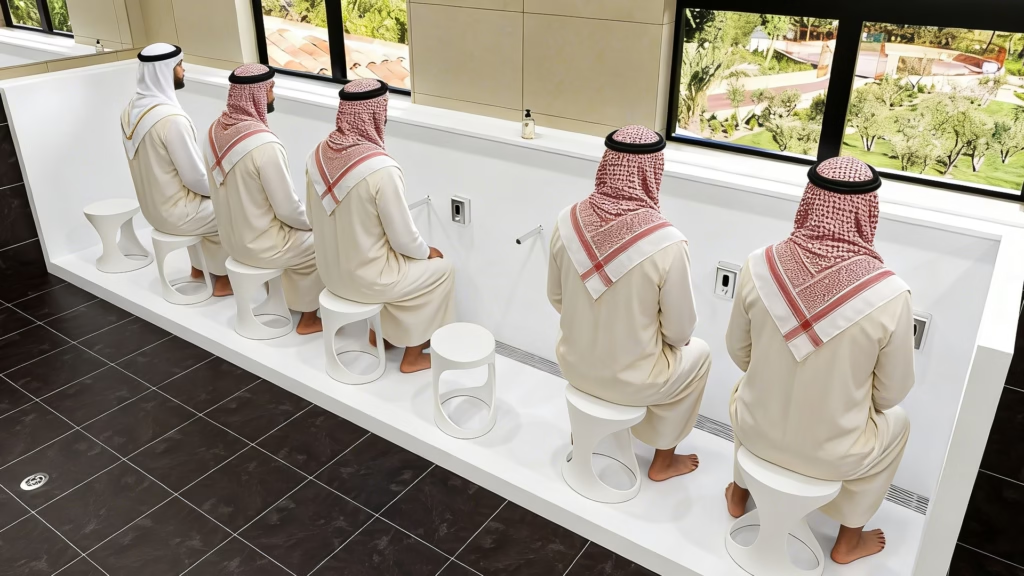
Material Quality and Construction Standards
Daily use of the wudu basin for mosques requires a high material quality and durable wudu basins. You should focus on the following factors.
Commercial-Grade Materials
For commercial wudu basins, always consider high-quality wudu stations with materials, such as:
- High-density ceramic, solid surface, or reinforced composites
- Corrosion-resistant finishes
- UV- and moisture-stable materials
Material Thickness
Material thickness should be high. It offers durability under extreme conditions and resists cracking under stress.
Impact Resistance
Mosque wudu basins with high impact resistance can bear more mechanical wear. They prevent cracks and visible physical damage when a heavy object strikes them.
Surface Durability
Surface durability includes a scratch-resistant finish and reduced cracking under stress conditions. Moreover, your public ablution basins should not stain early.
Structural Strength and Load Capacity
Public ablution basins have both structural strength and load capacity when designed efficiently.
Foot-load and body-weight tolerance requirements
The surface durability ensures it can withstand the user’s full body weight. Most wudu basin projects fail when they don’t account for user weight or don’t have the necessary strength to meet the required load capacity.
Reinforced bowl, rim, and mounting zones
Reinforced bowls and mounting zones are ideal for overall durability, reducing the risk of cracks. They elevate structural support and lifespan.
Wall-mounted vs floor-supported basin performance
Both wall-mounted and floor-mounted basins are ideal for mosques. However, you should assess your mosque traffic, usage conditions, and proper installation process before choosing any option. However, floor-mounted basins offer better structural support and higher load capacity than wall-mounted durable wudu basins.
Structural fixing requirements
For durable wudu basins, there are a few structural fixing options. These include:
- Heavy-duty brackets or floor anchors
- Load-rated fasteners
- Compliance with public facility standards
Design Features for High-Frequency Use
A durable wudu basin affects the durability, safety, and user comfort for daily public use. Here are a few design features suitable for high-frequency use.
Ergonomic foot placement
Proper foot placement angle and height ensure the user’s comfort. It also reduces the burden on individual wudu basins.
Splash control
Deep bowl geometry and controlled water flow directions reduce the splashing and ensure proper drainage. Water stagnation is less likely to occur with a proper splash control system.
Rounded edges and safety-focused geometry
Cornered edges compromise user safety and may cause accidents. Rounded edges and safety designs improve user safety.
Anti-slip surfaces
Wet and slippery floors cause slippage of worshippers and might injure them. Textured footprints and anti-slip surfaces provide better grip on the ground.
Plumbing and Hardware Specifications
Plumbing should be commercial-grade and must match the daily usage.
Heavy-duty taps, valves, and cartridges
Heavy-duty taps and valves should have high cycle ratings. Ceramic cartridges offer long life and better durability.
Drain size and flow rate
Consider the drain size, as small drains are more prone to clogging. Larger drains prevent water blockage and ensure fast water evacuation.
Concealed and tamper-resistant plumbing layouts
Concealed plumbing increases cleaning and elevates the aesthetic layout. They also decrease water splashing.
Compatibility with commercial plumbing systems
Public ablution basins must integrate into the building infrastructure. Incompatibility always causes pressure issues and premature failures.
Hygiene, Cleaning, and Surface Performance
For hygiene and cleaning purposes, your commercial wudu basins must have the following features.
Non-porous surfaces for hygiene control
Non-porous surfaces keep the moisture under control and optimize the drainage. They prevent bacterial growth and improve overall hygiene.
Resistance to harsh cleaning chemicals
Public ablution basins have to withstand harsh conditions. Therefore, deeper cleaning with cleaning chemicals offers hygiene. However, make sure your basins are resistant to harsh chemicals and don’t get damaged during this practice.
Ease of cleaning
The design and infrastructure of commercial wudu basins affect the ease of cleaning. A smooth and accessible surface increases cleaning efficiency.
Water drainage and residue minimization
Proper drainage systems help flow the water and avoid stagnation. Minimize residue accumulation and ensure better cleanliness.
Solid Surface Material Suitability and Advantages
Solid surface material is pretty much effective due to its non-porous, durable, and easy-to-clean nature. Its non-porous feature makes it more resistant to moisture and mildew, allowing the wudu basin to better maintain cleanliness in high-flow and high-humidity environments.
Wudu Wash Pro experts use the solid surface material as it is more suitable for large traffic mosques and offers better durability.
Key advantages of solid surface materials include:
- Non-porous structure. It prevents water absorption and bacterial growth. There are high hygiene standards in heavy-use wudu areas.
- High impact and crack resistance. Solid surface material withstands daily public stress, including accidental kicks, foot load, and misuse.
- Long service life. Continuous peak-time use and durability decreased replacement and repair costs.
Installation and Site Considerations
Robust infrastructure is ideal for high-traffic mosques and commercial settings. Consider the following tips for longevity.
Wall and floor preparation requirements
Weak floors and walls are prone to damage. Prepare your floor and use reinforced wall substrates, stable floors, and moisture-resistant finishes.
Drain alignment and tolerance limits.
Improper drainage causes water stagnation and an increased chance of infection. Align your drain system and prevent leaks. Ensure proper water flow.
Indoor and semi-outdoor installation suitability
Semi-outdoor conditions can wear your commercial wudu basins more quickly. At the same time, indoor conditions are less demanding compared to outdoor conditions. You should plan your commercial wudu basins based on needs.
Maintenance and Lifecycle Expectations
Without maintenance, commercial wudu basins wear out rapidly. Heavy use causes early damage and requires high-end wudu basins compatible for public usage.
Expected lifespan under heavy daily use
The lifespan of commercial wudu basins depends on material quality, structural design, and maintenance practices. A wudu basin can fail to comply with heavy use if it is not properly maintained or has low-quality materials.
Replaceable components and service access
Repair and replacement costs increase when components are hard to find or service access is rare. Install those commercial wudu basins that have readily available wudu basin components. Various expert services are available for the repair.
Downtime impact on public facilities
In high-traffic settings, short downtime results in long queues of users and increases the waiting time for every individual. Reliable wudu basins have fast repair, minimize failure risks, and help operate continuously.
FAQs
- What defines a commercial wudu basin?
A commercial wudu basin is suitable for heavy public usage and handles a large amount of traffic. Most often, mosques have commercial wudu basins made of reinforced materials, durable plumbing, and enhanced safety features.
- Which material is best for heavy public use?
Public ablution basins must be made from high-density ceramic, solid-surface materials, and stainless steel. They are more compatible and can sustain under harsh environmental conditions.
- Are wall-mounted basins suitable for high-traffic areas?
Yes. Wall-mounted basins are suitable for handling high-traffic areas. Ensure the design is solid and carefully planned.
- How often should public wudu basins be maintained?
Routine inspections are necessary for maintaining public ablution basins. You should set up weekly or biweekly maintenance to extend the lifespan of wudu basins.
- What causes early failure in public ablution basins?
High traffic, poor planning, and inaccurate wudu basin types often lead to failure in wudu basin projects. You should carefully plan the material, durable plumbing, and maintenance.
Conclusion
A wudu basin is an excellent fixture for the mosques. But you should differentiate between commercial and residential wudu basins. Also, assess your mosque’s needs, confirm the quality of the materials, and ensure proper installation with professional help.
Do you want to assess the wudu basin needs for your mosque? Consult experts like Wudu Wash Pro, who already have experience with large projects such as the Al-BUKHARI mosque. Their real-time assessment gets the best quantity, quality, and materials for commercial wudu basins. Contact experts right away!