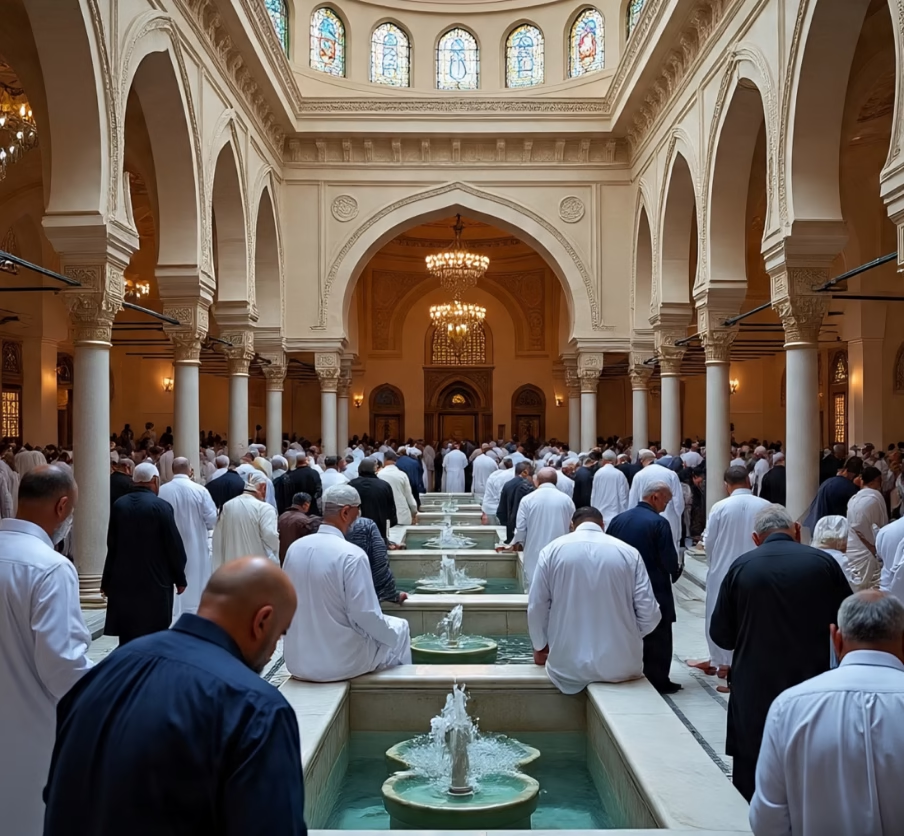
Circulation problems are hardly considered as a design problem in the busy mosques. They present themselves in the form of drippy floors, frustrated parishioners, cleaning grievances, and safety accidents. Most of these issues are not the result of the space inadequacy, but the improper planning of the wudu area circulation.
To facility managers and architects, movement is one of the most important design issues to be addressed by means of ablution spaces. When the planning of mosque wudu flow is efficient, users can move effectively, cleaning is not difficult, and even when the mosque is occupied with high-capacity prayers, the area is not in danger.
In this article, you will learn that decisions in circulation design can have a direct impact on the safety, speed, and experience of the users in high-traffic mosque wudu zones.
Why Circulation is the Real Performance Measure of a Wudu Area
In real mosque designs, circulation defines the functionality of a wudu area as pressure. It is possible to have a layout that satisfies the dimensional needs, yet it collapses because users walk across it, slow down, or queue randomly.
Based on project experience, the majority of congestion problems in Wudu are due to the following:
- Entry and exit paths overlap
- Users have to retrace their steps.
- There are no wet and dry movement areas.
Where there is no certainty of circulation, even the wudu areas that have been designed well are stagnant, unsafe, and expensive to maintain.
Design on Directional Movement and not Open Space
One of the most common mistakes that leads problem control the Flow and Circulation of Users in the crowded Mosque wudu area that most designers make in designing ablution is to believe that an open space would automatically result in good movement. Practically, the open layout, which lacks direction, tends to enhance confusion and cross traffic.
Strong movement of the ablution area depends on:
- Easy, straightforward user directions.
- Rational flow at the entry and exit.
- Pictorial indications made by basin alignment and spacing.
Directional layouts are always faster and safer than open plan layouts during peak prayer time as a result of renovation projects.
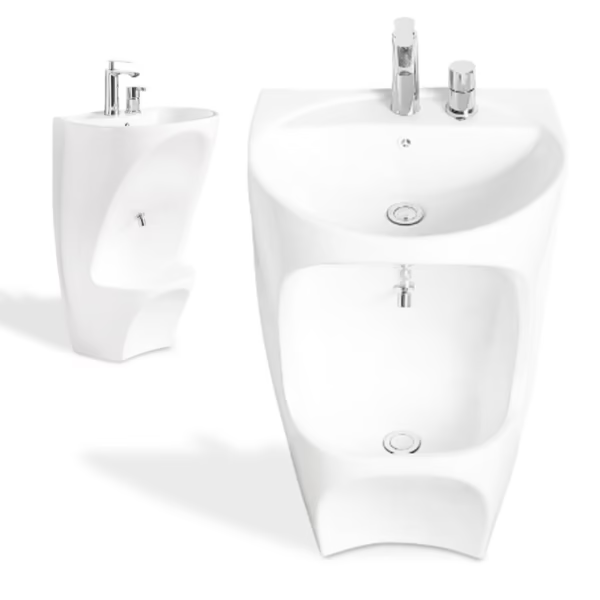
Wet and Dry Circulation Zones Separate Early
One critical standard of circulation that is practised in congested mosques is the separation of the wet activity area and the central walking tracks. The absence of this separation causes water to spread into circulation channels, risking slip and augmenting the load of cleaning.
The best performance wudu areas characterise:
- Wet zones that are right before basins.
- Entrance and exit dry paths of circulation.
- Transitional space to enable the user to be out of basins before drying or footwear.
Uncontrolled migration of moisture. Intensive research on building construction by independent bodies confirms that uncontrolled moisture migration is a major contributor to the risk of slipping and surface damage in high-use wet areas.
Why Linear Basin Layouts Enhance Under-Pressure Flow
Linear layout basin is one of the best tools for controlling wudu area circulation based on real-life applications. Linear layouts have users flow in one direction, unlike clustered designs.
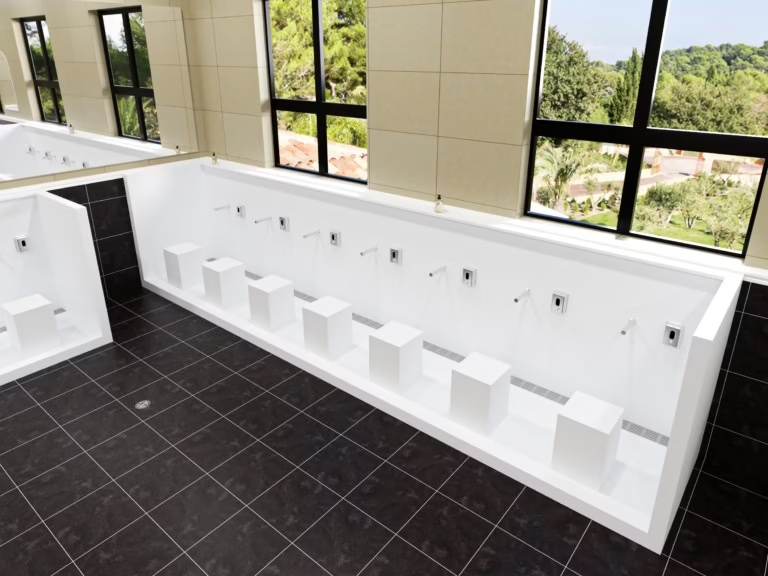
They enhance the wudu circulation in the mosques by:
- Less cross-traffic amongst users.
- Eliminating congestion over communal splash areas.
- Predicting entry and exit paths.
Specifically designed basin designs, e.g. the ones below.
https://wuduwashpro.com/wudu-basin-collection/
show that the size and alignment of basins make the circulation easier in busy settings.
Density of the Basin is More Important than the Number of Basins
One common planning constraint that affects the Flow and Circulation of Users in the crowded Mosque wudu area is the addition of more basins or the conservation of circulation space. Installation of additional basins at the cost of distance will almost always augment wudu congestion in crowded mosques.
- Compromised spacing can slow down the general throughput.
- Users are reluctant or take more time due to the fear of splashing.
- Access to cleaning is limited.
There are also fewer basins with the spacing and usually quicker to be utilised in comparison with crowded setups.
Drainage Circulation Suite Tools Placement
The impact of drainage on circulation is larger than anticipated by most planners. Such misplaced drains will cause the water to spill on walking paths, causing anyone who is using them to change their direction, which will result in a high risk of slips. Drainage must be designed at the same time as circulation- not fixed up afterwards. Effective circulation designs align:
- Drain areas having basin splash zones.
- Sloping floors with the desired direction of walking.
- Dry lanes can be used during peak time.
Lessons From Mosque Installations Projects
Problems of circulation can generally be anticipated when examining the projects that have been done. The actual installations show where users stall, where queues develop and where water disperses outside the desired areas.
Mosque projects help architects and facility managers to design circulation around behavioural observations and not assumptions.
Such evidence-based practice will always result in improved ablution areas.
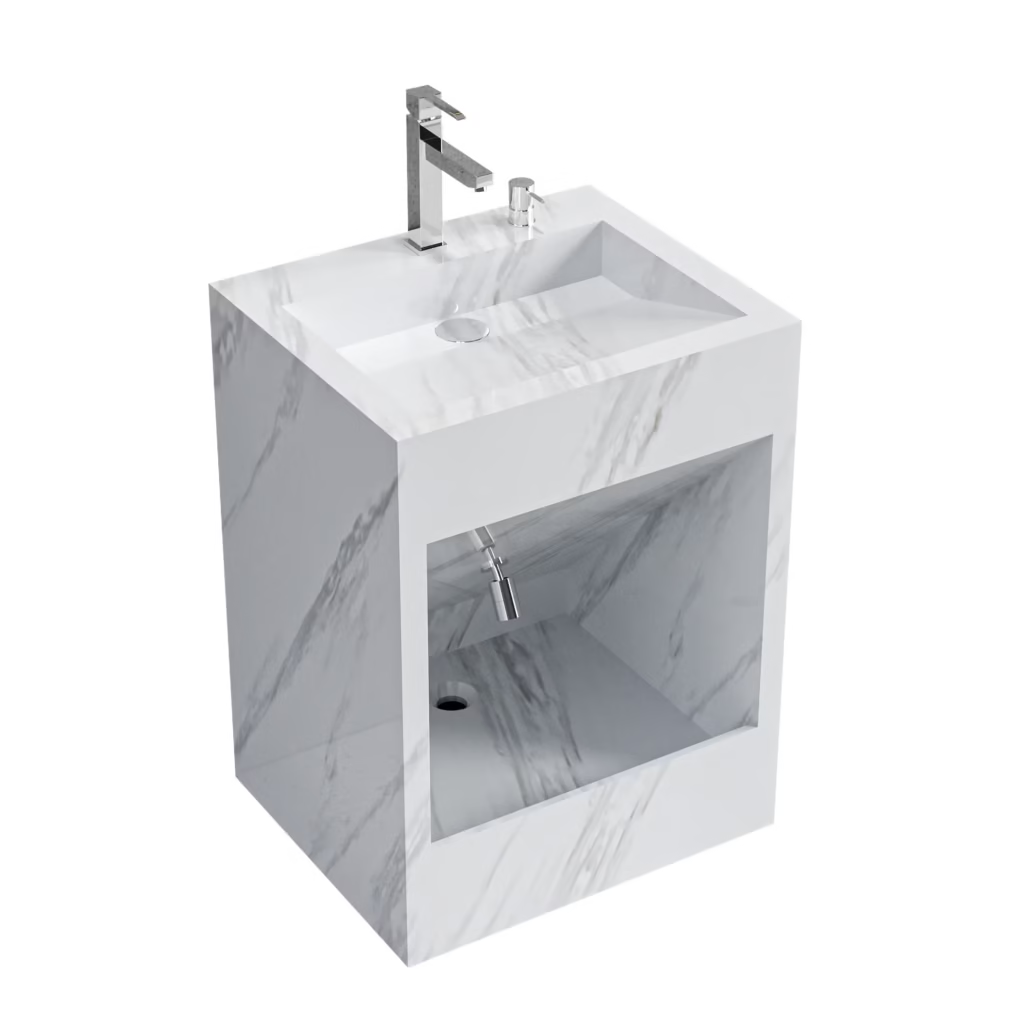
Why Circulation Decisions Reduced Costs in the Long Run
Based on our wudu basin pro solutions and long-term facility management experience, circulation faults present one of the most costly aspects of fixes once installed. It is much more economical to deal with them at the design planning stage.
Poor circulation increases:
- Time and labour cost of cleaning.
- Scratching on unwanted surfaces.
- Possibility of accidents and complaints.
That is why numerous specialists use the examples of specialist companies like WuduWashPro when considering the circulation-friendly wudu area solutions to use in the public mosques.
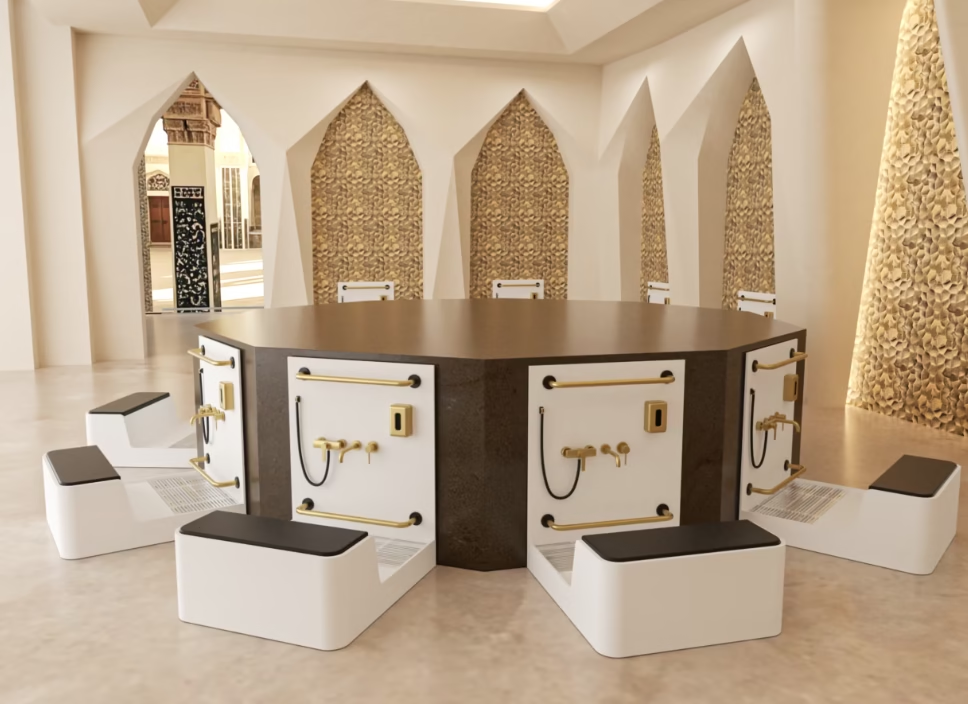
Wudu Area Circulation Planning Checklist for Busy Mosques
| Circulation Area | What to Check During Design | Why is this important in the Mosque Use? |
| Entry & Exit Flow | Do entry and exit points exist distinctly? Do users jump out into running traffic? | Intersecting routes are one of the main reasons that may lead to congestion of wudu during peak prayer periods. |
| Directional Movement | Does layout of the layout naturally lead the user in one direction without to and fro? | Directional circulation enhances speed and minimises hesitation and congestion. |
| Basin Alignment | Are the basins designed in a linear or wall-mounted configuration? | Linear alignment eliminates cross-traffic and enhances the flow of wudu in the mosque when pressure occurs. |
| Basin Spacing | Does it have enough spacing between basins to avoid contact of elbows and splashes? | Close spacing reduces throughput and enhances wet floors and frequency of cleaning. |
| Wet & Dry Zone Separation | Do wet activity areas obviously occur within the basin area? | Water on walking tracks poses a high risk of slips, and it interferes with the movement of ablution areas. |
| Drainage Placement | Do the drains lie in the estimated splash areas, and are they in line with the floor slope? | It lowers the drainage, thereby compelling the users to change the movement and raises long-term maintenance problems. |
| Floor Slope Direction | Does the floor slope keep water off the circulation routes? | Improper slope results in pooling in areas where users are walking, which exposes them to safety hazards. |
| High-Traffic Zone Design | Are the places around basins, drains and exits supported in cases of heavy use? | The wear and repair are mostly carried out in the circulation, but not in the basins. |
| Cleaning Access | Is it possible to do cleaning without blocking movement paths? | Cleaning disrupts circulation, which results in congestion and delays in operation. |
| Peak-Time Performance | Has it been tested as far as peak prayer usage scenarios are concerned? | Numerous circulation failures do not manifest themselves until there are many users and they are taking wudu at the same time. |
| Real-World Validation | Has the design been compared with installations of mosques which have been completed? | Comparison against real projects avoids the recurrence of familiar circulation failures. |
Final Thoughts
Even in crowded mosques, the distinction between a mosque that doesn’t cope with pressure and one that works dependably day by day lies in good circulation in the wudu area.
Well-defined motion patterns, regulated wet areas, adequate separation, and prior coordination of basins as well as drainage, are all involved to provide safer, quicker, and more convenient user interfaces.
To an architect or facility manager, circulation design should be based on actual user behaviour as opposed to idealised designs to minimise congestion, enhance safety, and safeguard long-term functionality.
Frequently Asked Questions
Q. What brings about congestion in the wudu areas of mosques?
Ans. Intersection of entry path and exit path, poor spacing of basins and designs that fail to direct users are some of the causes of congestion.
Q. What is the impact of the circulation design on safety?
Ans. When circulation is low, the water will spread along walking paths and expose people to slips, as well as complicate the cleaning process at the busiest time.
Q. Do busy mosques always have better linear basin layout?
Ans. Yes, in the majority of the high-traffic environments. Linear layouts improve the flow of people across the area and make the users move across the area predictably.
Q. Does the circulation issue get corrected once installed?
Ans. A part of the problems can be addressed, and the majority of the circulation defects need a structural transformation. They should be dealt with much better during design planning.
Q. What can be done to enhance wudu flow without renovation by facility managers?
Ans. Clarified indications, forced exit/entrance direction, and rigorous cleaning habits are possible, but the performance will remain limited by design constraints.