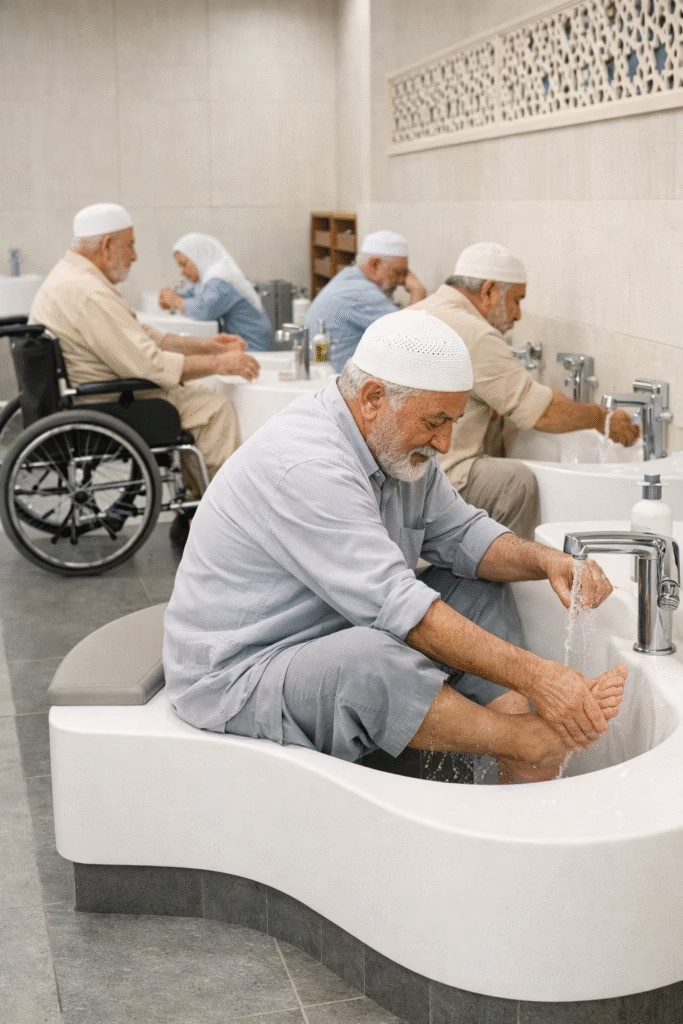
Selection of an accessible wudu basin for elderly worshipers is among the most sensitive specification decisions when dealing with a mosque project. Though accessibility is discussed in principle, it ultimately comes down to minor adjustments that do not serve the purpose when the space is in use. The elderly worshipers feel the difference very fast between a basin that functionally supports them and one that does not support them.
This article discusses the way to specify an accessible wudu basin, which promotes safety, dignity, and independence. It targets mosque committees and inclusive design planners at the specification stage when choices regarding height, seating, layout, and material have not turned into matters of mere detail.
Why Elderly Accessibility Needs Purpose-Built Wudu Basins
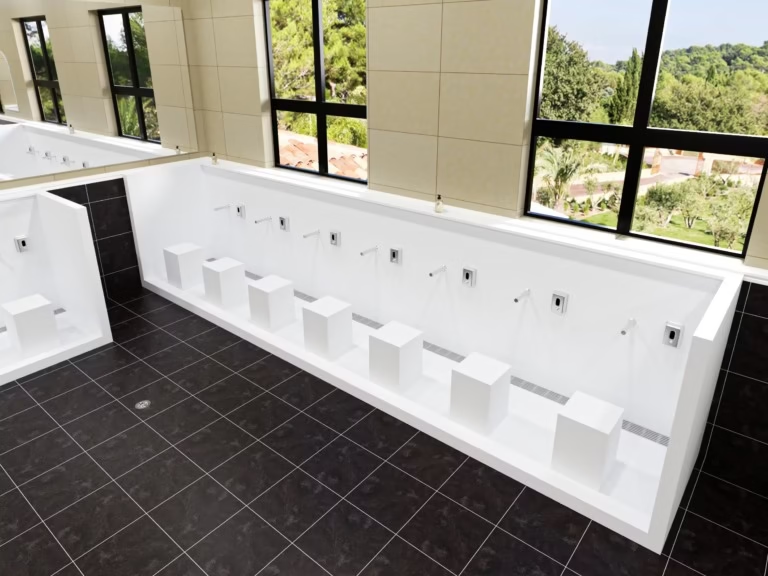
Elderly accessibility in mosque wudu areas cannot be treated as a secondary adjustment. From our experience working with mosque projects, accessibility issues rarely come from a lack of goodwill. They come from using standard basins in situations where elderly worshippers need far more physical support than those designs provide.
We consistently see that older users are not unable to perform wudu; they are uncertain while doing it. That uncertainty does not appear on opening day. It develops after weeks of regular use and becomes most visible during busy prayer times, when movement is faster, and floors are wet.
The major problems that we have found are,
- Wrong basin height: Standard heights force awkward lifting or excessive bending for seated users
- Unstable or improvised seating: Add-on stools shift or feel unsafe on wet floors
- Insufficient load support: Basin edges and seating zones are not designed to bear body weight
- Poor movement clearance: Tight layouts make sitting down and standing up more difficult
These are not issues that cleaning, supervision, or small accessories can resolve. Once the wudu basin height, seating position, and layout are fixed, the physical demands placed on elderly users cannot be meaningfully reduced without replacement or reconstruction.
Where elderly accessibility is addressed through purpose-built wudu basins, these problems largely disappear because posture, load support, and movement are resolved at the specification stage. Designs that account for seated use and stable weight transfer allow elderly worshippers to perform wudu calmly and independently.
An elderly wudu basin should feel like support and understanding, not an afterthought added at the edge of the space.
What Defines an Accessible Wudu Basin
Accessibility does not come from one thing. A truly easy-to-reach wash basin supports the whole wudu process without making the person change their position or needing help.
In practice, accessibility means the basin allows a natural seated position, stable weight transfer, and controlled water use. When these elements work together, elderly worshippers are able to perform wudu confidently, even during busy prayer times.
Wudu Basin Height: The Most Critical Dimension
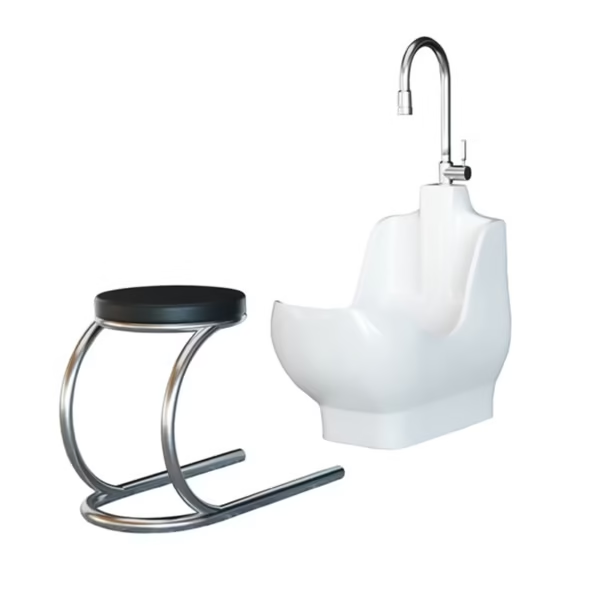
Wudu basin height has more influence on elderly usability than any other single specification choice. From our experience, height-related decisions are also the most difficult to reverse once installation is complete. When plumbing, drainage, and floor levels are fixed, basin height becomes a structural condition rather than an adjustable feature.
We frequently see projects rely on standard manufacturer dimensions without testing how those heights perform in seated use. For elderly worshipers, even a minor mismatch of heights can already cause instability, particularly in the act of lifting the foot or transferring weight on wet surfaces. These are usually understated during planning since they seem minor at first and only become very apparent after regular daily use.
The problems related to height that mosques mostly face are:
- Basins set too high: Users have to lift their leg higher than what is normally comfortable, hence increasing the strain on balance
- Basins set too low: Excessive bending places stress on knees and hips
- Misalignment with seating: Seat and basin heights do not work together, forcing awkward posture
- Inconsistent heights across stations: Elderly users cannot find which basins feel safe to use
Cleaning, grab bars, or better supervision would not solve those problems. Once the height of the basin is set wrongly, elderly users have to adjust their postures each and every time they perform wudu. This increases discomfort and risk over time.
We have found that effective height planning begins with seated posture and natural movement, not standing reach or standard dimensions. When the height of the basin is specified correctly from the very beginning, the transfer of weight feels predictable. There will be reduced splash and reduced reliance on support features.
Getting the wudu basin height right at the specification stage is one of the clearest ways committees can prevent long-term accessibility issues that cannot be corrected later.
Seating Design
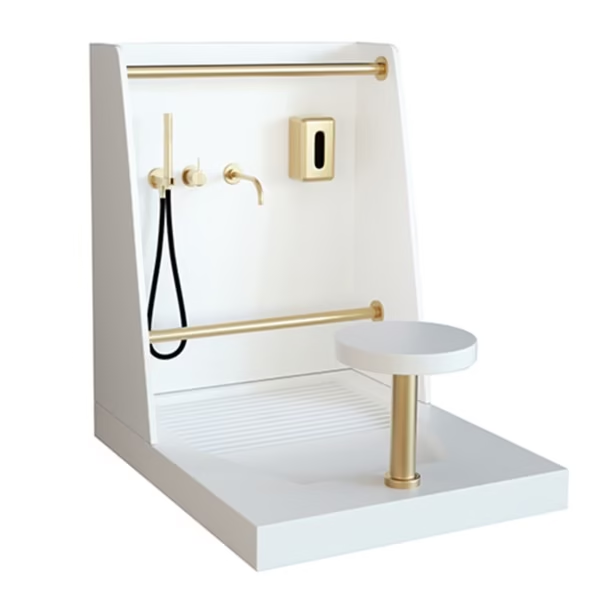
Seating is seen as an accessory and not as a structural part of the wudu station. Lightweight stools, seating that can be moved in and out, or seating added after installation adds to the uncertainty when being used on wet floors. For most elderly users, such uncertainty is enough to discourage use or otherwise force awkward movement.
The most common seating-related problems we encounter include:
- Lack of stability: Seats that shift or rock under body weight
- Poor alignment: Seating positioned too far or too close to the basin
- Incorrect seat height: Heights that increase strain when lifting or lowering the body
- Insufficient load support: Seating not designed to bear repeated body weight
Better cleaning will not fix these problems. Neither will rubber feet, nor will more frequent replacement of the stools. Whenever seating is unstable or misaligned, elderly users must compensate with their bodies, increasing discomfort and risk over time.
We have found that integrated, fixed seating performs consistently better because it is specified as part of the basin system. When seating height, position, and structural support are resolved together, posture feels natural, and movement becomes predictable.
Well-designed seating allows elderly worshippers to sit, perform wudu, and stand with confidence. That confidence improves safety, reduces hesitation and splash, and supports a calmer wudu environment during peak prayer times, outcomes that cannot be achieved through add-on solutions after installation.
Layout and Movement
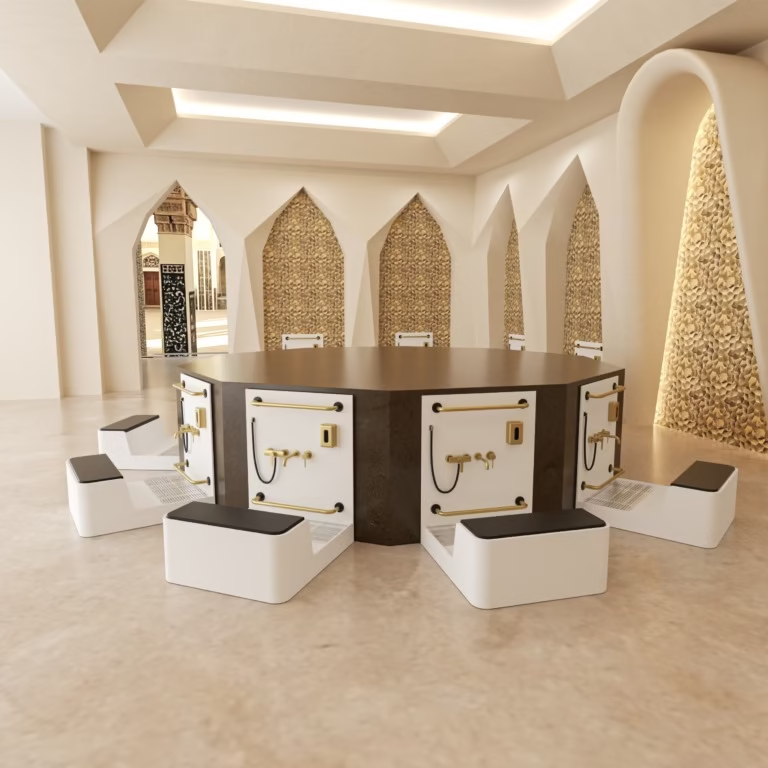
Accessibility does not stop at the basin edge. Space must be provided for elderly users to approach, sit, and stand without asking them to maneuver around anyone or anything.
Layout issues often stem from accessible basins being in high-traffic zones or tucked into tight corners. Even the best-designed basin can feel precarious if circulation is constricted.
An effective layout provides clear approach paths and sufficient clearance behind seating, plus locations wherein elderly worshippers would be able to use the basin without pressure during peak times.
Why Material Choice Matters More for Elderly Users
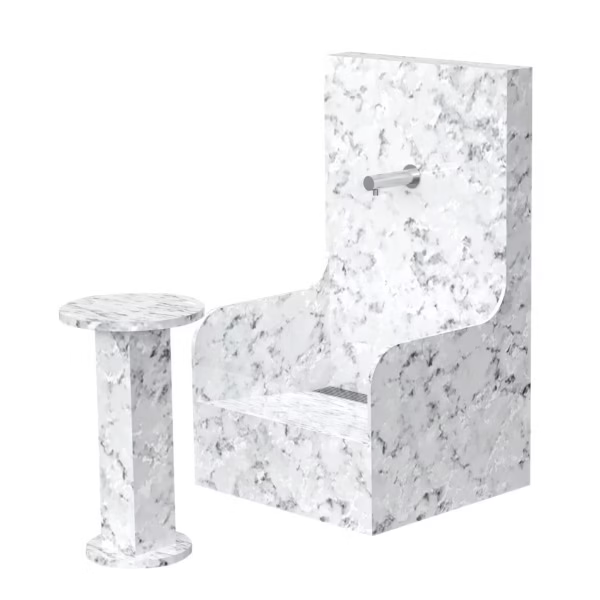
Material performance has a greater impact in elderly-focused wudu areas than in standard installations. Edges, seating zones, and contact points experience higher stress as users rely on them for balance and support.
Ceramic basins are widely used, but in high-use or elderly-accessible zones they often show wear first at exactly these points. Cracks, chips, and surface degradation tend to appear where weight is applied most frequently.
This is where solid surface materials offer clear, practical advantages.
Why Solid Surface Is Better Suited for Accessible Wudu Basins
In the projects aimed at making it easier for the elderly to get around, solid surfaces have been a reliable material that stands up well to wear and tear over time.
The main benefits are that it can bear heavy loads, has a non-porous composition that is good for hygiene, and can be made in one piece, thus getting rid of sharp joints and pressure points. Moreover, the solid surface does not get yellow or stained, thereby helping to keep the place looking neat and nice, which is very important in a well-used environment.
We have seen solid surfaces perform especially well in elderly seating zones, where ceramic alternatives are more prone to long-term damage.
Solid Surface vs Ceramic for Elderly Wudu Areas
| Consideration | Ceramic | Solid Surface |
| Resistance to body weight | Limited at edges | High structural strength |
| Porosity | Can absorb moisture | Non-porous and hygienic |
| Edge durability | Prone to chipping | Smooth, reinforced edges |
| Long-term appearance | May stain or become yellow | Maintains color consistency |
| Repairability | Replacement required | Surface can be refinished |
For this reason, many high-end mosques now recommend solid surfaces specifically for accessible and elderly-use stations.
Common Mistakes in Elderly Wudu Basin Specification
Accessibility issues often arise when the elderly’s needs are addressed too late. Common mistakes include selecting standard basins and adding stools afterward, ignoring seated posture when choosing height, or prioritizing appearance over material performance.
These decisions usually lead to workarounds rather than true solutions and are difficult to correct once the mosque is operational.
Integrating Elderly-Friendly Basins Without Segregation
An accessible design, which is inclusive at its core, operates at its optimum level. The elderly should not be made to feel separated or in a hurry when going to the place of worship.
The installation of several elderly-friendly basins in the main wudu area, as opposed to having a single station, would lessen the wait time while also allowing for use in conjunction with the congregation at large.
What to Confirm During Specification
Committees and planners should test that the height of the basin is right for use in a seated position, the seat is fixed and unstabilized, the arrangement of things allows for the safe movement of people, and the materials are good for the long-term use of the elderly, especially before they give the green light. These things being tackled early will eliminate expensive changes later on that are time-consuming.
Designing for accessible wudu should be thought of in terms of eliminating obstacles rather than introducing new features. When the four aspects of basin height, seating, layout, and material are collectively chosen, elderly worshippers will be more self-reliant and confident in their daily worship.
First steps make a difference. After the place has been put up, it is very hard to get rid of accessibility faults.
Get Accessible Wudu Basins That Support Long-Term Use
Solid surface materials play a central role in durable, hygienic, elderly-friendly wudu design. When combined with proper height, integrated seating, and thoughtful layout, they support long-term safety and usability.
WuduWashPro works with mosque committees and inclusive design planners to specify solid surface wudu basins tailored to the elderly and accessibility needs. Factory-direct production allows basin height, seating integration, and layout requirements to be resolved before manufacturing, not improvised on site.
Speak with the WuduWashPro team to specify accessible wudu basins that support elderly worshippers with dignity, safety, and long-term reliability.