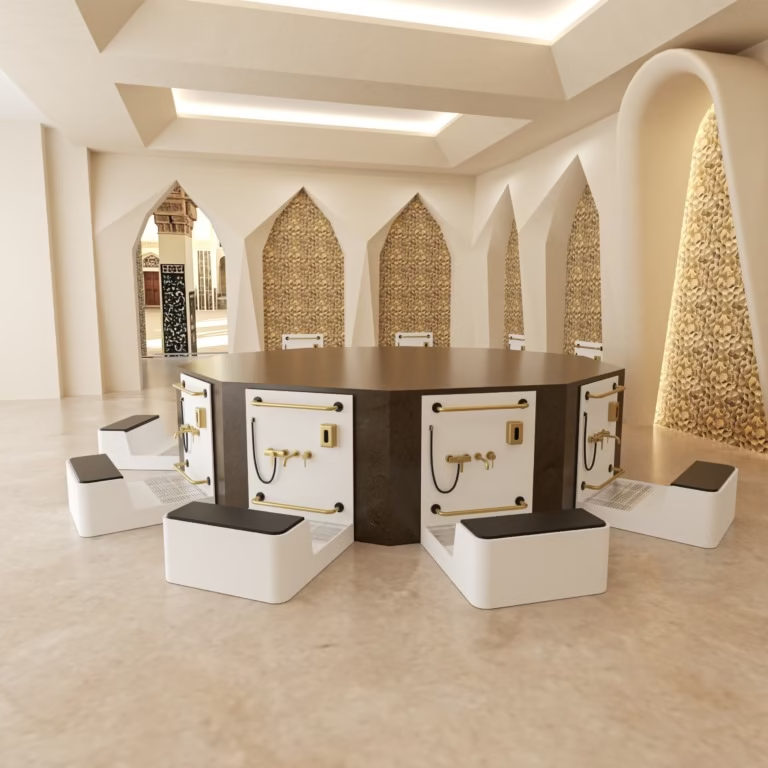
Choosing a supplier is fundamentally the most important decision of any mosque wudu project. It is at this point that one has to note that whereas Wudu basins may look very similar at first glance, differences in construction quality, customization ability, and long-term support usually become apparent only after installation.
Supplier selection carries added responsibility for mosque projects. Wudu basins should be able to function well under frequent use and integrate smoothly with the wider ablution area. Procurement teams should have a clear method of evaluation for which supplier is best suited for long-term mosque use.
A structured wudu basin supplier comparison enables the decision makers to go beyond the superficial differences and evaluate the suppliers on their quality, capability, and support. Systematic comparison reduces the risk in procurement and ensures choices that are practical and cost-effective over the life of the mosque.
Factors To Consider When Selecting Wudu Basin Suppliers for Mosque Projects
When suppliers are evaluated against factors that are clearly defined and readily applicable, it assists the procurement team in risk mitigation and in making choices that stay valid for the entire life of the mosque project.
1. Product Quality and Build Standards
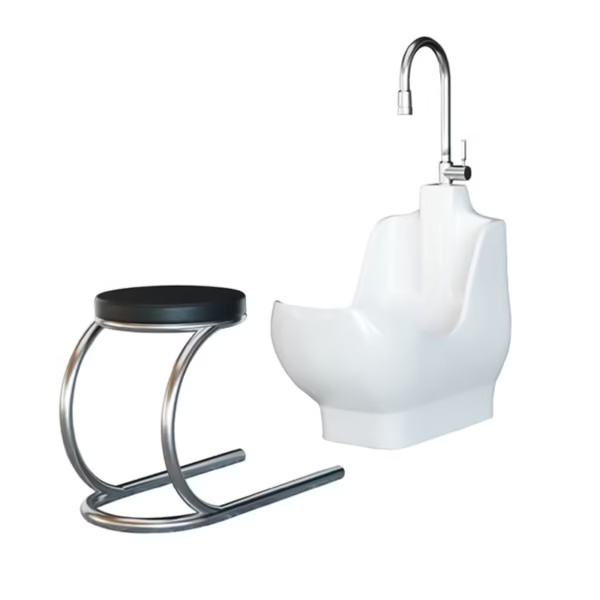
Product quality becomes most visible several months after installation, not on handover day. When real mosque projects are reviewed, it is noticed that basins that appeared identical at first often performed very differently once exposed to daily wudu cycles, constant moisture, and aggressive cleaning routines. Build standards determine which products continue to function reliably and which begin to show wear far earlier than expected.
When comparing suppliers, practical evaluation should focus on:
- Material durability: Ability to resist corrosion, cracking, and surface wear in continuous wet conditions
- Construction quality: Strength of joints, fixings, and supports under repeated daily use
- Surface finish performance: How well it resists stains and how easy it is to clean after some time has passed.
- Consistency across units: The same high quality for every basin supplied, not just a few samples.
- Suitability for commercial use: Products are made for high-traffic, communal spaces.
Reviewing these elements supports a more accurate wudu basin supplier comparison. Suppliers with factory-direct production and established quality controls, such as WuduWashPro, tend to perform more consistently in this area.
2. Suitability for Mosque Use
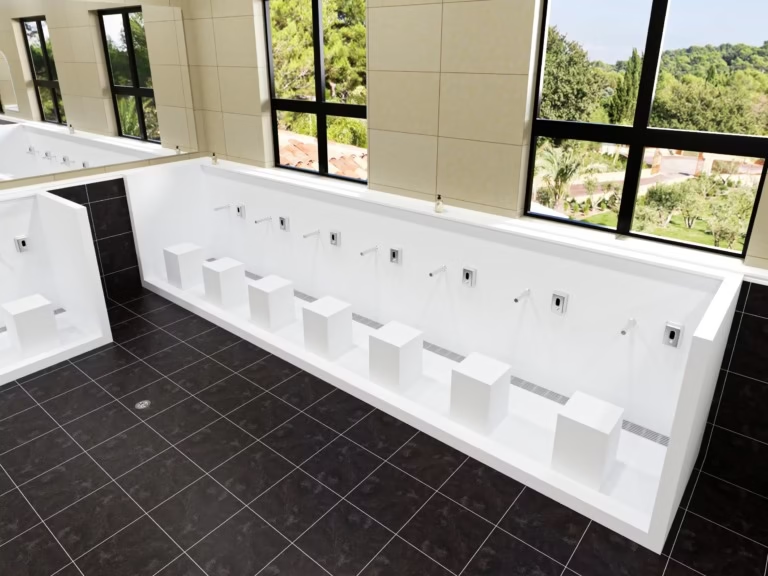
On paper, many wudu basins meet basic functional requirements. In real mosque environments, suitability is tested very differently. From projects we’ve been involved in, issues often surface only once worshippers begin using the space several times a day, across different ages and physical abilities.
In high-traffic mosques, suppliers unfamiliar with religious settings frequently underestimate how people actually perform wudu. In post-installation reviews, common issues can be seen, such as basin heights that feel awkward for older users, excessive splashing that spreads water into walking paths, or controls that slow the process during busy prayer windows. These are not design flaws in isolation; they are signs that mosque-specific use was not fully understood.
Common aspects to evaluate include:
- Insight into wash-up rituals: Basin depth, height, and water control features all contribute to a good wudu.
- User comfort and dignity: Seating, reach, and posture that can easily accommodate worshippers of various ages.
- Splash management: Designs that are aimed at minimizing water splashes and thus, leaving the surrounding areas drier.
- Experience with mosque environments: Proven supply history within mosques or similar religious settings
- Compatibility with mosque layouts: The capability of integrating with already existing or planned ablution areas.
Make sure that the selected supplier is not only capable of delivering a functional basin but also provides a solution that a mosque’s ablution area can practically make good use of.
3. Customization Capability
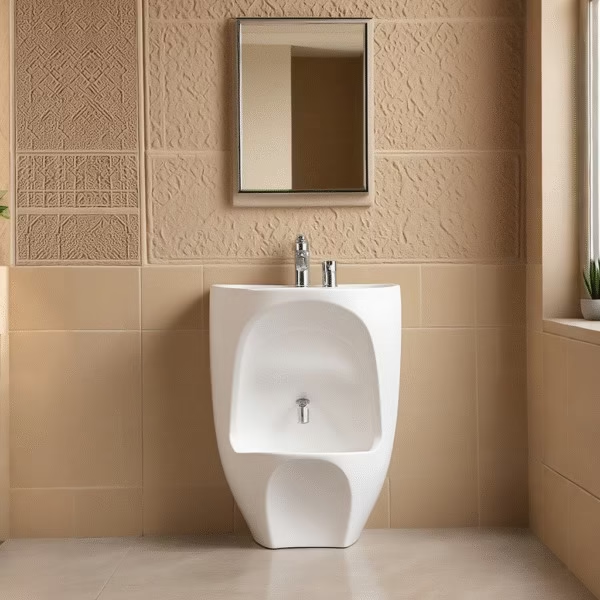
Customisation often determines whether a wudu area feels intentionally planned or awkwardly forced into place. Mosque projects rarely offer ideal conditions. Existing plumbing, fixed wall lines, columns, and circulation routes frequently dictate what can and cannot be done, and standard basin dimensions rarely align neatly with these constraints.
When suppliers cannot adjust their products, compromises tend to shift to the site itself. Installers are left adjusting positions, altering connections, or squeezing units closer together than intended. Over time, these decisions lead to uneven spacing, splash issues, and drainage points that do not perform as expected.
Points to assess include:
- Dimensional adaptability: Readiness to modify basin size, height, or spacing to fit the area
- Material choices: Range of finishes and materials that are suitable for mosque usage
- Layout adaptability: Support for single units, linear arrangements, or shared configurations
- Integration with site conditions: Correspondence with existing plumbing and floor levels
- Limits of customization: Thorough knowledge of changes that are possible and those that are not
WuduWashPro can resolve many of these constraints before manufacturing begins. That ability reduces on-site improvisation and helps deliver wudu areas that function as intended rather than adapting around limitations after installation.
4. Range and System Consistency
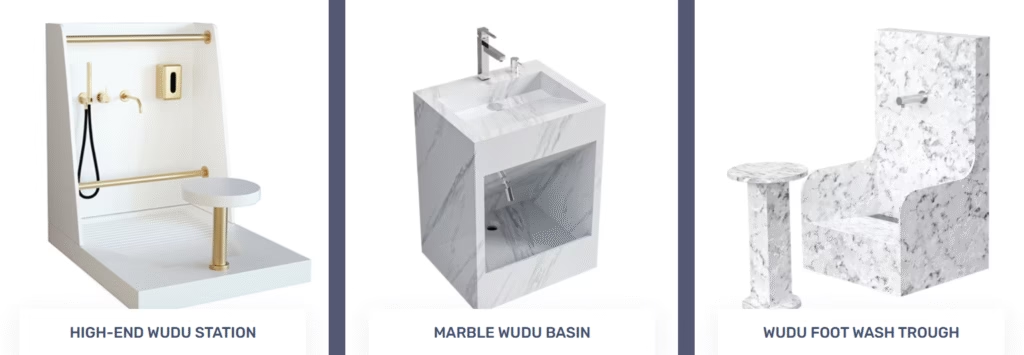
The suppliers’ product range and system harmony can influence the seamlessness of the process when a wudu area is being set up. Choosing products that are designed to work together as one system usually results in reduced complexity during installation and ensures uniform performance throughout the space.
Common considerations include:
- Breadth of product range: The provision of basins, seating, and related components all coming from a single supplier.
- Consistency in design language: The same look and functionality among various basin types.
- Component compatibility: Products that integrate without additional adaptation or modification
- Standardization benefits: Facilitates easier maintenance and replacement.
- Scalability: Capacity to accommodate both small-scale installations and large mosque projects.
Suppliers that manage system design in-house, such as WuduWashPro, are better positioned to maintain consistency across components. That consistency supports smoother installation, more predictable performance, and simpler long-term maintenance for mosque wudu areas.
5. Installation and Integration Support
Installation support can be one of the major factors that can decide the smoothness of the wudu basins’ incorporation in the mosque. Even the best-made products can fail if the installation guidance is unclear or incomplete.
Factors to review include:
- Transparency of the installation requirements: Drawings should be detailed, and instructions should be very clear for the contractors
- Coordination support: Capability to work with architects, consultants, and installers
- On-site support availability: The technician must be ready to attend to any issues during installation if technical assistance is required
- Documentation quality: The manual is accurate and reflects the actual site conditions as well
Suppliers with strong installation and integration support will certainly help reduce project delays, minimize errors, and improve overall project outcomes.
6. Long-Term Support and Maintenance
Long-term support often determines whether a wudu installation remains reliable or becomes a recurring maintenance issue. Once a mosque is in daily operation, access for repairs is limited, and expectations for uninterrupted use are high. Supplier involvement does not end at delivery. It becomes more important after the handover.
Aspects to evaluate include:
- Availability of replacement parts: No long lead times to get the parts
- Responsiveness after installation: Open channels for support and issue resolution
- Maintenance guidance: Basic steps for cleaning and regular care
- Product continuity: It is a good thing to have models and parts accessible throughout the whole period of time
WuduWashPro provides long-term support and product continuity by maintaining controlled production and ongoing parts availability. This approach allows mosque projects to rely on consistent maintenance support and avoid premature replacement, helping wudu areas remain functional and dependable throughout their service life.
7. Evaluating Cost Beyond Unit Price
Normally, it is not the unit price that reflects the actual cost of supplying wudu basins to a mosque project. If one decides on procurement based on the initial price, then most probably they will spend more later through the pain of repairs and replacements or even operational disruption.
The thorough evaluation considers the full cost over time, including:
- Installation complexity: Products that require additional adaptation, custom fittings, or extended labor increase total cost
- Maintenance effort: Designs that are difficult to clean or repair raise ongoing operational expenses
- Durability and lifespan: Lower-cost units that wear quickly often require earlier replacement
- Downtime impact: Repairs or replacements that restrict access affect daily mosque operations
- Support and parts availability: Delays in sourcing replacements add indirect costs
Comparing suppliers through a lifecycle lens helps procurement teams balance upfront spend against long-term value and make more reliable decisions during the wudu basin supplier comparison.
Questions Procurement Teams Should Ask Suppliers
Direct questions help cut through marketing buzz to discover the real capability of a mosque wudu basin supplier. They also help in a more explicit comparison, thereby reducing assumption-building during the process of selection.
1. Have you supplied mosque wudu projects before? 2. Which elements of the basin can be customized, and what are the limits? 3. What materials do you use, and how does it perform in daily wet use? 4. What installation guidance and technical documentation do you provide? 5. How has the spare parts supply been organized, and what are the normal lead times? 6. What post-installation support is available? 7. For how long will this product range be available? |
Using a consistent set of questions helps procurement teams structure their wudu basin supplier comparison and evaluate suppliers on capability rather than presentation alone.
Work With WuduWashPro: A Trusted Commercial Wudu Basin Supplier
The choice of the supplier for wudu basins is directly or indirectly related to quality, ease of maintenance, and long-term reliability. Structured comparison enables procurement to go beyond the price or any other superficial difference and select a partner who can work with them in a joint commitment to support mosque projects through their full lifecycle.
WuduWashPro liaises with mosque committees, architects, and procurement teams to assist in informed supplier evaluation and specification. With factory-direct capability, extensive customization options, and experience delivering wudu solutions for high-use religious and public spaces, the focus is on long-term performance, not short-term supply. Early engagement enables teams to define requirements and align product selection to the practicality of mosque use.
Ask for the WuduWashPro catalog or talk to the team about wudu basin solutions that offer reliability.