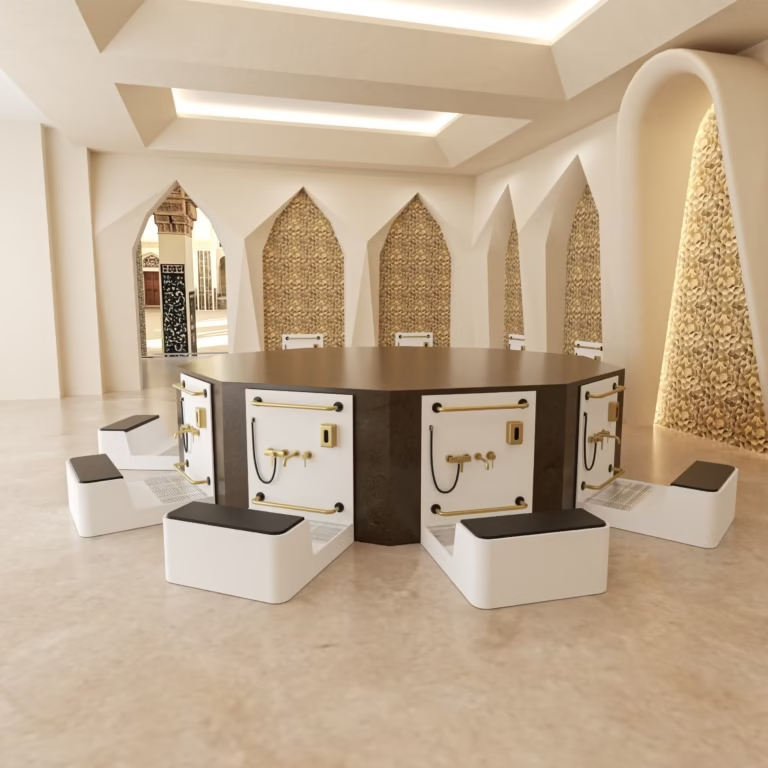
High-traffic mosques place exceptional demands on wudu areas, and layout decisions play a far greater role than basin quantity alone. Congestion, splashing, and user conflict have their roots in those initial planning decisions where circulation, spacing, and movement patterns were not accorded due consideration.
Fixed walls, drainage routes, and basin positions quickly turn layout decisions into structural conditions. Queues emerge where movement is constrained, wet floors spread where spacing is insufficient, and user interference increases when flow lacks clarity. Operational measures such as cleaning schedules or usage rules rarely correct these issues.
An efficient wudu basin layout requires deliberate planning at the layout design stage, grounded in how people approach, use, and exit the space under dense conditions. Early, informed layout decisions remain one of the most effective ways mosque committees can prevent long-term usability problems in high-traffic wudu areas.
Why High-Traffic Mosques Need a Different Layout Approach
Layouts that work in smaller or lightly used mosques often fail under sustained, concentrated demand. High-traffic environments amplify every inefficiency. Narrow walkways slow entry and exit. Close wudu basin spacing increases splash and accidental contact. Ambiguous circulation creates hesitation that cascades into queues.
Design intent must shift away from maximizing fixtures per wall length. Priority should move toward predictable movement, adequate clearance, and conflict reduction. Once these fundamentals are resolved, basin counts tend to perform better without forcing users to rush.
What an Efficient Wudu Basin Layout Achieves
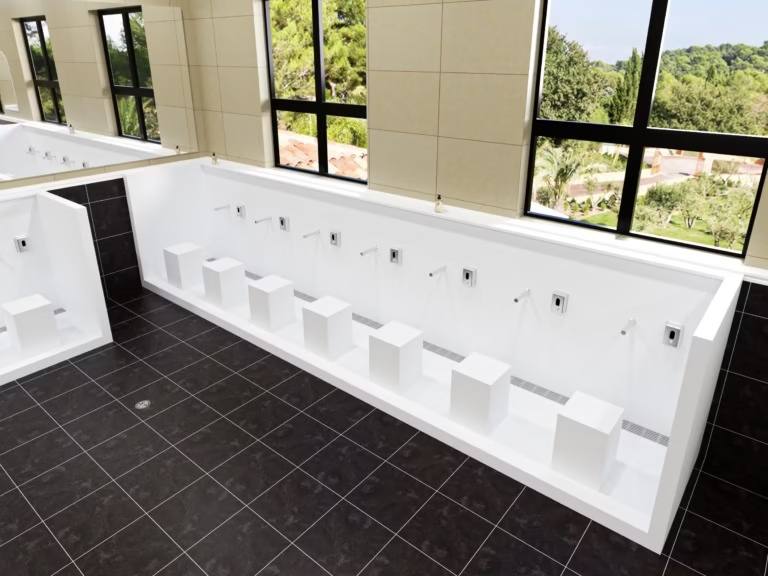
An efficient wudu basin layout reduces conflict, controls water spread, and supports calm use without instruction.
Outcomes of well-planned layouts include:
- Reduced user conflict: Clear spatial separation prevents interference between seated users and those moving past
- Controlled splash zones: Spacing and orientation keep water within intended areas
- Predictable flow: Users instinctively understand where to approach, use, and exit
Layouts that achieve these outcomes often feel orderly even during the busiest periods.
Design Considerations for Wudu Basin Layouts
High-traffic mosque wudu areas demand deliberate layout decisions that go beyond fitting basins into available space. Flow, gaps, seating, and material selection must join to help smooth the move, cut down on clashing, and keep control of the water spread. Once the size of the plan and placement of the drains are set, a lot of these things cannot be changed. So early planning is key for long-term performance.
1. Flow and Movement
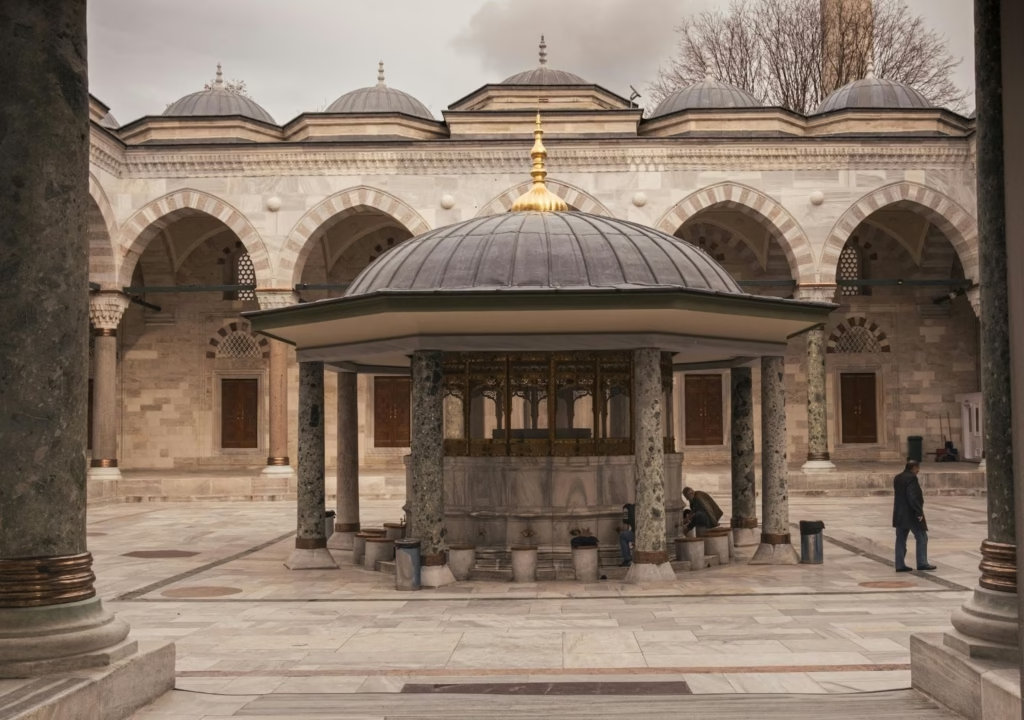
Flow and movement determine how a wudu basin layout performs once the space is under pressure. From our experience reviewing high-traffic mosque projects, congestion rarely begins at the basins themselves. Congestion almost always starts where approach, use, and exit overlap without clear separation.
We have seen that effective flow planning treats movement as a sequence rather than a single open area. Worshippers arrive, pause briefly, perform wudu, and then leave with wet feet and garments. Each stage requires its own spatial clarity. Layouts that blur these phases force users to negotiate around one another, increasing hesitation, splash, and user conflict.
The most common flow failures we encounter after opening include:
- Shared entry and exit paths: Incoming users block those finishing wudu, slowing turnover
- Circulation crossing active basins: Movement passes directly behind or beside seated users
- Undefined waiting zones: Informal queues spill into walkways and exits
Now, flow problems cannot be corrected through supervision or behavioral guidance. Once walls, drainage, and basin rows are fixed, circulation patterns become structural conditions.
Layouts that perform well in high-traffic mosques rely on predictable movement rather than speed. Clear entry, use, and exit paths reduce hesitation, limit splash exposure, and allow the space to remain calm even during heavy demand.
2. Spacing and Capacity
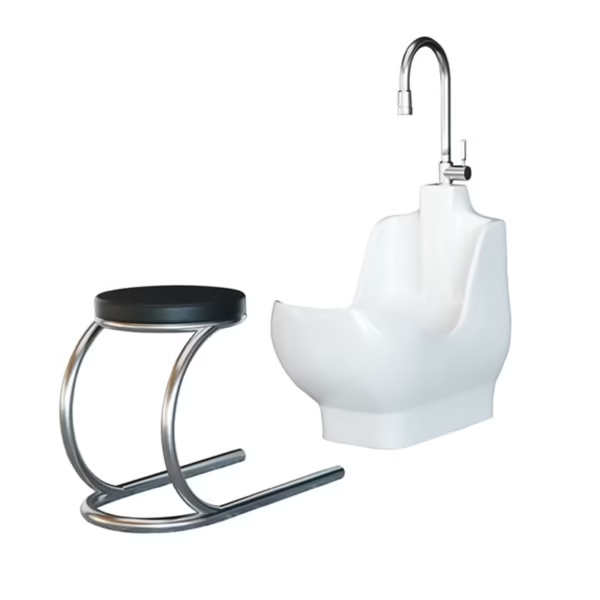
Spacing determines how much of a wudu area’s theoretical capacity is actually usable. From our experience evaluating high-traffic mosque projects, capacity problems are rarely caused by having too few basins. Problems arise when basins are placed too close together, reducing comfort and slowing turnover.
We often see layouts planned around minimum dimensions rather than real movement. Those minimums may work on drawings, but real use involves turning, foot lifting, towel handling, and brief pauses. Tight spacing forces users to adjust posture, wait for adjacent movement, or abandon a basin entirely.
The most common spacing-related failures we encounter include:
- Basins positioned too close: Splash overlaps into neighboring stations and discourages simultaneous use
- Insufficient clearance behind seating: Passing users interrupt seated worshippers and slow movement
- Edge-to-edge planning: Human movement is ignored in favor of fixture count
Increasing spacing by even a small margin often improves effective capacity more than adding another basin. Wider spacing allows users to complete wudu without interference, which shortens perceived waiting time and reduces hesitation.
Spacing decisions become fixed once drainage locations and floor finishes are installed. Cleaning, queuing rules, or usage supervision cannot compensate for basins placed too tightly. Layouts that succeed under sustained use prioritize usable space per worshipper rather than maximum basin density.
3. Seating and User Interaction
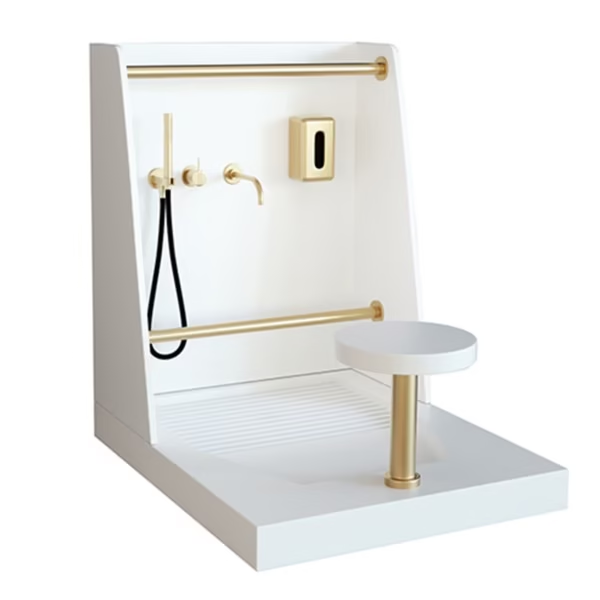
Seating establishes how people relate to each other in the wudu area, not just to the basin. In high-traffic mosques, poorly planned chairs become the hidden reason for congestion and uneasiness, even if there are enough basins and their spacing is right.
Seated users take up space for a longer time and move differently compared to standing users. When seating is positioned without considering these behavior patterns, interaction problems surface quickly. People passing behind seated worshippers hesitate. Seated users feel rushed or exposed. Movement slows in ways that are difficult to diagnose after opening.
Interaction issues linked to seating layout commonly include:
- Seating placed too close to circulation paths: Passing users interrupt seated worshippers
- Insufficient clearance for standing transitions: Users struggle to sit down or stand up without blocking others
- Seating not aligned with basin position: Awkward posture increases time spent at the station
- Uneven spacing between seated users: Some stations feel usable while others are avoided
- Seating located at visual choke points: Hesitation increases when users feel observed or pressured
These interaction problems persist regardless of cleaning or supervision. Once seating positions are fixed relative to basins and walkways, behavior adapts to the layout, not the other way around.
Effective seating design allows seated and moving users to coexist without conflict. Adequate clearance, proper alignment, and predictable positioning reduce hesitation and help maintain a steady rhythm of use across the wudu area.
4. Splash and Floor Control
Splash patterns reveal whether a wudu layout is working as intended. In high-traffic mosques, uncontrolled water spread usually points to spatial decisions rather than user behavior. Floor wetness expands when basins, seating, and walkways are positioned without regard to how water actually leaves the station.
We have observed that splash problems increase when layouts rely on accessories instead of geometry. Mats, barriers, and frequent cleaning address symptoms but leave the underlying causes untouched. Water travels along the paths the layout allows, especially where spacing is tight and circulation passes close to active basins.
Common splash-related failures include:
- Basins facing primary walkways: Water reaches circulation zones during normal use
- Insufficient spacing between stations: Splash overlaps into adjacent positions
- Corner or wall-adjacent placement: Water collects and spreads along edges
- Seams and joints near foot zones: Moisture accumulates and becomes harder to manage
Floor control improves when splash is managed through orientation and distance. Basins positioned away from walkways, with buffer space around active zones, keep water contained where it belongs. Clear separation between wet zones and circulation paths reduces tracking and lowers slip risk.
5. Material and Durability Considerations
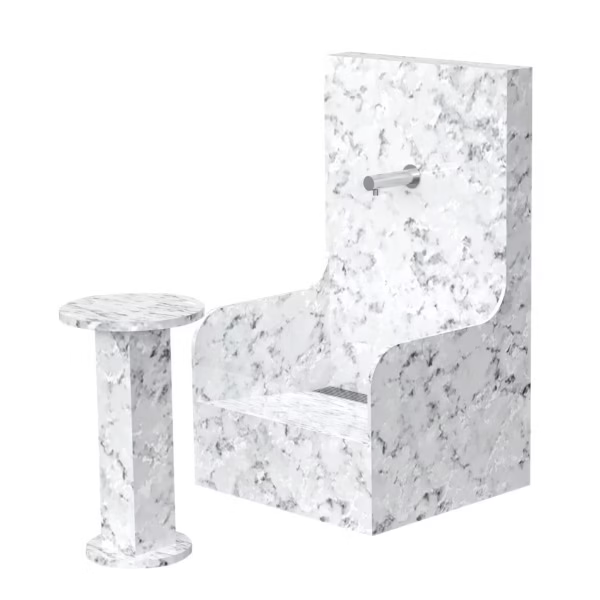
Material choice directly influences whether a high-traffic mosque ablution layout continues to function as intended over time. In dense environments, basins, edges, and seating zones experience constant contact, weight, and moisture. Materials that perform adequately in lighter-use settings often degrade quickly under these conditions, gradually undermining spacing, hygiene, and safety.
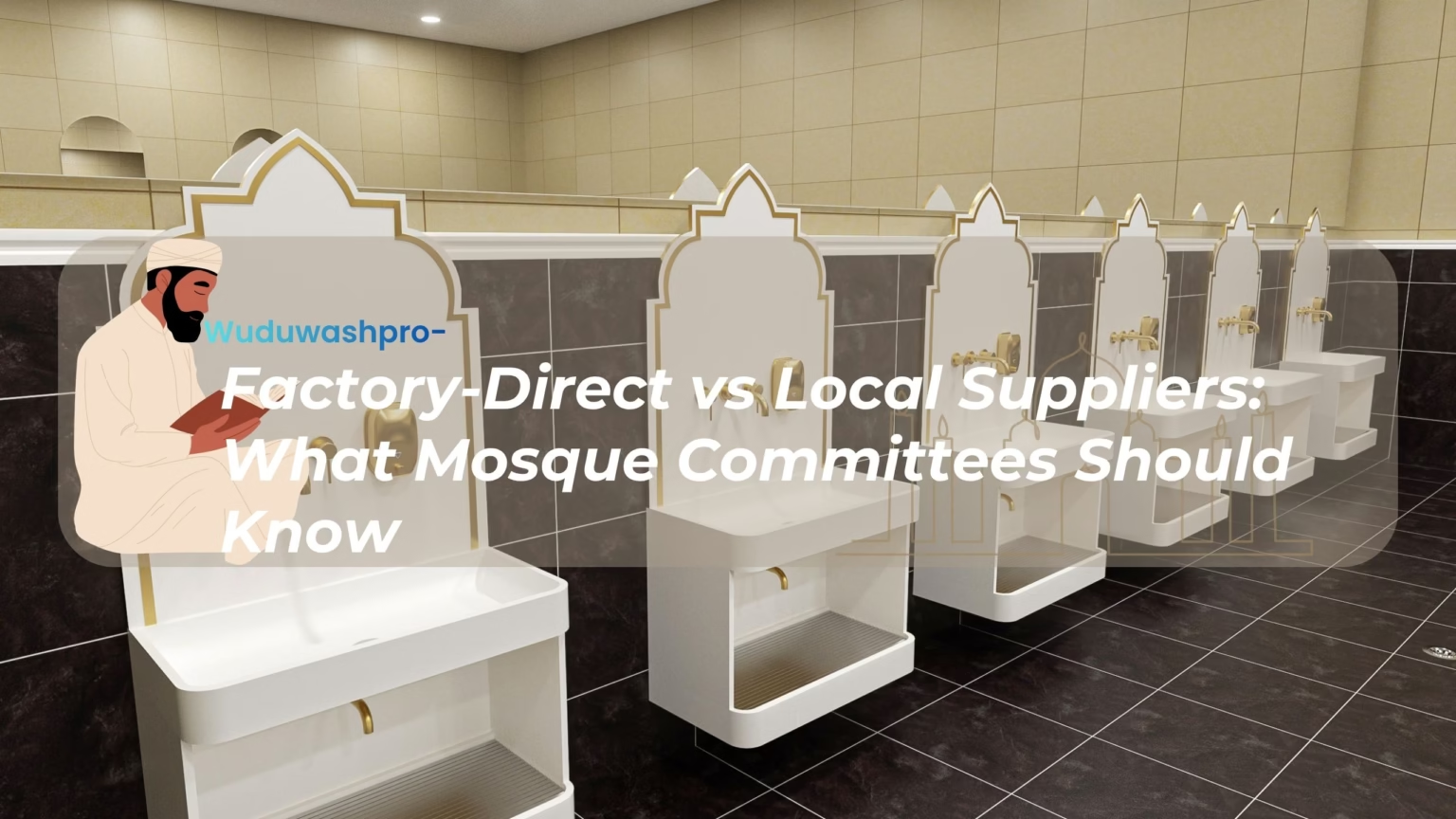
Solid surface has shown to be an excellent match for high-traffic mosque wudu areas because it supports both durability and layout performance. Ceramic can crack, chip, or stain at stress points. Solid surface maintains its integrity. It does not matter how many people are interacting with the space.
Good reasons solid surface performs well in high-traffic layouts include:
- Structural strength at edges and seating zones: Supports repeated contact and body weight without cracking
- Non-porous composition: Prevents moisture absorption, reducing staining, odor, and hygiene concerns
- Seamless construction: Eliminates joints that trap water and debris in dense layouts
- Surface repairability: Allows localized refinishing without full basin replacement
- Color stability: Resists yellowing and discoloration in highly visible circulation areas
This is also where supplier capability matters. WuduWashPro specializes in solid surface wudu basins, with factory-direct production that allows basin geometry, seating integration, and edge reinforcement to be resolved before installation. That level of material control helps ensure the layout performs consistently over time, even under sustained, high traffic wudu area use.
Material decisions at the planning stage define whether the wudu basin layout will stay efficient or steadily break down into a space that needs constant operational intervention. Solid surface reduces that risk by supporting long-term performance exactly where traffic and contact are highest.
Plan High-Traffic Wudu Basin Layouts With Confidence
Efficient wudu areas do not succeed because of rules, signage, or increased cleaning. They succeed because layout decisions are resolved correctly before construction begins. Circulation, spacing, seating, and material choice work as a single system, and once those elements are fixed, performance is largely locked in.
High-traffic mosques benefit most from early layout planning that reflects real movement, real contact, and sustained daily use. Solid surface materials further protect those decisions by maintaining structural integrity, hygiene, and visual clarity where traffic is heaviest.
WuduWashPro works with mosque committees and project planners at the layout design stage, helping translate flow requirements, spacing logic, and solid surface performance into manufacturable solutions. Factory-direct production allows layout intent to be preserved through fabrication rather than compromised on site.
Engage WuduWashPro early to design a wudu basin layout that reduces congestion, controls splash, and delivers long-term performance in high-traffic mosques.