Introduction
As the world becomes increasingly interconnected, architects and facility planners face the challenge of designing spaces that accommodate diverse religious practices. Among these, one of the most practical yet complex design considerations is providing wudu (ablution) facilities in multi-faith environments such as airports, universities, hospitals, and shopping malls.
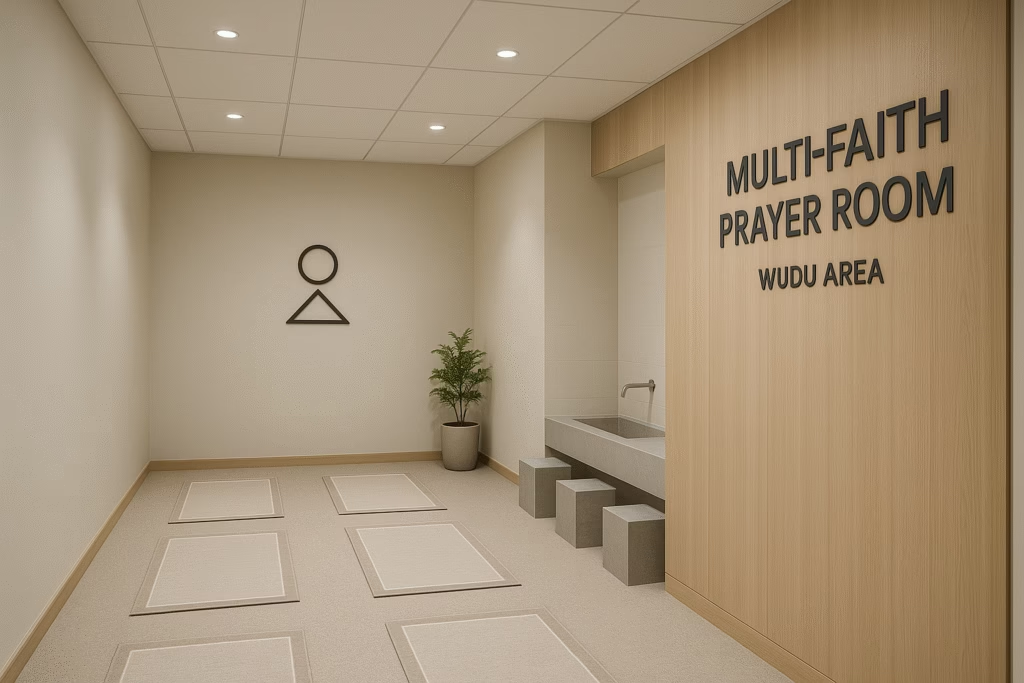
Designing such spaces requires understanding both the spiritual significance of wudu in Islam and the inclusive principles of modern architecture. The goal is to create facilities that are functional, respectful, hygienic, and comfortable for all users — Muslim and non-Muslim alike.
Understanding Multi-Faith Facility Design
The Purpose of Multi-Faith Spaces
Multi-faith rooms or quiet spaces are neutral environments intended for reflection, prayer, or meditation by people of any religion. However, the physical needs of each faith differ. For Muslims, performing wudu before prayer is a mandatory ritual purification that cannot be skipped or substituted.
This distinction means that shared spaces must consider how to integrate wudu areas without compromising the neutral, inclusive character of the overall facility.
The Three Design Priorities
When creating wudu spaces in shared environments, architects should balance three key principles:
- Respect religious practice – Provide proper facilities for wudu according to Islamic requirements.
- Maintain inclusivity – Ensure that design choices do not alienate or inconvenience users of other faiths.
- Promote hygiene and efficiency – Manage water flow, drainage, and cleanliness in a way that benefits all users.
Spatial Planning and Flow
Layout and Accessibility
The wudu area should be near the prayer space, yet separated by a short corridor or buffer zone for privacy and noise control. Accessibility for wheelchairs and clear signage (using terms such as Ablution Area or Preparation Zone) ensures inclusivity for all users.
Privacy and Gender Considerations
Designs should offer gender-specific sections or flexible partitions when space allows. Non-slip flooring, low seating, and anti-splash basin heights can prevent accidents and enhance comfort.
Circulation and Zoning
Efficient spatial flow — from entrance to washing area to prayer room — minimizes congestion and maintains order, particularly in high-traffic settings like airports or shopping centers.
👉 Related reading: The Complete Guide to Designing Wudu Areas in Mosques
Functional Design Principles
Dedicated Wudu Basins
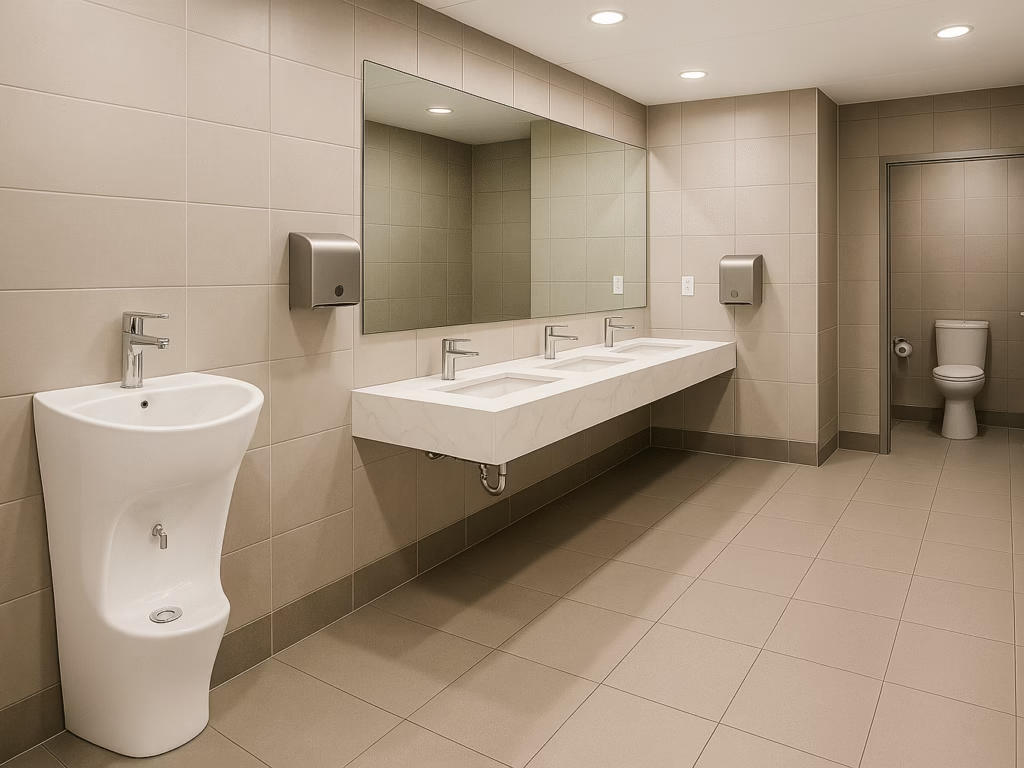
Ordinary sinks are inadequate for foot washing. Dedicated wudu basins — often lower and ergonomically angled — support both seated and standing use. Dual-level options can serve hands and feet simultaneously, improving comfort and efficiency.
👉 Read more: Exploring Dual-Level Wudu Basins: Comfort for Hands and Feet
Water Management and Safety
Good design must prevent water spillage, pooling, and slippery surfaces. This can be achieved through:
- Sloped flooring toward trench drains
- Non-slip finishes
- Wall-mounted drying systems
- Motion-activated faucets to limit water waste
Material Selection
For high-traffic, multi-faith facilities, solid surface materials are ideal. They are seamless, non-porous, and antibacterial — perfectly suited for continuous use and easy cleaning.
👉 Learn more: Why Solid Surface is the Best Material for Wudu Basins
Balancing Neutrality and Cultural Sensitivity
Aesthetics and Atmosphere
Wudu areas in shared spaces should reflect calmness and neutrality. Using natural tones, indirect lighting, and soft materials ensures harmony across different faith traditions. Avoiding overt religious iconography maintains the space’s inclusive tone.
Cultural Respect
Small design gestures — such as floor-level shoe storage or directional flow toward the qibla — can show awareness of Muslim practices while remaining subtle enough to preserve neutrality for all users.
Technology and Hygiene in Shared Environments
Smart Automation
In multi-faith facilities, smart wudu systems with infrared sensors and automatic shut-off taps help maintain hygiene and sustainability. They reduce touchpoints and water waste while simplifying maintenance.
Sustainability and Maintenance
Integrating water-saving devices and easy-to-clean materials reduces long-term operational costs. Regular maintenance schedules should be built into facility management plans to keep wudu areas clean and inviting.
👉 Reference: The Future of Smart Wudu Facilities: Sensors, Hygiene, and Automation
Case Study Insights
Airports
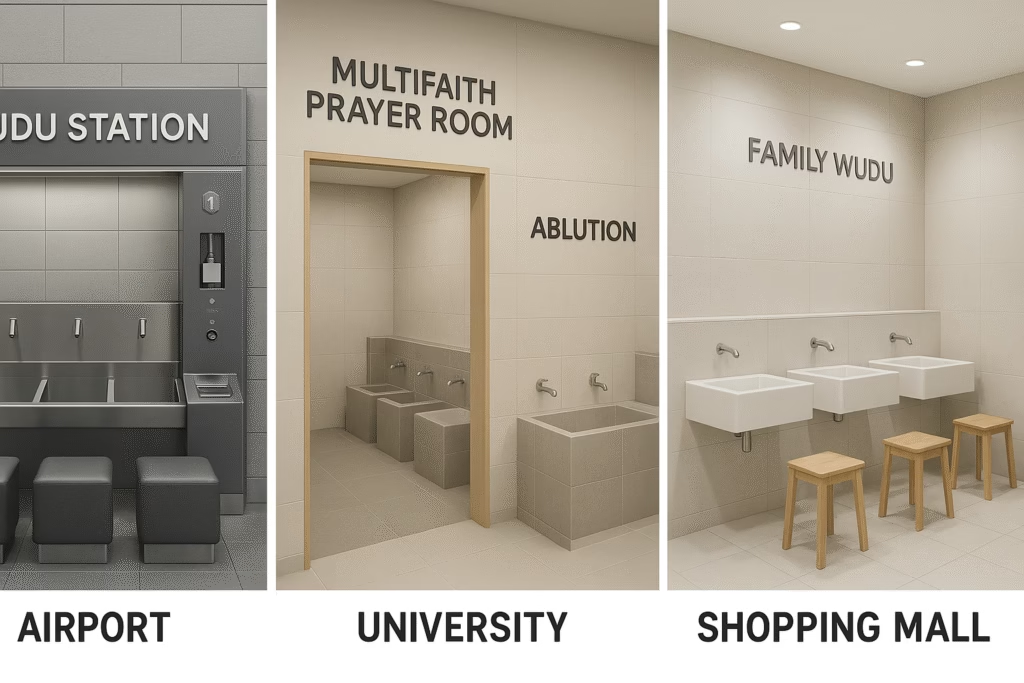
Airports such as Dubai and Kuala Lumpur International have integrated compact, modular wudu stations that support quick, hygienic use. Durable materials and water-saving systems ensure continuous service under heavy traffic.
Universities
Educational campuses often feature multi-faith reflection rooms adjacent to wudu facilities. The focus is on inclusivity, acoustic privacy, and accessibility for students with different needs.
Shopping Malls and Hospitals
These high-traffic venues require durable, low-maintenance materials and subtle zoning. Incorporating family-friendly wudu spaces ensures convenience for parents and children.
Conclusion
Designing wudu spaces for multi-faith environments is not just an architectural challenge — it is an act of cultural empathy. When executed thoughtfully, such spaces can represent unity in diversity: honoring religious practices while ensuring comfort for everyone.
By combining intelligent spatial planning, solid surface wudu basins, and smart hygiene systems, architects can transform shared public facilities into places of inclusivity and respect.
👉 Explore customizable ablution solutions designed for modern public environments at WuduWashPro.com.
FAQ
1. Why are wudu facilities important in multi-faith spaces?
They allow Muslims to perform mandatory ablution before prayer, ensuring religious inclusivity in shared public buildings.
2. How can designers maintain neutrality while including wudu areas?
By using minimalist design, neutral colors, and functional zoning that serve all users equally.
3. What materials are best for shared wudu spaces?
Solid surface and stainless steel — both are durable, easy to sanitize, and blend seamlessly with neutral interiors.
4. Can compact wudu solutions fit into existing prayer rooms?
Yes. Modular or dual-level designs can be retrofitted without major plumbing changes.
5. How can technology improve multi-faith wudu facilities?
Through sensor-activated taps, water-saving devices, and automated cleaning systems that enhance hygiene and efficiency.