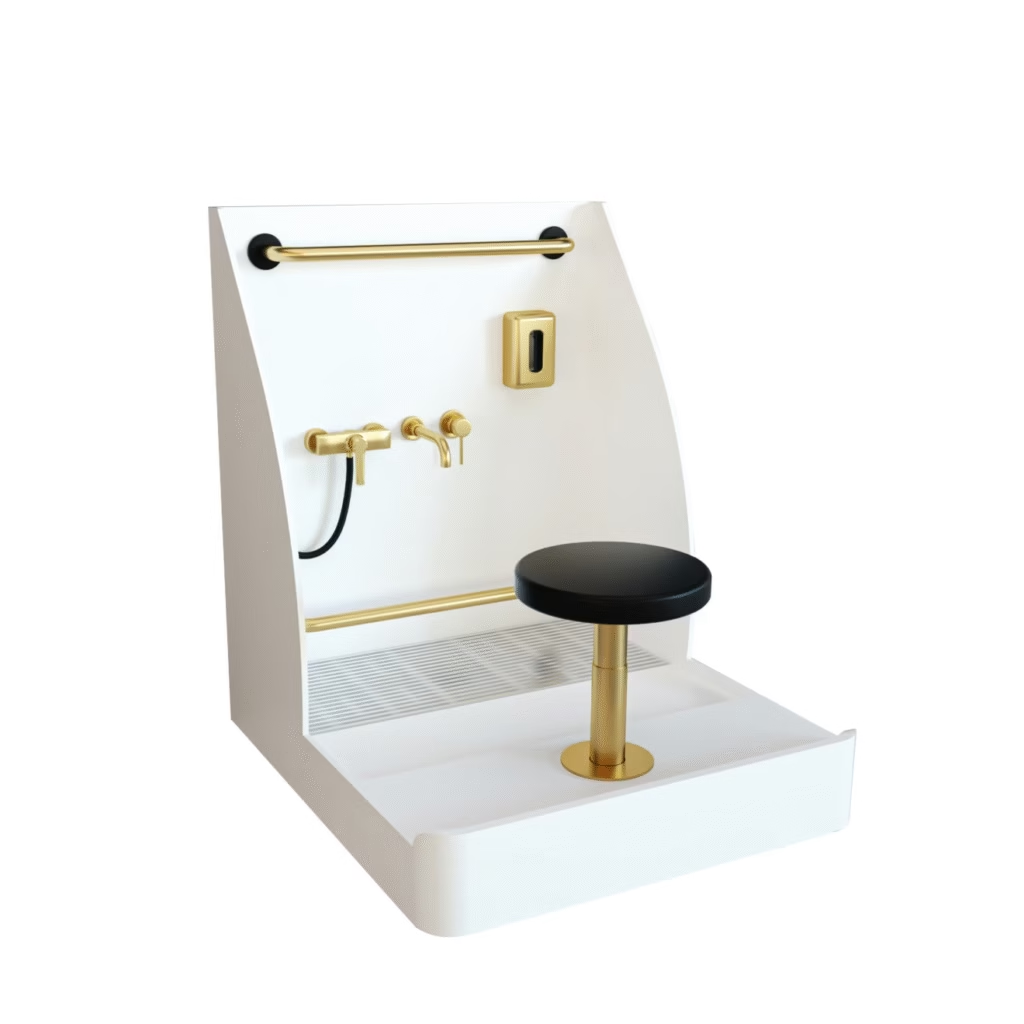
Choosing a wudu basin supplier for the mosque is a long-term choice and operational decision that directly affects safety, hygiene, the maintenance expenses, and the smooth process of the ablution area during the peak hours of the prayers. To the mosque committees and the procurement teams, the greater risk is not product or price choice, but selecting a supplier who does not understand how ablution spaces function under real mosque conditions.
From project experience, layout-related issues are the most expensive to correct after installation, particularly when basin dimensions were not considered early.
This guide explains the important questions the committees need to pose to suppliers at the supplier-selection stage in order to ensure that the decision-makers do not have poor-quality installations and other problems in terms of the long-term operations. You will also find the supplier’s evaluation checklist, which will help buyers evaluate suppliers and avoid poor-quality or unsuitable products.
Is the Supplier a Real Mosque Environment Specialist?
Not every commercial wudu basin supplier knows the realities of the mosque. The footfall within the ablution areas is high; it is used on a daily basis, and the peak demand is concentrated towards the day, especially before prayers. The suppliers that lack experience with mosques tend to design to look good instead of performing well.
A reliable wudu basin supplier for mosques should demonstrate experience with:
- The frequent use, at least several prayer periods per day.
- Close circulation ablution areas.
- Continuous exposure to cleaners and water.
Suppliers who cannot clearly explain how their products perform under these conditions should be excluded from consideration, regardless of price or appearance.
How Wudu Basins Perform Under Continuous Daily Use
Durability is often underestimated during procurement, yet it is one of the main drivers of long-term cost. Lower upfront pricing frequently results in higher maintenance expenses, early replacement, and operational disruption. Products designed for low-use environments consistently fail when exposed to the daily, high-frequency use typical in mosques.
Request the suppliers to demonstrate, in practice:
- The resistance of materials to staining, cracking, and damage by moisture.
- Stability of hygiene of surfaces after years of cleaning.
- Which issues of maintenance are anticipated in the long run?
A reliable supplier of wudu basins to use in the construction of mosques must be capable of supporting the choice of materials made on the basis of performance and not because of specification sheets.
When real mosque projects are being considered, the selection of suppliers is not a matter of features versus features, but a trade-off of cost in the short run and stability in the long run of operations. Low-priced basins may seem good when the procurement is taking place, but in most cases, they will lead to an increase in the cost of maintenance, degradation of material very quickly, and replacement after the material has been used in day-to-day life, with moisture and cleaning. The outcome of the wrong supplier will not only involve repairs, but it will also interrupt the prayer-time flow, posing hygienic risks and needing remedial work that might have been prevented. Practically, the most important criteria are not the unit price or appearance, but the ability to endure during the active operation, compatibility of the layout, and the possibility of the supplier to assist in the planning decisions pre-installation.
Can Basin Design Support Limited and Shared Mosque Spaces?
Most mosques are run on limited footprints, particularly when dealing with an old building or when it is being converted. Design of basins should provide effective layouts and not limit them.
In the assessment of suppliers, it is important to check whether their basin designs:
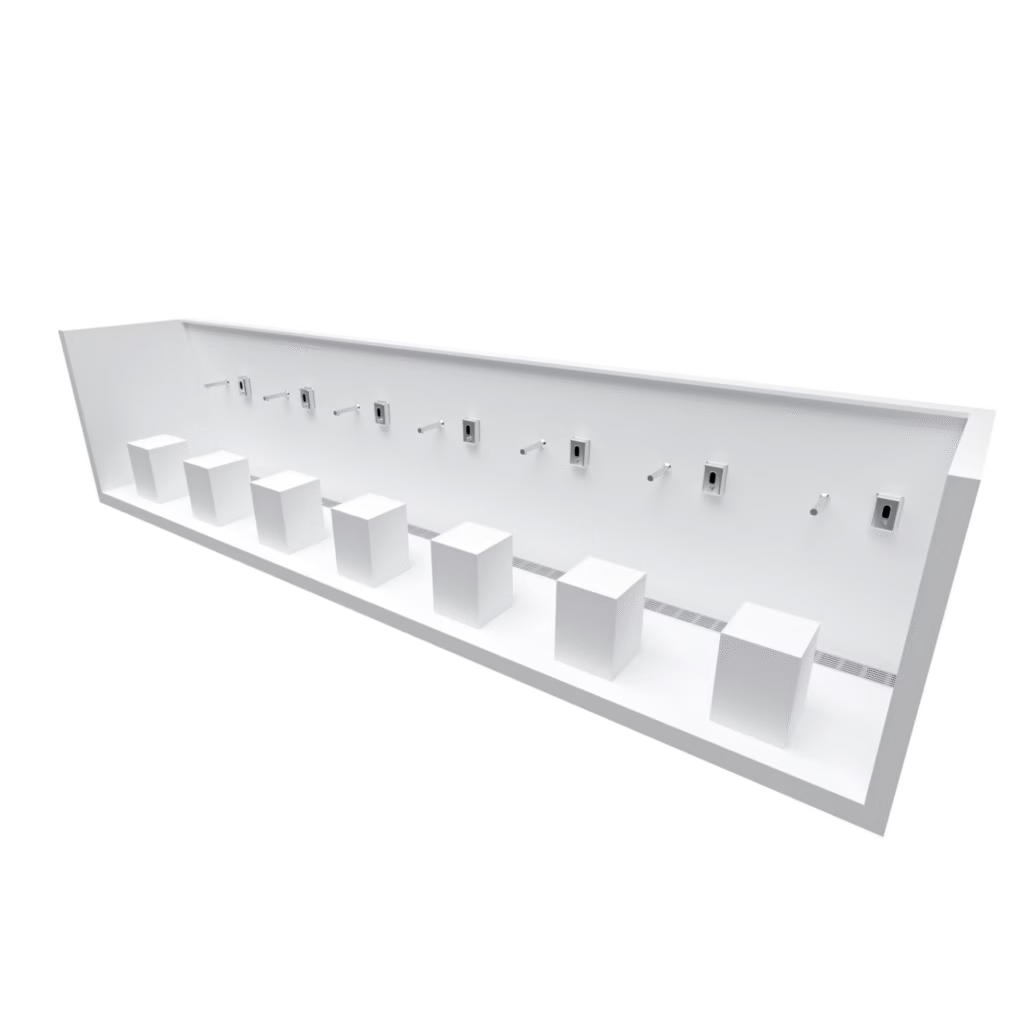
- Support wall-mounted or linear layouts.
- Control splash within small circles.
- Align with the realistic location of drainage.
Development-specific solutions, like Wudu Wash Pro Solutions demonstrate the possibility of safer and more convenient layouts in small ablution spaces using the size and shape of the basin.
Maintenance and Cleaning after Installation
Problems with maintenance will hardly manifest themselves right after installation. They are formed due to cleaning and use on a daily basis.
An efficient supplier must respond to:
- Access over basins and below basins for cleaning.
- Non-residue building surface continuity.
- The designs that minimise standing water around the walkways.
The suppliers who take maintenance into consideration in the design phase ensure that they keep the committees out of hygiene issues and expensive retrofitting in the future.
Does the Supplier Demonstrate Proven Mosque Installations?
It is not enough to have product catalogs. To be familiar with the standards of products in actual conditions, the committees should examine the installations that have been completed in the mosques.
Ask suppliers to share:
- Finished building projects on mosques and Islamic centers.
- Plans worked out during peak prayer congestion.
- After sales feedback on performance.
Examining actual projects, helps committees check the performance of solutions in reality rather than drawings and proposals of a supplier.
Why Basin Selection Must Come Before Layout Finalization?
Among the most common and expensive procurement errors made by the mosque committees is to complete the wudu area plan and then choose the basins. Planners can find themselves putting the wrong basins into rigid spaces by initially designing layouts, thereby forcing odd spacing, clumsy circulation, and drainage problems that are challenging to rectify at a later stage.
Established suppliers know that layout planning should not be made to follow basin selection, but rather precede it. The size of basins, the height on which they are mounted, the amount of clearance where the feet can be washed, and the features of the water control all directly affect the amount of room per user, the possibilities of alignment between the basins, and the location of drainage. The failure to consider these factors at an early stage will lead to overcrowding of the layout, splashing, and less utility during the peak hours of praying.
At the planning stage, reviewing of basin configurations enables the mosque committees and planners to operate within realistic dimensions at the beginning. This design will help maintain proper spacing, safer circulation routes, and more co-ordination of basins, floors, and drainage.
Through designing basin specifications early enough before the layout, the committees will save on the late-stage design change, minimize risks in the installation, and make sure that the completed wudu area works as intended to be used on the daily basis as opposed to merely fitting in the drawing.
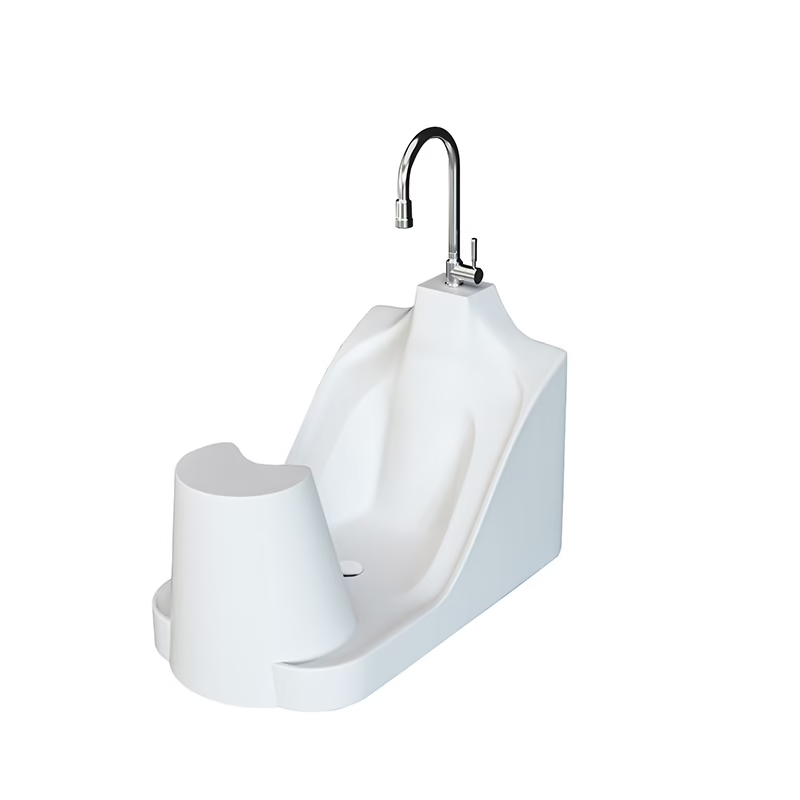
Is the Mosque Wudu Supplier an Advisor or a Vendor?
The best supplier of the wudu basin for mosque projects not only supplies the products but also gives guidance. The difference between a useful installation and one that needs to be fixed comes in the form of advisory capability.
A strong supplier will:
- Inquire about space limitations and user profiles.
- Before installation, highlight planning is dangerous.
- Demonstrate the justification of some basin designs.
The suppliers that are unit sales only rarely consider long-term operational realities. In completed mosque projects, we frequently see problems traced back to suppliers who sold products without participating in early planning discussions.
Why Supplier Evaluation Matters Over Time?
Several material and design problems can only be realized after months or years of operations. Studies on building performance always indicate that exposure to moisture and excessive service are catalysts of wear in case materials and plans are inappropriate. According to advice by the Building Research Establishment (BRE) the long-term conditions of moisture have an influence on the durability and maintenance of products. This is because supplier selection is not a purchasing operation, but rather a strategic move.
Supplier Evaluation Checklist For Wudu Basin Mosque Committee
| Evaluation Area | Important Questions to the Supplier | Why It Matters |
| Mosque-Specific Experience | Has the supplier done projects for mosques or Islamic centers? Are they aware of the ablution customs and prayer at its best? | Less experienced suppliers of the mosque do not pay much attention to congestion, hygiene, and durability problems. |
| Material Durability | What are the materials, and how will they perform given the constant moisture and daily cleaning? | Low-grade materials are stained, cracked, or deteriorate very fast in high usage wudu. |
| Design for Heavy Use | Are the basins built to be used on a daily basis or for occasional use? | Lightly used basins do not last long in the mosque setting. |
| Layout Compatibility | Are basin dimensions friendly to linear and wall-mounted designs of small areas? | Small wudu designs that are layout-friendly minimize congestion and enhance safety. |
| Splash & Water Control | What is the effect of the basin design on reducing splashing and water spray? | Splashing out of control will lead to wet floors, chances of slipping, and high maintenance. |
| Drainage Alignment | Does the supplier offer instructions on the location of the drains and the floor slope? | The bad drainage produces long-term safety and hygiene challenges. |
| Cleaning Access | Are there enough cleaning facilities behind and below the basins? | Poor access will result in moisture accumulation and hygiene issues in the long run. |
| Maintenance Practicality | What is the ease of keeping the basin surfaces in the course of years used? | Stressful maintenance adds to the operational costs and unavailability. |
| Accessibility Considerations | Are basin heights and clearances accommodating to the elderly/mobility-limited patrons? | The inclusive design will make the space safe for all members of the congregation. |
| Project Evidence | Is the supplier able to share the completed mosque installations and performance results? | The actual projects show the performance of the products, other than drawings and brochures. |
| Advisory Support | Is the supplier a source of planning advice or simply a seller? | Advisory suppliers will assist in eliminating the expensive planning and installation errors. |
| Long-Term Value | How long will the basins last, and what will be their performance? | The long-term value is important as compared to the first purchase price. |
Final Thoughts
Supplier selection should be treated as a technical and operational decision, not a purchasing task. The wrong choice typically leads to higher maintenance costs, compromised safety, and long-term usability issues.
The committees are required to determine the suppliers who are also aware of the mosque settings, assist in the planning of the practical layout, and provide long-term solutions.
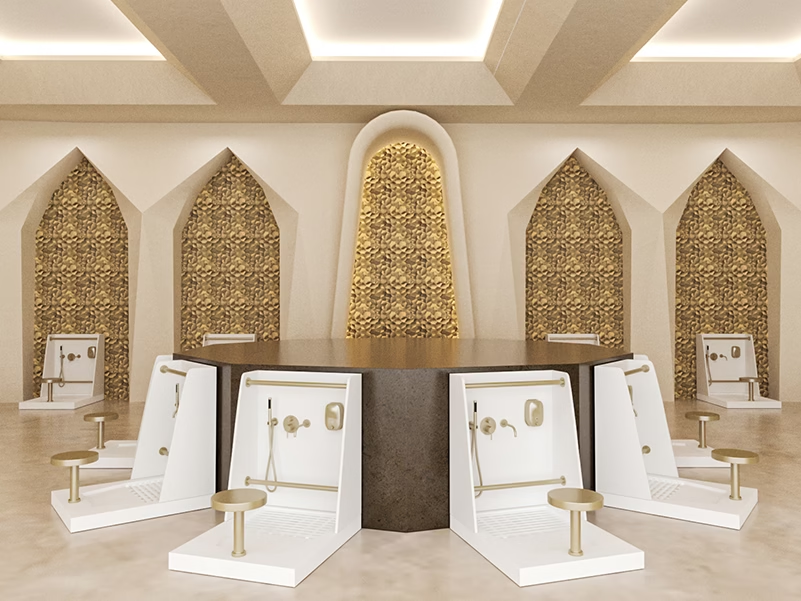
Raising the right questions at the right time, the mosque committees will be able to save installations of poor-quality and provide the ablution areas with high-quality, safe, and hygienic areas, which will be used by the people during the next years. Established suppliers who have experience in dealing with mosques, specifically like WuduWashPro, can show how wise supplier choice can help to achieve better results both in terms of facilities and the worshippers.
Frequently Asked Questions
Q. What is the way of determining a walking wudu basin supplier in mosque projects?
Ans. A good supplier shows that they have dealt with installations in mosques and informs about the behavior of materials when they are under the stress of high usage, and carries out the planning of the layout instead of selling standardized fittings.
Q. Do commercial wudu basin vendors fit the small mosque areas?
Ans. This is only when their products are made to suit small layouts. Several commercial suppliers do not provide solutions that can manage the splash and accommodate the linear layouts in restricted areas.
Q. Why then should basin selection occur prior to laying down the layout?
Ans. Direct effects of basin size, mounting height on spacing and circulation, as well as drainage requirements. Early choice of basins eliminates unsound design and expensive alterations in the future.
Q. What are the maintenance problems to be considered by mosque committees when choosing suppliers?
Ans. The accessibility to cleaning, durability of the surface, moisture resistance, and the ability of the designs to stop standing water on the walking surface should be evaluated by the committees.
Q. What is the significance of evaluating the completed mosque projects?
Ans. An inspection of actual installations assists the committee in knowing how basins work during high prayer times and usage, which cannot be presented on drawing.